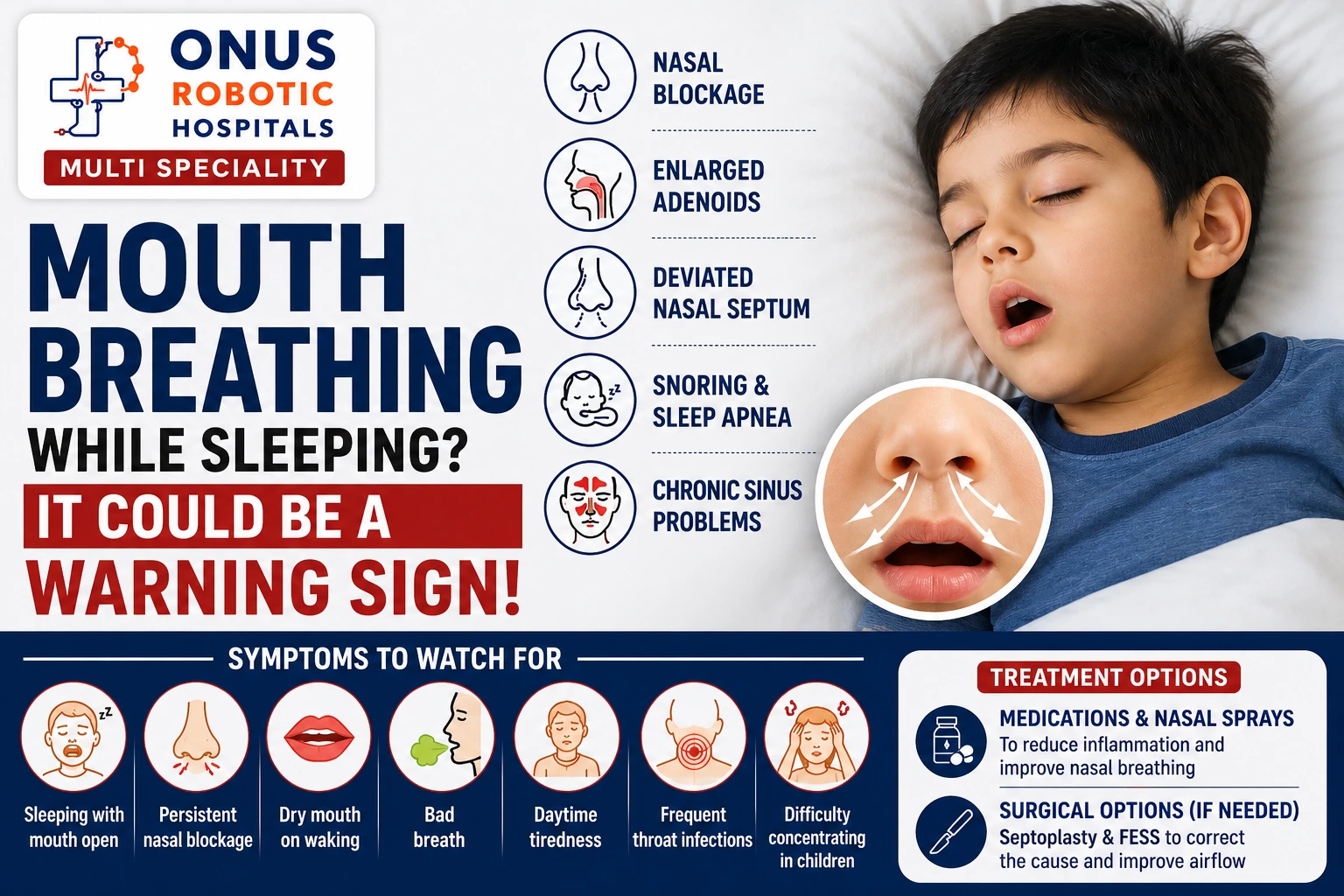
Do you or your child sleep with the mouth open? While many people consider this a harmless habit, mouth breathing during sleep is often a sign of an underlying problem affecting the nose or airway. Persistent mouth breathing can disturb sleep, affect overall health, and reduce quality of life if left untreated.
Normally, we breathe through our nose, which filters, warms, and humidifies the air before it reaches the lungs. When the nose becomes blocked, the body compensates by breathing through the mouth.
In this article, Consultant ENT Surgeon at ONUS Robotic Hospitals, explains the common causes of mouth breathing, symptoms to watch for, available treatment options, and why early ENT evaluation is important.
What Is Mouth Breathing?
Mouth breathing occurs when a person breathes primarily through the mouth instead of the nose, especially during sleep.
Occasional mouth breathing during a cold may not be a concern. However, persistent mouth breathing often indicates an obstruction or condition affecting the nasal passages or upper airway.
Why Is Nasal Breathing Important?
The nose plays an essential role in healthy breathing by:
- Filtering dust and allergens
- Warming inhaled air
- Adding moisture to the air
- Protecting the lungs from infections
- Supporting better oxygen exchange
- Promoting restful sleep
When nasal breathing is impaired, mouth breathing becomes the body’s alternative, but it does not provide these protective functions.
Common Causes of Mouth Breathing
1. Deviated Nasal Septum (DNS)
A Deviated Nasal Septum (DNS) occurs when the wall separating the two nostrils is displaced to one side.
This can lead to:
- Difficulty breathing through the nose
- Frequent nasal blockage
- Snoring
- Mouth breathing during sleep
- Recurrent sinus infections
Depending on the severity, treatment may involve medications or Septoplasty, a procedure to straighten the nasal septum.
2. Enlarged Adenoids
Adenoids are lymphoid tissues located behind the nose. In children, enlarged adenoids can block the airway and make nasal breathing difficult.
Common signs include:
- Mouth breathing
- Snoring
- Noisy breathing during sleep
- Frequent ear infections
- Poor sleep quality
- Daytime irritability
Persistent symptoms should be evaluated by an ENT specialist.
3. Nasal Blockage
Chronic nasal blockage can result from:
- Allergies
- Swollen nasal tissues
- Nasal polyps
- Recurrent infections
- Structural abnormalities
When the nose remains blocked for long periods, mouth breathing often becomes habitual.
4. Chronic Sinus Problems
Chronic sinusitis causes ongoing inflammation of the sinuses, leading to:
- Nasal congestion
- Facial pressure
- Thick nasal discharge
- Reduced sense of smell
- Difficulty breathing through the nose
Untreated sinus disease may contribute to persistent mouth breathing.
5. Snoring and Sleep Apnea
People who snore or have Obstructive Sleep Apnea (OSA) frequently breathe through the mouth during sleep.
Sleep apnea may also cause:
- Loud snoring
- Pauses in breathing
- Excessive daytime sleepiness
- Morning headaches
- Poor concentration
Early diagnosis is important because untreated sleep apnea can increase the risk of high blood pressure, heart disease, and other health complications.
Common Symptoms of Mouth Breathing
If you regularly breathe through your mouth while sleeping, you may experience:
- Sleeping with the mouth open
- Persistent nasal blockage
- Dry mouth upon waking
- Bad breath
- Snoring
- Poor-quality sleep
- Daytime tiredness
- Frequent throat infections
- Morning sore throat
- Difficulty concentrating, especially in children
Children may also develop behavioral changes, restless sleep, or poor academic performance if the problem persists.
Can Mouth Breathing Affect Children?
Yes. Persistent mouth breathing in children may interfere with:
- Sleep quality
- Growth and development
- Concentration
- Learning ability
- Facial and jaw development (when prolonged)
Parents should seek medical evaluation if their child regularly sleeps with an open mouth or snores frequently.
How Is Mouth Breathing Diagnosed?
An ENT specialist may recommend:
Medical History
Your doctor will ask about:
- Snoring
- Sleep quality
- Nasal blockage
- Allergies
- Sinus infections
- Mouth breathing habits
Physical Examination
The ENT examination may include assessment of:
- Nose
- Septum
- Adenoids
- Tonsils
- Throat
- Airway
Nasal Endoscopy
A nasal endoscopy allows the ENT specialist to examine the inside of the nose and identify structural abnormalities, polyps, or inflammation.
Imaging (If Needed)
In selected cases, imaging studies such as a CT scan may be recommended to evaluate chronic sinus disease or anatomical abnormalities.
Consultant ENT Head & Neck Surgeon
ONUS Robotic Hospitals – Hyderabad
👉 link: contact-us or book-appointment