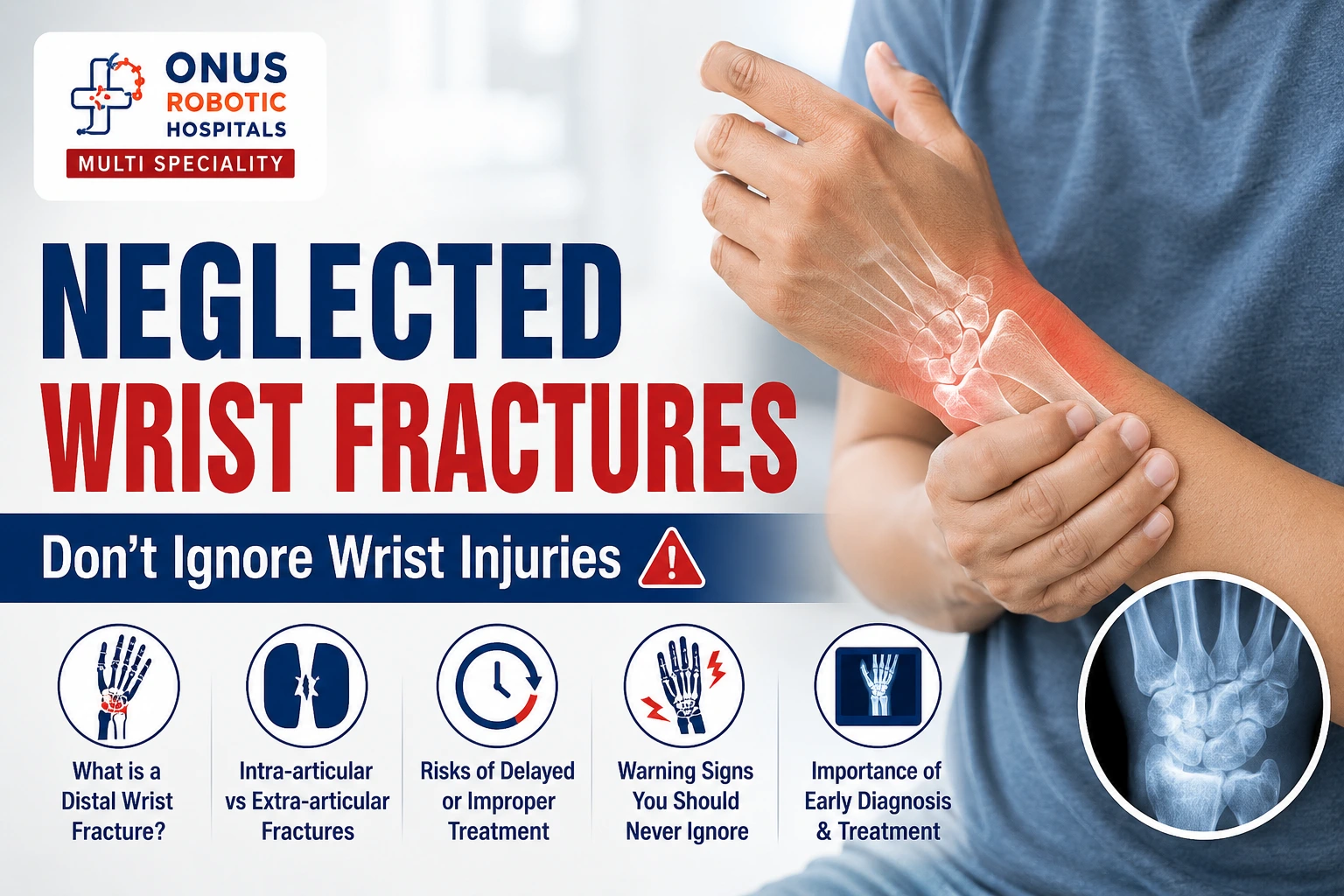
A wrist fracture may seem like a minor injury, especially if the pain gradually decreases after a fall or accident. However, neglecting a wrist fracture or receiving improper treatment can lead to permanent stiffness, chronic pain, deformity, and reduced wrist function.
One of the most serious types of wrist fractures is an intra-articular fracture, where the break extends into the wrist joint. Without timely diagnosis and appropriate treatment, this injury can significantly affect hand function and quality of life.
In this article, Dr. M. Balaraju Naidu, Robotic Orthopedic Surgeon at ONUS Robotic Hospitals, discusses the importance of early diagnosis and treatment by sharing the example of a 33-year-old patient who developed complications after neglecting a distal wrist fracture.
What Is a Distal Wrist Fracture?
The wrist is formed by the lower ends of the radius and ulna bones along with the small wrist bones (carpal bones). The distal radius is the portion of the radius closest to the wrist.
A fracture in this area is known as a distal radius fracture, commonly referred to as a wrist fracture.
It is one of the most frequently seen fractures after:
- Falling on an outstretched hand
- Road traffic accidents
- Sports injuries
- Workplace injuries
- High-impact trauma
Types of Wrist Fractures
Understanding the type of fracture helps determine the most appropriate treatment.
Extra-Articular Fracture
An extra-articular fracture occurs outside the wrist joint.
Characteristics include:
- The joint surface remains intact.
- Stable fractures may often be treated without surgery.
- Recovery is generally favorable with timely treatment.
Intra-Articular Fracture
An intra-articular fracture extends into the wrist joint.
This type of fracture is more complex because it affects the smooth joint surface responsible for normal wrist movement.
Without proper treatment, it may result in:
- Joint stiffness
- Arthritis
- Persistent pain
- Reduced movement
- Weak grip strength
Why Neglected Wrist Fractures Are Dangerous
Many people ignore wrist injuries because swelling and pain may reduce after a few days.
However, untreated fractures can heal in the wrong position, a condition known as malunion.
This can lead to:
- Permanent deformity
- Loss of wrist movement
- Chronic pain
- Weak grip strength
- Difficulty lifting objects
- Reduced ability to perform daily tasks
- Early arthritis
The longer treatment is delayed, the more challenging it becomes to restore normal wrist function.
A Real-Life Example
In this case shared by Dr. M. Balaraju Naidu, a 33-year-old patient suffered a distal wrist fracture but did not receive timely orthopedic treatment.
Because the injury involved the wrist joint and proper alignment was not restored early, the patient later experienced complications that affected wrist movement and function.
This highlights the importance of consulting an orthopedic specialist immediately after a wrist injury rather than relying solely on pain relief or temporary immobilization.
Warning Signs You Should Never Ignore
Seek medical attention immediately if you experience:
- Severe wrist pain after a fall
- Swelling around the wrist
- Visible deformity
- Difficulty moving the wrist
- Inability to grip objects
- Pain while rotating the wrist
- Persistent tenderness
- Bruising around the wrist
- Numbness in the fingers
Even if symptoms appear mild, an orthopedic evaluation is recommended after any significant wrist injury.
How Are Wrist Fractures Diagnosed?
Accurate diagnosis is essential for choosing the right treatment.
Clinical Examination
Your orthopedic surgeon will assess:
- Pain location
- Swelling
- Deformity
- Wrist movement
- Grip strength
- Blood circulation
- Nerve function
X-ray
An X-ray is usually the first imaging test performed to identify:
- Fracture location
- Bone alignment
- Degree of displacement
CT Scan
A CT scan may be recommended when:
- The fracture involves the joint
- Multiple fracture fragments are present
- Surgical planning is required
- The fracture pattern is complex
CT imaging provides a detailed view of the wrist anatomy and helps guide treatment.
Treatment Options
Treatment depends on:
- Type of fracture
- Severity
- Joint involvement
- Bone alignment
- Patient’s age
- Activity level
Non-Surgical Treatment
Stable fractures may be managed with:
- Closed reduction (if required)
- Splint or cast
- Pain management
- Follow-up X-rays
- Physiotherapy after healing
Surgical Treatment
Surgery may be recommended when:
- The fracture is intra-articular
- Bones are displaced
- Joint alignment is affected
- The fracture is unstable
- There are multiple bone fragments
The aim is to restore the normal anatomy of the wrist and preserve long-term function.
Recovery After Wrist Fracture
Recovery varies depending on the injury and treatment.
Most patients require:
- Immobilization during the initial healing phase
- Regular follow-up
- Gradual rehabilitation
- Physiotherapy to improve strength and mobility
Complete recovery may take several months, especially in complex fractures.
Can Wrist Fractures Be Prevented?
Although accidents cannot always be avoided, you can reduce the risk by:
- Wearing protective gear during sports
- Maintaining good bone health
- Treating osteoporosis
- Preventing falls at home
- Strengthening muscles through regular exercise
When Should You Consult an Orthopedic Surgeon?
Visit an orthopedic specialist immediately if you have:
- Wrist pain after an injury
- Swelling that does not improve
- Difficulty moving the wrist
- Visible deformity
- Persistent tenderness
- Loss of grip strength
- Wrist pain affecting daily activities
Prompt diagnosis can prevent long-term disability and improve recovery.
Expert Orthopedic Care at ONUS Robotic Hospitals
At ONUS Robotic Hospitals, patients with wrist injuries receive comprehensive orthopedic evaluation using advanced imaging and personalized treatment plans.
Dr. M. Balaraju Naidu, Robotic Orthopedic Surgeon, specializes in the diagnosis and treatment of wrist fractures, joint injuries, trauma, sports injuries, and advanced orthopedic conditions.
Early consultation ensures the best opportunity to restore normal wrist function and prevent long-term complications.
About the Doctor
Dr. M. Balaraju Naidu
Founder & Managing Director
Chief Robotic Orthopedic Surgeon
ONUS Robotic Hospitals
Dr. M. Balaraju Naidu specializes in robotic orthopedic surgery, fracture management, trauma care, joint replacement, sports injuries, spine disorders, and advanced musculoskeletal treatments. His patient-centered approach focuses on early diagnosis, precision treatment, and long-term functional recovery.
Frequently Asked Questions (FAQs)
Can a wrist fracture heal without treatment?
Some minor fractures may heal, but healing in the wrong position can cause deformity, stiffness, and long-term functional problems. Any suspected wrist fracture should be evaluated by an orthopedic specialist.
What is an intra-articular wrist fracture?
An intra-articular fracture extends into the wrist joint. These fractures often require careful assessment because improper healing can affect joint movement and increase the risk of arthritis.
When is a CT scan needed for a wrist fracture?
A CT scan may be recommended when the fracture involves the joint, is complex, or requires detailed evaluation before treatment or surgery.
What happens if a wrist fracture is left untreated?
Untreated fractures may heal incorrectly, leading to chronic pain, reduced movement, weak grip strength, deformity, and early arthritis.
How long does it take to recover from a wrist fracture?
Bone healing generally takes 6–8 weeks, while complete recovery of strength and mobility may take several months depending on the injury and rehabilitation.
For Appointments:
Dr. Balaraju Naidu, Robotic Orthopedic Surgeon
ONUS Robotic Hospitals – Hyderabad
👉 link: contact-us or book-appointment