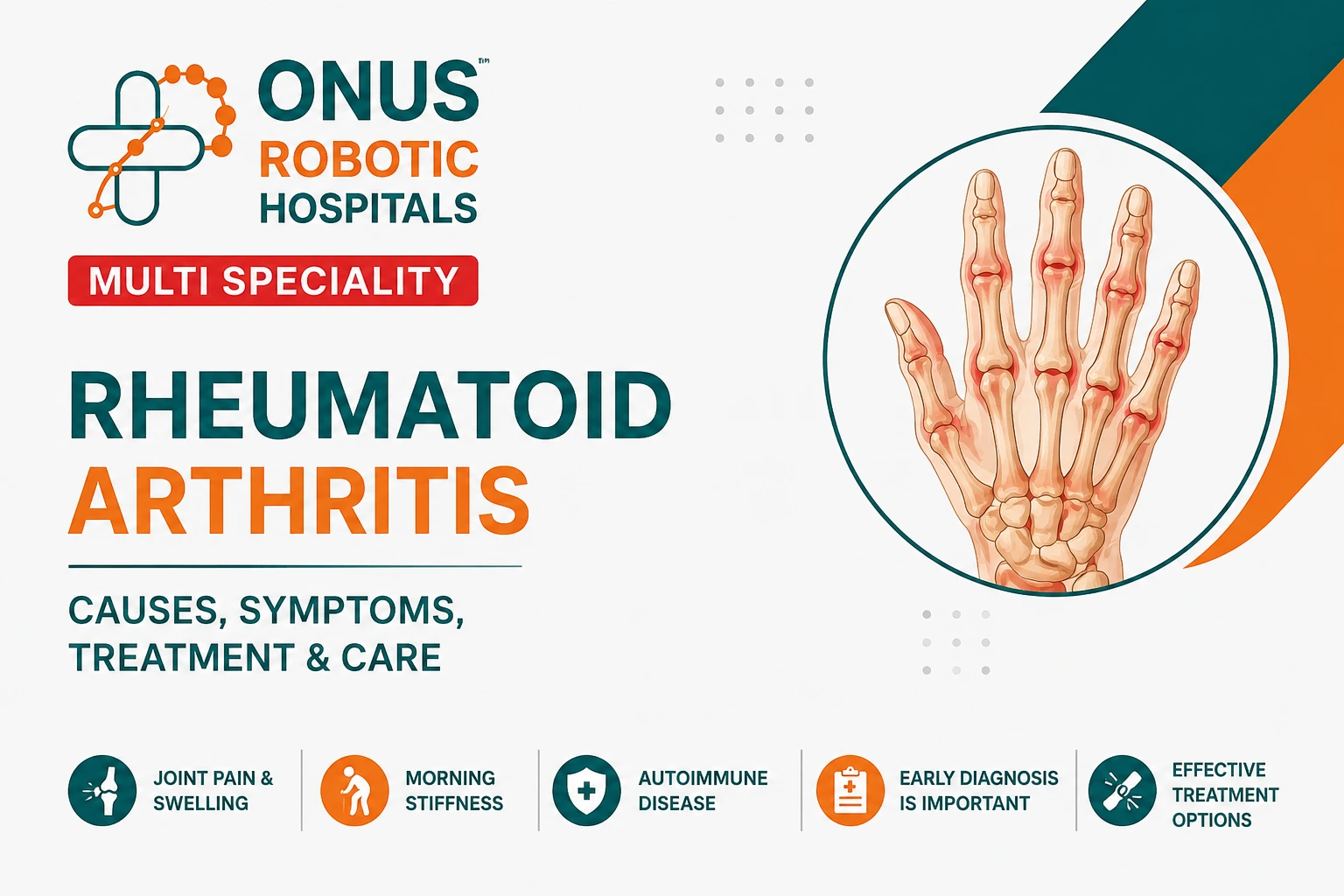
Rheumatoid Arthritis (RA) is a chronic autoimmune disease that primarily affects the joints. Unlike osteoarthritis, which develops due to wear and tear over time, Rheumatoid Arthritis occurs when the body’s immune system mistakenly attacks its own healthy joint tissues. This results in inflammation, pain, swelling, stiffness, and progressive joint damage if left untreated.
RA can affect people of all ages but is most commonly diagnosed between the ages of 30 and 60. Women are affected more frequently than men. Early diagnosis and timely treatment play a crucial role in controlling symptoms, preventing joint destruction, and maintaining a good quality of life.
What is Rheumatoid Arthritis?
Rheumatoid Arthritis is an autoimmune condition in which the immune system attacks the synovium—the lining of the joints. The inflammation causes the synovium to thicken, leading to pain and swelling. Over time, the disease can damage cartilage, bones, ligaments, and tendons surrounding the joints.
Although RA commonly affects the hands, wrists, feet, and knees, it can also impact other organs such as the lungs, heart, eyes, and blood vessels.
Why is Rheumatoid Arthritis an Autoimmune Disease?
In healthy individuals, the immune system protects the body from infections and harmful organisms. In Rheumatoid Arthritis, the immune system becomes overactive and incorrectly identifies joint tissues as foreign invaders.
This abnormal immune response triggers chronic inflammation, resulting in:
- Joint pain and tenderness
- Swelling around joints
- Stiffness and reduced mobility
- Progressive joint damage
- Fatigue and general weakness
The exact cause of this immune system malfunction remains unknown, but genetic and environmental factors are believed to contribute.
Causes and Risk Factors
Several factors may increase the risk of developing Rheumatoid Arthritis:
Genetic Factors
A family history of RA may increase susceptibility to the disease.
Gender
Women are approximately two to three times more likely to develop RA than men.
Age
Although RA can occur at any age, it is most commonly diagnosed during middle age.
Smoking
Cigarette smoking significantly increases the risk of developing Rheumatoid Arthritis and may worsen disease progression.
Hormonal Factors
Hormonal changes may contribute to the higher prevalence of RA among women.
Environmental Triggers
Certain infections and environmental exposures may activate the disease in genetically susceptible individuals.
Common Symptoms of Rheumatoid Arthritis
Symptoms often develop gradually and may vary from person to person.
Joint Pain
Persistent pain affecting multiple joints, particularly on both sides of the body.
Joint Swelling
Inflammation causes visible swelling, warmth, and tenderness around the joints.
Morning Stiffness
One of the hallmark signs of RA is stiffness lasting more than 30 minutes after waking up.
Fatigue
Many patients experience extreme tiredness, low energy levels, and general weakness.
Reduced Range of Motion
Inflammation and joint damage can make movement difficult.
Small Joint Involvement
The hands, fingers, wrists, and feet are commonly affected in the early stages.
Symmetrical Symptoms
RA often affects the same joints on both sides of the body.
How Rheumatoid Arthritis Affects the Joints
As inflammation continues, it can gradually destroy cartilage and bone within the joints. This may lead to:
- Joint deformities
- Loss of joint function
- Reduced mobility
- Difficulty performing daily activities
- Permanent disability if untreated
Early treatment is essential to slow or prevent this damage.
Understanding Rheumatoid Factor (RF)
Rheumatoid Factor (RF) is an antibody commonly found in the blood of individuals with Rheumatoid Arthritis.
While a positive RF test may support the diagnosis, it is not definitive because:
- Some RA patients may have a negative RF test.
- Some healthy individuals may test positive without having RA.
Doctors often combine RF testing with other blood investigations and clinical findings for an accurate diagnosis.
Diagnosis of Rheumatoid Arthritis
Diagnosing RA involves a detailed medical evaluation and several investigations.
Clinical Examination
The doctor assesses joint swelling, tenderness, stiffness, and mobility.
Blood Tests
Common tests include:
- Rheumatoid Factor (RF)
- Anti-CCP Antibodies
- ESR (Erythrocyte Sedimentation Rate)
- CRP (C-Reactive Protein)
Imaging Studies
X-rays, ultrasound scans, or MRI scans help identify joint inflammation and damage.
Early diagnosis enables timely treatment and improves long-term outcomes.
Treatment Options for Rheumatoid Arthritis
Although there is currently no permanent cure for RA, modern treatments can effectively control inflammation, reduce symptoms, and prevent joint damage.
Medications
Disease-Modifying Anti-Rheumatic Drugs (DMARDs)
These medications help slow disease progression and protect joints.
Biologic Therapies
Advanced medications that target specific components of the immune system.
Anti-inflammatory Medications
Used to reduce pain and swelling.
Corticosteroids
May be prescribed temporarily during severe flare-ups.
Physical Therapy
Regular physiotherapy helps:
- Maintain joint flexibility
- Improve muscle strength
- Reduce stiffness
- Enhance mobility
Lifestyle Modifications
Patients can benefit from:
- Regular low-impact exercise
- Maintaining a healthy body weight
- Quitting smoking
- Stress management
- Adequate rest during flare-ups
Surgical Treatment
In advanced cases with severe joint damage, surgical procedures such as joint replacement may be recommended to restore function and reduce pain.
Long-Term Joint Care for RA Patients
Managing Rheumatoid Arthritis requires ongoing care and monitoring.
Tips for Joint Protection
- Follow prescribed medications consistently.
- Attend regular medical follow-ups.
- Stay physically active with appropriate exercises.
- Avoid excessive stress on affected joints.
- Maintain a healthy diet rich in anti-inflammatory foods.
- Monitor symptoms and report flare-ups promptly.
When Should You Consult a Specialist?
Seek medical attention if you experience:
- Persistent joint pain
- Swelling in multiple joints
- Morning stiffness lasting more than 30 minutes
- Unexplained fatigue
- Difficulty using your hands, feet, or other joints
- Progressive loss of mobility
Early consultation can significantly reduce the risk of permanent joint damage and disability.
Conclusion
Rheumatoid Arthritis is a serious autoimmune condition that can affect both joints and overall health. While it cannot always be prevented, early diagnosis and modern treatment strategies can successfully control inflammation, preserve joint function, and improve quality of life.
If you are experiencing persistent joint pain, swelling, or morning stiffness, do not ignore these symptoms. Seeking timely medical evaluation can help identify Rheumatoid Arthritis early and allow appropriate treatment before significant joint damage occurs.
Expert Care at ONUS Robotic Hospitals
Dr. Balaraju Naidu, Robotic Orthopedic Surgeon, provides comprehensive evaluation and management for patients with Rheumatoid Arthritis and other joint disorders. Early intervention and personalized treatment can help patients maintain mobility, independence, and a healthier future.
For Appointments:
Dr. Balaraju Naidu, Robotic Orthopedic Surgeon
ONUS Robotic Hospitals – Hyderabad
👉 link: contact-us or book-appointment