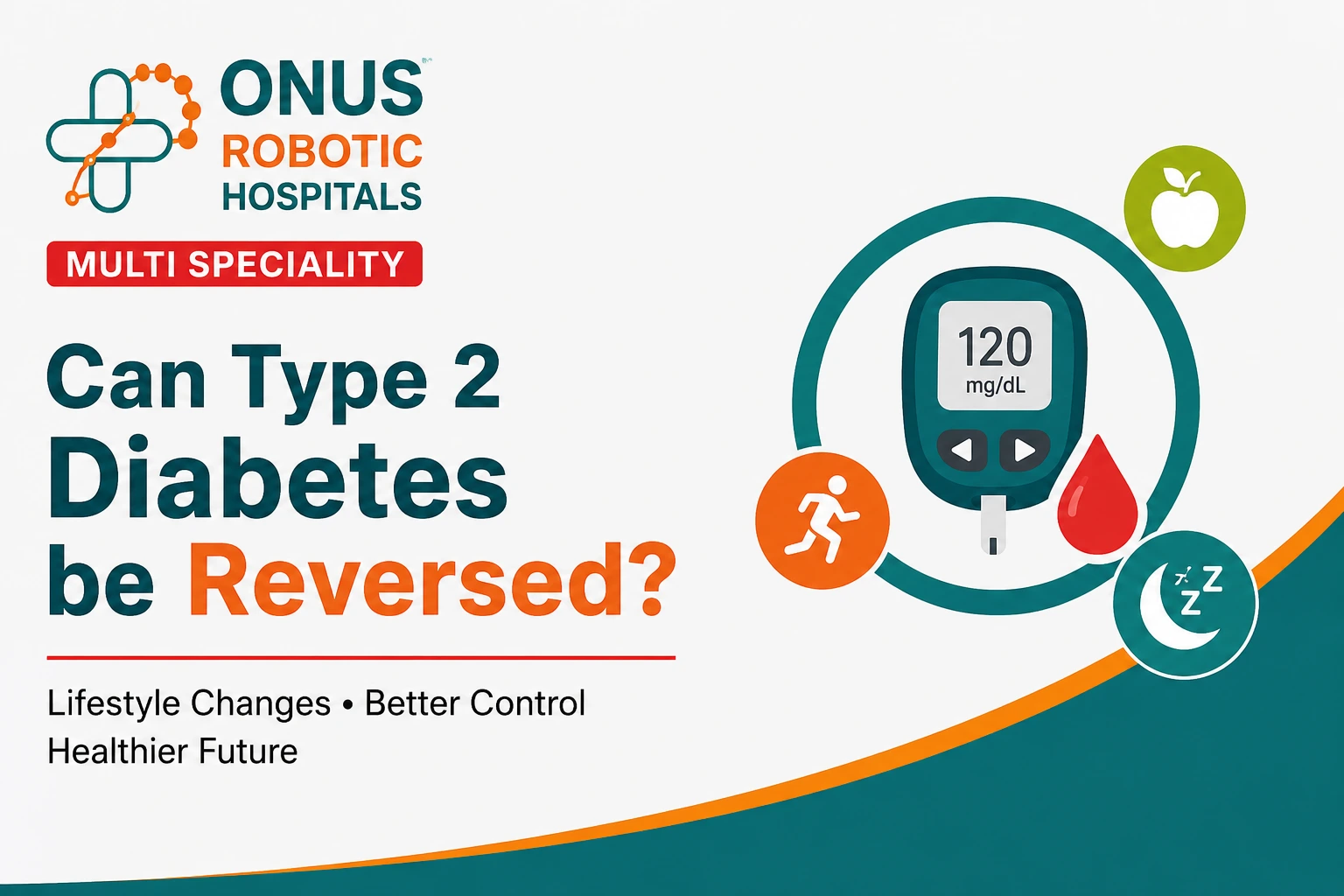
Can Type 2 Diabetes Be Reversed? Understanding Diabetes Remission, Lifestyle Changes, and Long-Term Metabolic Health- By Dr. Ravi Kiran | Diabetologist, Onus Robotic Hospital
Type 2 Diabetes has become one of the most common chronic health conditions worldwide, affecting millions of people and increasing the risk of heart disease, kidney disease, nerve damage, vision loss, and other serious complications. For many years, diabetes was considered a lifelong condition that could only be managed with medications.
However, modern medical research has transformed our understanding of Type 2 Diabetes. Today, evidence suggests that some individuals may achieve diabetes remission—often referred to as “diabetes reversal”—through sustained lifestyle changes, weight loss, improved metabolic health, and proper medical supervision.
In this article, Dr. P. Ravi Kiran, Senior General Physician & Diabetologist at ONUS Robotic Hospitals, explains what diabetes reversal means, who may benefit, and the evidence-based strategies that support better blood sugar control and long-term health.
What Does Diabetes Reversal Mean?
The term “diabetes reversal” can sometimes be misleading. In medical practice, the preferred term is diabetes remission.
Diabetes remission occurs when:
- Blood sugar levels return to the non-diabetic range.
- HbA1c remains below diabetic thresholds.
- Blood sugar control is maintained without diabetes medications for a sustained period.
- There is no ongoing need for glucose-lowering drugs under physician guidance.
It is important to understand that remission does not necessarily mean a permanent cure. If unhealthy lifestyle habits return, blood sugar levels may rise again.
Why Does Type 2 Diabetes Develop?
Type 2 Diabetes primarily develops due to insulin resistance, a condition in which the body’s cells become less responsive to insulin.
As insulin resistance worsens:
- The pancreas must produce more insulin.
- Blood glucose levels begin to rise.
- Fat accumulates around the liver and pancreas.
- The body’s ability to regulate blood sugar becomes impaired.
Several factors contribute to insulin resistance, including:
- Excess body weight
- Sedentary lifestyle
- Poor dietary habits
- Chronic stress
- Inadequate sleep
- Genetic predisposition
- Aging
Understanding and addressing insulin resistance is the foundation of diabetes reversal strategies.