Introduction
A wound that refuses to heal is more than just a skin problem. In some cases, especially among people with diabetes, poor blood circulation, or weakened immunity, a persistent wound can lead to a serious condition known as Osteomyelitis, or bone infection.
Osteomyelitis occurs when bacteria or other microorganisms spread into the bone, causing inflammation and destruction of bone tissue. If left untreated, the infection can progress deeper into surrounding tissues and lead to long-term complications.
According to Dr. Balaraju Naidu, Robotic Orthopedic Surgeon, early diagnosis and timely treatment are crucial to prevent permanent damage and preserve function.
What Is Osteomyelitis?
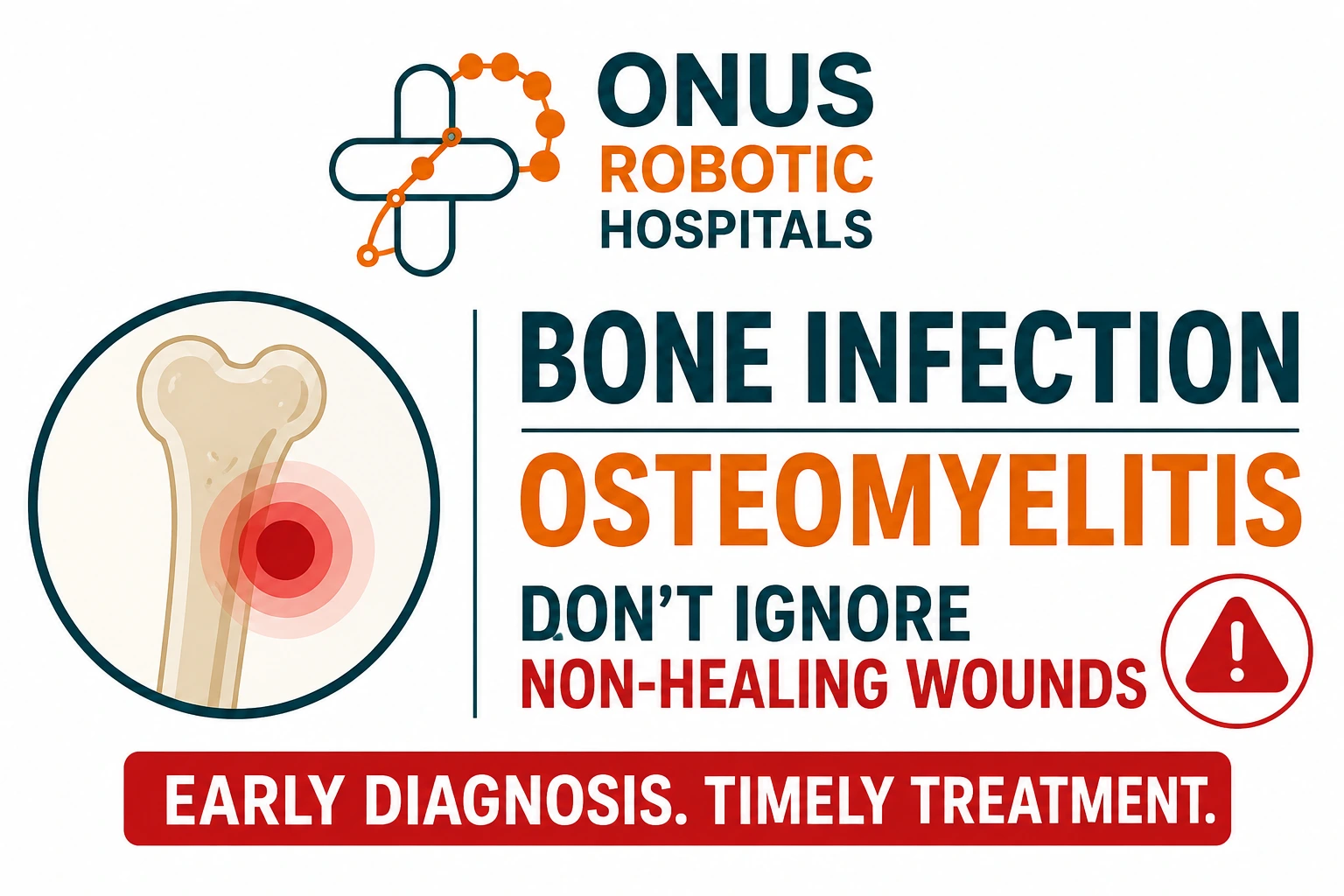
Osteomyelitis is an infection of the bone.
The infection may develop when bacteria enter the bone through:
- A non-healing wound or ulcer
- Diabetic foot infections
- Open fractures
- Surgical wounds
- Bloodstream infections
- Deep soft tissue infections
Once bacteria reach the bone, inflammation develops, reducing blood supply and damaging healthy bone tissue.
Without treatment, the infection may become chronic and increasingly difficult to manage.
Why Are People With Diabetes at Higher Risk?
People with diabetes are particularly vulnerable to osteomyelitis due to several factors:
Reduced Sensation (Neuropathy)
Many diabetic patients may not feel pain from small cuts, blisters, or injuries.
Poor Blood Circulation
Reduced blood flow can delay healing and impair the body’s ability to fight infection.
Delayed Wound Healing
Elevated blood sugar levels can interfere with normal healing processes.
Increased Risk of Foot Ulcers
Diabetic foot ulcers provide a pathway for bacteria to enter deeper tissues and bone.
For these reasons, every diabetic foot wound deserves careful attention and monitoring.
How Does Osteomyelitis Develop?
The progression often occurs in stages:
Stage 1: Skin Injury or Ulcer
A wound develops due to trauma, pressure, or diabetic foot complications.
Stage 2: Soft Tissue Infection
Bacteria spread into deeper layers beneath the skin.
Stage 3: Bone Involvement
The infection eventually reaches the underlying bone.
Stage 4: Progressive Bone Damage
Without treatment, bone destruction and chronic infection may occur.
Early intervention significantly improves treatment outcomes.
Warning Signs of Osteomyelitis
Recognizing symptoms early can prevent complications.
Common warning signs include:
Non-Healing Wound
A wound that remains open despite treatment.
Persistent Drainage
Continuous discharge or pus from the wound.
Swelling
Inflammation around the affected area.
Redness and Warmth
Signs of ongoing infection.
Deep Ulcers
Wounds extending into deeper tissues.
Pain or Tenderness
Although diabetic patients may have reduced sensation, pain can still occur.
Fever
Some patients may develop systemic signs of infection.
Foul-Smelling Wounds
Unpleasant odor may indicate advanced infection.
Any wound that is not healing normally should be evaluated by a healthcare professional.
Diabetic Foot Infections and Bone Infection
One of the most common causes of osteomyelitis is a diabetic foot ulcer.
When ulcers remain untreated:
- Bacteria can penetrate deeper tissues
- Infection may spread to tendons and joints
- Bone involvement becomes increasingly likely
This is why diabetic foot care is a critical part of diabetes management.
Regular foot inspections can help identify problems before they become serious.
How Is Osteomyelitis Diagnosed?
Accurate diagnosis requires a combination of clinical evaluation and investigations.
Clinical Examination
The doctor will assess:
- Wound depth
- Signs of infection
- Tissue damage
- Blood circulation
- Neurological function
Blood Tests
Several laboratory tests help evaluate infection and inflammation.
CBC (Complete Blood Count)
May show elevated white blood cells indicating infection.
CRP (C-Reactive Protein)
Helps measure inflammation levels.
ESR (Erythrocyte Sedimentation Rate)
Often elevated in bone infections and can assist in monitoring treatment response.
MRI Scan
MRI is one of the most valuable imaging studies for diagnosing osteomyelitis.
MRI can:
- Detect bone infection early
- Assess soft tissue involvement
- Identify abscesses
- Guide treatment planning
Early MRI evaluation may help detect infection before significant bone destruction occurs.
Treatment of Osteomyelitis
Treatment depends on:
- Severity of infection
- Extent of bone involvement
- Patient’s overall health
- Presence of diabetes
- Blood circulation status
A multidisciplinary approach often produces the best results.
Antibiotic Therapy
Antibiotics play a central role in treatment.
The choice of antibiotics depends on:
- Type of bacteria involved
- Severity of infection
- Laboratory findings
- Culture results when available
Some patients may require prolonged antibiotic therapy.
Surgical Debridement
In many cases, infected and dead tissue must be removed surgically.
Goals of Debridement
- Remove infected tissue
- Reduce bacterial load
- Promote wound healing
- Preserve healthy tissue
Early surgical intervention can improve outcomes significantly.
Local Antibiotic Delivery
In selected cases, surgeons may use antibiotic beads or other local antibiotic delivery systems.
These techniques help:
- Deliver high concentrations of antibiotics directly to the infected area
- Improve infection control
- Support healing
The decision depends on the individual patient’s condition.
Importance of Proper Wound Care
Effective wound care is a vital component of treatment.
Proper wound management may include:
- Regular cleaning
- Dressing changes
- Pressure relief
- Infection monitoring
- Blood sugar control
Ignoring wound care can allow infection to progress despite treatment.
Can Osteomyelitis Be Prevented?
Many cases can be prevented through early intervention.
Inspect Feet Daily
Especially important for people with diabetes.
Manage Blood Sugar Levels
Good diabetes control supports healing and reduces infection risk.
Seek Early Medical Attention
Do not ignore cuts, blisters, ulcers, or wounds.
Wear Proper Footwear
Protect feet from injury and pressure points.
Attend Regular Foot Checkups
Routine examinations can detect problems early.
When Should You Consult an Orthopedic Specialist?
Seek medical evaluation immediately if you have:
- A wound that is not healing
- Diabetic foot ulcers
- Persistent swelling
- Redness or discharge
- Deep wounds
- Recurrent infections
- Fever associated with a wound
Early diagnosis can prevent complications and improve treatment success.
Early Diagnosis. Timely Treatment. Protect Your Bones. Protect Your Future.
Osteomyelitis is a serious condition, but prompt diagnosis and appropriate treatment can help prevent permanent damage.
Non-healing wounds should never be dismissed as minor problems, especially in people with diabetes. Early orthopedic evaluation, proper wound care, imaging studies, and timely intervention can make a significant difference in outcomes.
Conclusion
Osteomyelitis is a potentially serious bone infection that often develops from untreated or non-healing wounds, particularly in people with diabetes. Symptoms such as persistent ulcers, swelling, redness, drainage, and delayed healing should never be ignored.
Through early diagnosis, MRI evaluation, blood tests, wound care, antibiotics, and surgical treatment when necessary, osteomyelitis can be effectively managed and complications can be reduced.
Dr. Balaraju Naidu emphasizes that recognizing warning signs early and seeking prompt medical care are essential steps in protecting both bone health and overall quality of life.
For Appointments:
Dr. Balaraju Naidu, Robotic Orthopedic Surgeon
ONUS Robotic Hospitals – Hyderabad
👉 link: contact-us or book-appointment