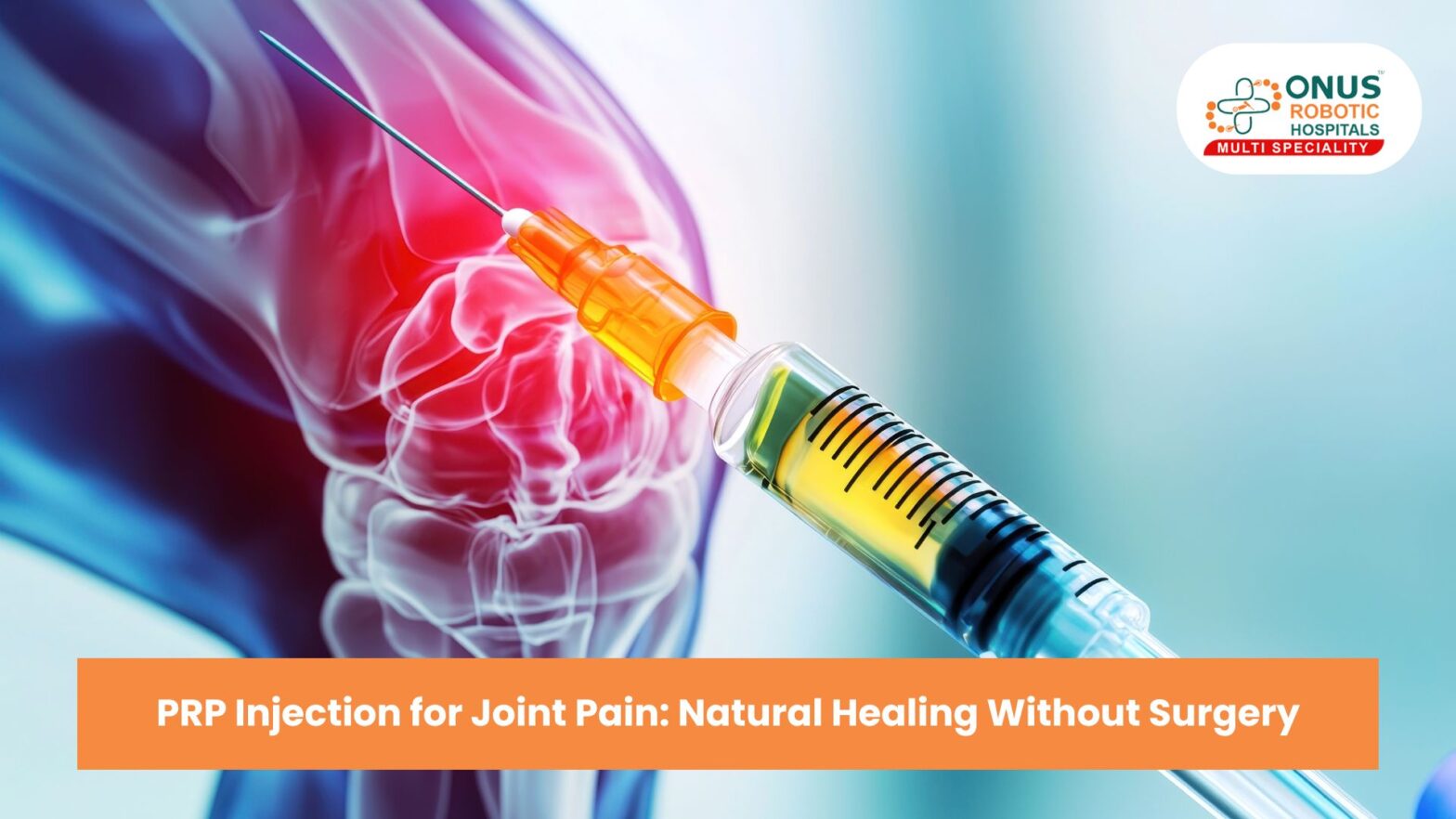
PRP Injection for Joint Pain: Natural Healing Without Surgery: Dr. Balaraju Naidu, Robotic Orthopedic Surgeon
Joint pain has become extremely common today — whether due to sports injuries, long working hours, arthritis, or age-related wear and tear. Many people rely on painkillers for temporary relief, while a few fear that surgery might be the only solution.
But modern regenerative orthopedics now offers a safe and natural alternative: PRP Therapy (Platelet-Rich Plasma Injection).
At ONUS Robotic Hospitals, we use PRP therapy to heal joints and tissues from the inside, using the body’s own healing power — without surgery.
⭐ What is PRP Therapy?
PRP stands for Platelet-Rich Plasma.
Your blood contains platelets — cells responsible for repairing injuries and promoting tissue healing.
In PRP therapy:
- A small amount of your blood is drawn.
- The blood is processed in a centrifuge machine to increase the platelet concentration.
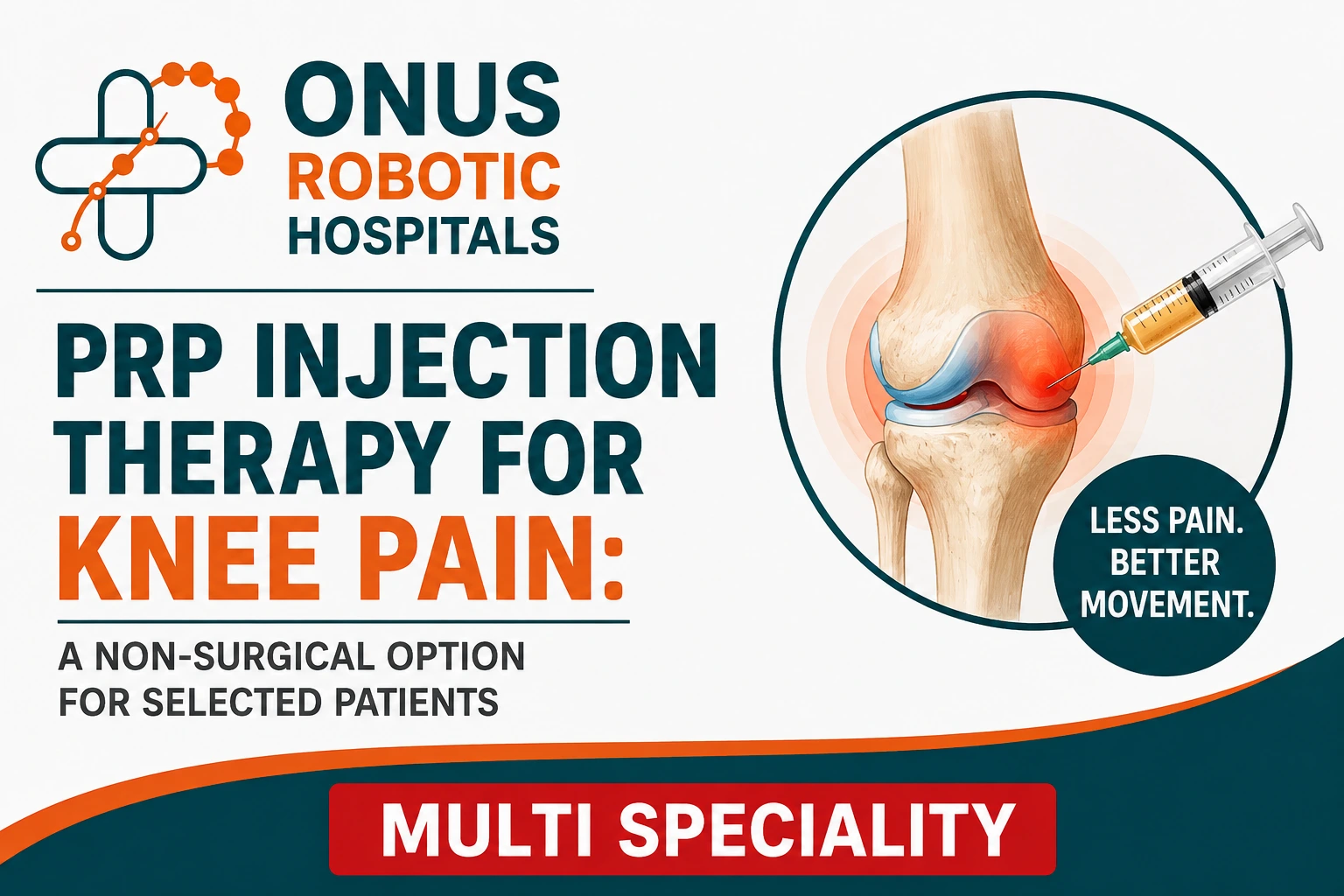
- This platelet-rich plasma is then injected directly into the injured or painful joint.
This boosts natural healing and reduces pain from the root cause.
🧬 How Does PRP Work?
PRP contains growth factors that help your tissues heal.
After injection, these growth factors:
- Reduce inflammation
- Improve blood supply
- Repair damaged cartilage, tendons & ligaments
- Strengthen joint support
- Improve movement and flexibility
Unlike painkillers, PRP does not just mask pain — it actually heals the tissues.
✅ Conditions Where PRP Is Effective
PRP is useful for treating:
| Condition | Example Pain Areas |
| Knee Osteoarthritis | Knee joint pain, stiffness |
| Tennis Elbow / Golfer’s Elbow | Outer/inner elbow pain |
| Shoulder Rotator Cuff Injury | Shoulder pain, reduced lifting |
| Plantar Fasciitis (Heel Pain) | Morning heel pain |
| Ligament & Muscle Injuries | Sports-related injuries |
| Hip & Ankle Pain | Joint degeneration or sprain |
PRP is especially effective in early to moderate arthritis and in active individuals, helping them avoid or delay surgery.
🩺 PRP Procedure – Step-by-Step
The procedure is simple and safe:
- Blood Collection – 10–15 ml of blood is drawn.
- Processing – Platelets are separated using a centrifuge.
- Injection – PRP is injected into the affected joint under ultrasound guidance for precision.
- Rest & Recovery – You can go home the same day.
No admission • No stitches • No anesthesia • No side-effects
⏱ When Will You See Results?
PRP works gradually because it heals naturally.
| Time | What Happens |
| Week 1 | Mild soreness possible |
| Week 2–4 | Gradual pain reduction |
| Week 6–12 | Best results in pain relief & mobility |
Most patients require 1–3 sessions, depending on severity.
🧑🤝🧑 Who is a Good Candidate?
PRP is suitable for:
- Adults with joint pain or tendon injuries
- Patients wanting to avoid or delay surgery
- Athletes with soft tissue injuries
- Early to moderate arthritis patients
PRP may not be effective in severe end-stage arthritis, where joint replacement may be needed.
🔄 Post-PRP Care
For best results:
- Avoid heavy exercise for 48 hours
- Begin physiotherapy after 3–5 days
- Avoid painkillers (they reduce PRP effect)
- Maintain hydration & protein-rich diet
PRP + Physiotherapy = Best Recovery
🛡️ Is PRP Safe?
Yes.
Since PRP is prepared from your own blood, it is:
- 100% natural
- Non-allergic
- Free from chemical drugs
- Safe for long-term use
📍 Where to Get PRP Done?
For accurate results, PRP must be:
- Prepared in a sterile medical environment
- Injected under proper guidance
- Evaluated by an orthopedic specialist
At ONUS Robotic Hospitals, we specialize in Regenerative Orthopedic treatments including PRP, stem-cell support therapy, and robotic joint rehabilitation.