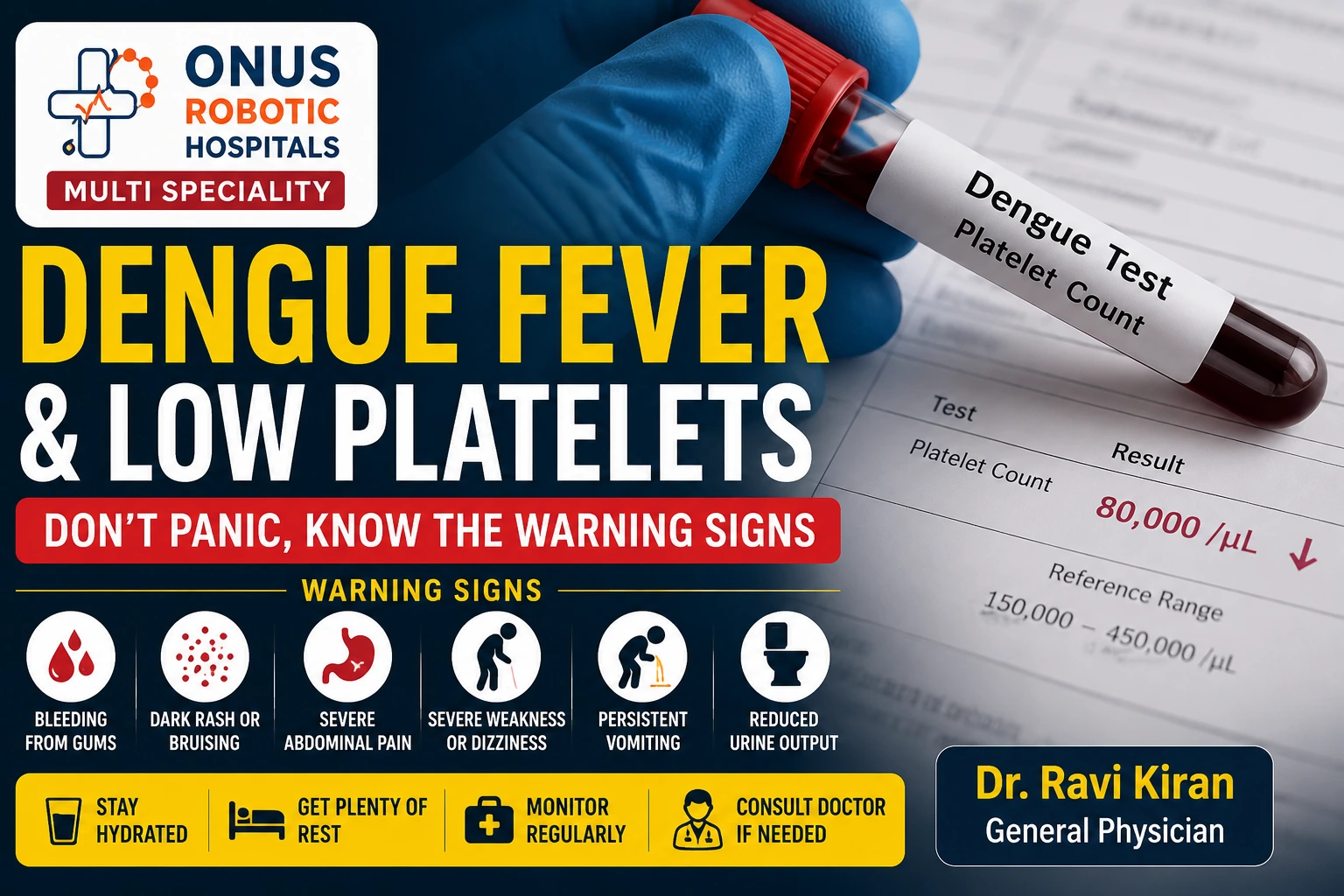
Dengue Fever & Low Platelets: Don’t Panic, Know the Warning Signs – By Dr. Ravi Kiran | Diabetologist, Onus Robotic Hospital
Dengue fever is one of the most common mosquito-borne viral infections, especially during the rainy season. One of the biggest concerns among patients diagnosed with dengue is a fall in platelet count. Many people become anxious when their platelet count drops below 1 lakh (100,000) or reaches 80,000, fearing that it automatically means a life-threatening condition.
However, a low platelet count alone does not always indicate severe dengue. What matters most is the patient’s overall condition, hydration status, and whether warning signs of severe dengue are present.
In this article, Dr. Ravi Kiran, General Physician at ONUS Robotic Hospitals, explains why platelets decrease during dengue, when patients should remain calm, the warning signs that require immediate medical attention, and how proper monitoring can help prevent complications.
What Is Dengue Fever?
Dengue fever is a viral infection caused by the dengue virus, which spreads through the bite of an infected Aedes mosquito.
It is common in tropical and subtropical regions, especially during the monsoon season when mosquito breeding increases.
Early diagnosis and proper medical supervision are essential for safe recovery.
Why Do Platelets Decrease in Dengue?
Platelets are tiny blood cells that help control bleeding by forming blood clots.
During dengue infection, platelet levels may decrease because:
- The virus temporarily affects bone marrow function, reducing platelet production.
- The immune system destroys infected platelets more rapidly.
- Increased inflammation leads to platelet consumption.
A falling platelet count is a common feature of dengue and does not always indicate severe disease.
Is a Platelet Count of 80,000 Dangerous?
Many patients panic when they hear their platelet count is 80,000 or below 1 lakh.
In reality:
- Some patients remain stable even with lower platelet counts.
- Platelet count is only one part of the overall assessment.
- Doctors also evaluate hydration, blood pressure, pulse rate, urine output, bleeding, and other clinical findings.
If the patient is otherwise stable, drinking fluids well, and has no warning signs, careful observation under medical supervision is often sufficient.
When Should You Stay Calm?
Patients with dengue may not require aggressive treatment simply because platelets are low.
Generally, careful monitoring may be appropriate if the patient:
- Is alert and conscious
- Is able to drink enough fluids
- Has stable blood pressure
- Has no active bleeding
- Passes urine normally
- Has no severe abdominal pain
- Does not have persistent vomiting
Regular follow-up and repeat blood tests help monitor recovery.
Why Hydration Is So Important
One of the most important aspects of dengue management is maintaining proper hydration.
Adequate fluid intake helps:
- Maintain blood circulation
- Prevent dehydration
- Support kidney function
- Reduce complications caused by plasma leakage
- Improve overall recovery
Depending on the patient’s condition, doctors may recommend oral fluids or intravenous (IV) fluids.
Never ignore signs of dehydration.
Dengue Warning Signs That Need Immediate Medical Attention
Although many dengue patients recover with supportive care, some may develop severe dengue.
Consult a doctor immediately if you notice:
- Bleeding from the gums
- Black or tarry stools
- Blood in vomit
- Dark rashes or extensive bruising
- Bleeding under the skin
- Severe weakness or dizziness
- Persistent vomiting
- Severe abdominal pain
- Reduced urine output
- Cold or clammy skin
- Difficulty breathing
- Confusion or excessive drowsiness
These warning signs require urgent medical evaluation and should never be ignored.
📍 Dr. Ravi Kiran
Diabetologist & Preventive Medicine Specialist
Onus Robotic Hospital, Hyderabad