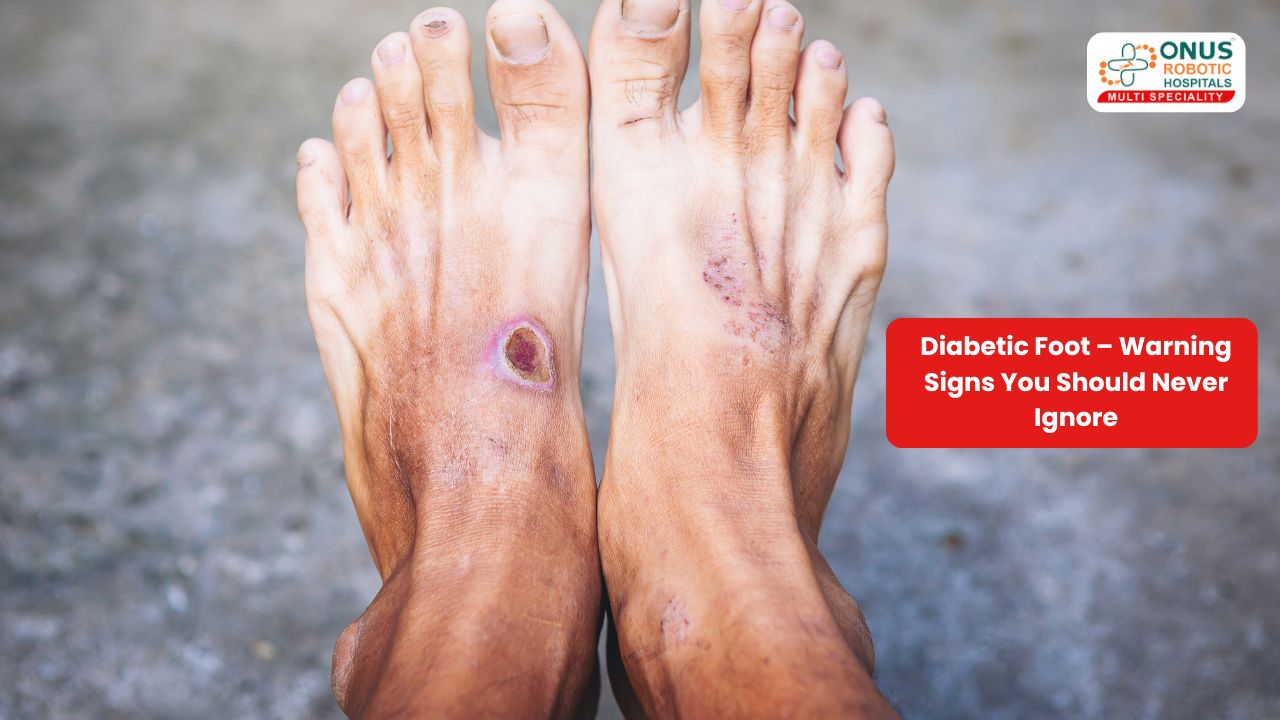
Diabetic Foot – Warning Signs You Should Never Ignore – By Dr. Balaraju Naidu, Robotic Orthopedic Surgeon, ONUS Robotic Hospitals
How Small Wounds in Diabetes Can Become Dangerous
Do you have diabetes and notice a small cut, wound, or blister on your foot that is not healing?
Many people ignore minor foot injuries, assuming they will heal naturally.
However, in patients with diabetes, even a small wound can develop into Diabetic Foot, a serious condition that may lead to infection, gangrene, or even amputation if untreated.
The good news is that early diagnosis and proper care can prevent severe complications and save the foot.
What Is Diabetic Foot?
Diabetic foot refers to foot problems that occur due to long-term diabetes.
High blood sugar affects:
- Nerves
- Blood vessels
- Immune system
- Wound healing
As a result:
- Sensation decreases
- Blood circulation reduces
- Wounds heal slowly
- Infection risk increases
This combination makes foot injuries dangerous in diabetic patients.
Why Do Wounds Heal Slowly in Diabetes?
Diabetes affects the body’s ability to heal.
Key Reasons:
1. Nerve Damage
Known as Diabetic Neuropathy
This condition causes:
- Loss of sensation
- Reduced pain awareness
- Unnoticed injuries
Patients may not feel wounds.
2. Poor Blood Circulation
Reduced blood flow delays healing.
This condition is called:
Peripheral Arterial Disease
Poor circulation means:
- Less oxygen reaches tissues
- Healing becomes slow
- Infection risk increases
3. Weak Immune System
High blood sugar weakens the body’s defense system.
This increases:
- Infection risk
- Delayed healing
- Tissue damage
Early Warning Signs of Diabetic Foot
Recognizing symptoms early can prevent complications.
Common warning signs include:
- Small wounds that do not heal
- Redness or swelling
- Foot pain or burning sensation
- Numbness in the feet
- Skin cracks or ulcers
- Foot deformity
These symptoms require medical attention.
Danger Signs (Seek Immediate Medical Care)
Some symptoms indicate serious infection.
Consult a doctor immediately if you notice:
- Non-healing wound
- Pus discharge
- Bad smell from wound
- Blackened skin
- Fever with foot wound
- Severe swelling
These may indicate gangrene, a life-threatening condition.
Common Causes of Diabetic Foot Problems
Several factors increase risk.
Poor Foot Care
Common mistakes include:
- Walking barefoot
- Ignoring minor injuries
- Improper footwear
- Delayed treatment
Uncontrolled Diabetes
High blood sugar increases:
- Infection risk
- Nerve damage
- Healing problems
Smoking
Smoking reduces blood circulation.
This significantly increases:
- Risk of ulcers
- Risk of amputation
How Is Diabetic Foot Diagnosed?
Diagnosis usually involves:
Clinical Examination
Doctors assess:
- Wound size
- Infection
- Blood circulation
- Nerve function
Diagnostic Tests
If required:
- Blood sugar tests
- X-ray
- Doppler scan
- Wound culture
These tests help determine severity.
Treatment for Diabetic Foot
Treatment depends on wound severity.
1. Wound Care
The most important step.
This includes:
- Cleaning the wound
- Removing dead tissue
- Dressing changes
- Infection control
Proper wound care prevents complications.
2. Antibiotics
Used when infection is present.
These help:
- Control infection
- Prevent spread
- Promote healing
3. Blood Sugar Control
Essential for recovery.
Maintaining normal sugar levels:
- Improves healing
- Reduces infection risk
4. Advanced Treatments
In moderate to severe cases:
- Surgical wound cleaning
- Skin grafting
- Vascular treatment
These procedures help save the limb.
5. Amputation (Last Resort)
Amputation is considered only when:
- Infection spreads
- Tissue becomes dead
- Life is at risk
Early treatment prevents this outcome.
Daily Foot Care Tips for Diabetic Patients
Simple habits can prevent complications.
Daily Foot Care Checklist
- Inspect feet daily
- Wash feet with lukewarm water
- Dry feet carefully
- Moisturize dry skin
- Wear proper footwear
- Trim nails carefully
- Never walk barefoot
These steps significantly reduce risk.
When Should You See a Doctor?
Consult a doctor immediately if:
- Wound does not heal within 3 days
- Foot becomes red or swollen
- Pain increases
- Numbness develops
- Skin color changes
Early treatment can save the foot.
Final Takeaway
Diabetic foot is:
✔ Preventable
✔ Treatable
✔ Dangerous if ignored
Early treatment can save your foot—and your life.
Never ignore small wounds if you have diabetes.
For Appointments:
Dr. Balaraju Naidu, Robotic Orthopedic Surgeon
ONUS Robotic Hospitals – Hyderabad
👉 link: contact-us or book-appointment