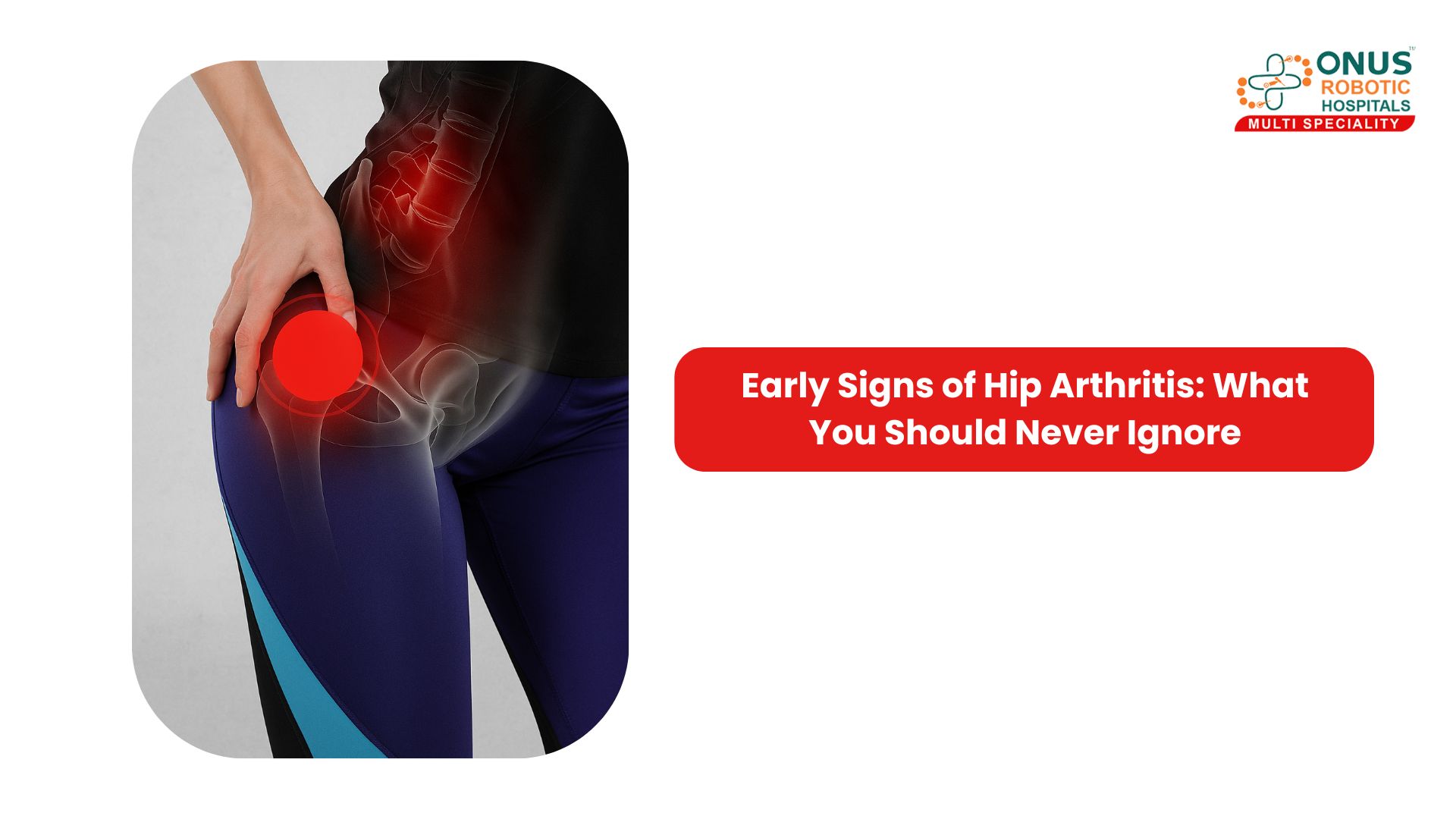
Early Signs of Hip Arthritis: What You Should Never Ignore: By Dr. Balaraju Naidu, Robotic Orthopedic Surgeon, ONUS Robotic Hospitals
Hip arthritis is one of the most common causes of lower body pain among adults. But the surprising truth is—it doesn’t start suddenly. The early warning signs are often subtle and easy to miss.
Recognizing them early can help prevent worsening of the condition and delay the need for surgery.
In this article, we explain the early signs, causes, diagnosis, and treatment options available at ONUS Robotic Hospitals.
1. What Is Hip Arthritis?
Hip arthritis is the wearing away of the cartilage that cushions the hip joint.
As the cartilage thins, bones begin to rub against each other, causing:
- Pain
- Inflammation
- Stiffness
- Reduced mobility
The most common type is Osteoarthritis, but hip arthritis can also result from injury, genetics, or inflammatory conditions.
2. Early Signs of Hip Arthritis
1. Deep Groin Pain
This is the hallmark sign. The pain may feel dull, burning, or sharp and commonly worsens with:
- Walking long distances
- Climbing stairs
- Standing for long periods
- Turning the leg inward
2. Morning or After-Rest Stiffness
If your hip feels tight after waking up or sitting for long, it could be arthritis starting to form.
3. Reduced Hip Flexibility
Struggling to:
- Wear socks
- Cross legs
- Squat
- Sit comfortably on the floor
Happens because the joint begins to lose its smooth movement.
4. Clicking or Catching Sensation
This indicates irregular joint surfaces or labral damage.
5. Limping or Uneven Walking
As the joint becomes painful, the body shifts weight to protect it, leading to limping.
6. Pain Spreading to Thigh, Buttock, or Knee
Referred pain is extremely common and often misdiagnosed as a knee problem.
7. Pain After Activity
Hip arthritis pain typically increases after physical work, not during rest.
3. Who Is at Higher Risk?
- Age > 40
- Previous hip injury
- Obesity
- Family history of arthritis
- Sedentary lifestyle
- Athletes with repetitive hip strain
4. Diagnosis at ONUS Robotic Hospitals
We use a combination of:
- X-rays to assess joint space
- MRI to evaluate cartilage/labrum
- Gait analysis & posture study
- Clinical examination by expert orthopedic surgeons
Early detection helps preserve the natural joint for many years.
5. Treatment Options
Non-Surgical
- Physiotherapy
- Hip strengthening exercises
- Weight control
- Lifestyle modifications
- Pain-relief injections (if needed)
Surgical Options (Advanced Cases)
Robotic Hip Replacement at ONUS provides:
- Precision up to 0.1 mm
- Faster recovery
- Less pain
- Long-lasting implants
6. When to See a Doctor?
If symptoms persist for more than 3 weeks, consult an orthopedic specialist immediately.
Hip arthritis doesn’t start suddenly — your body gives many early signals. Recognizing them early can help you stay active, pain-free, and mobile for years.
For expert diagnosis and advanced robotic hip treatments, visit ONUS Robotic Hospitals.
📞 For Appointments:
ONUS Robotic Hospitals – Hyderabad