Meniscus Injuries – When Do You Really Need Surgery?: By Dr. Balaraju Naidu, Robotic Orthopedic Surgeon, ONUS Robotic Hospitals
Understanding the Meniscus
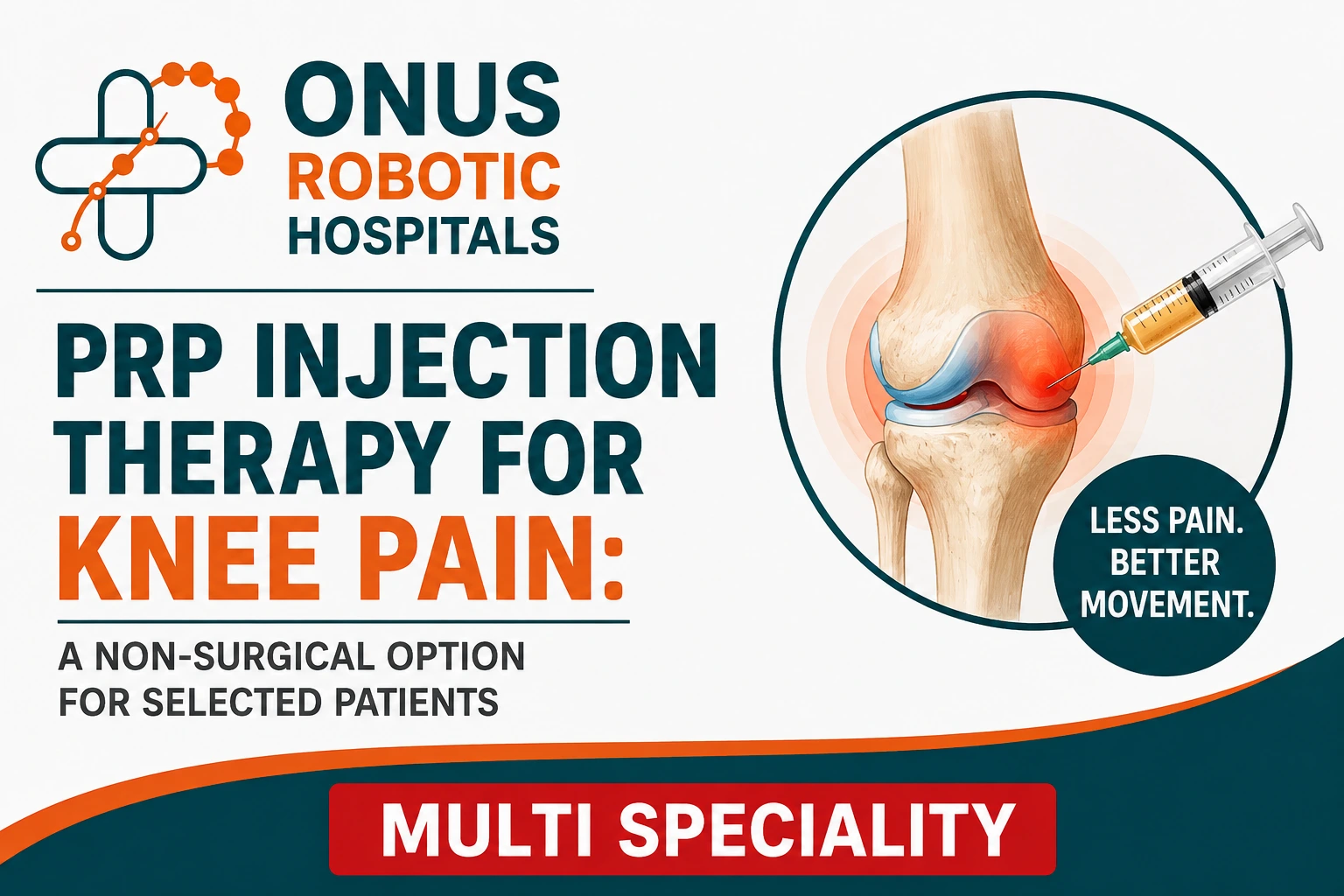
The meniscus is a vital shock absorber inside the knee joint. Each knee has two menisci — medial (inner) and lateral (outer). Together, they distribute weight, protect cartilage, and stabilize the joint. A tear in this structure can disrupt movement and lead to long-term arthritis if ignored.
Why Meniscus Tears Happen
Meniscus injuries are commonly seen in:
- Athletes – due to twisting, pivoting, or sudden stops
- People above 40 – degenerative tears
- Accidents & falls
Depending on the cause, the tear may be small and stable or large and unstable.
Symptoms You Should Never Ignore
- Knee pain along inner or outer joint line
- Swelling (immediate or delayed)
- Locking or catching while bending
- Difficulty climbing stairs
- Clicking or popping sensations
- Unable to squat fully
If your knee locks or gets stuck, it indicates a more serious tear.
Not All Meniscus Tears Need Surgery
Many patients recover well with conservative treatment.
Surgery is usually not required for:
- Degenerative tears
- Stable, small tears
- Mild symptoms
- Older adults with minimal functional limitation
Non-surgical treatment includes:
- Rest & activity modification
- Ice therapy
- Anti-inflammatory medications
- Physiotherapy for muscle strengthening
- Knee support braces
Most improve within 4–6 weeks.
When Surgery Is Needed
Here are the red flags:
1. Knee Locking or Stuck Movement
This happens when a flap of torn meniscus obstructs normal joint motion. Surgical correction is the only solution.
2. Bucket-Handle Tear
This is an emergency meniscus tear where a large piece flips like a handle inside the joint. Needs urgent arthroscopic repair.
3. Persistent Pain Despite Physiotherapy
If swelling or pain continues after 6 weeks of guided physiotherapy, it suggests an unstable tear.
4. Meniscus Root Tears
Tears at the attachment point cause the entire meniscus to lose function — early surgery prevents arthritis.
5. Combined ACL + Meniscus Tear
Most athletes require simultaneous ACL reconstruction + meniscus repair for the best outcome.
Types of Meniscus Surgeries
Modern treatments use keyhole arthroscopy with minimal scars.
✔ Meniscus Repair
Stiches the meniscus and preserves tissue. Best for younger patients or large vertical tears.
✔ Partial Meniscectomy
Only the torn portion is removed; recovery is faster but long-term wear is possible.
✔ Root Repair
Fixing tears at the meniscus root to restore stability.
✔ Meniscus Transplant
Used in rare, severe cases.
Recovery After Meniscus Surgery
- Weight-bearing: 1–2 weeks
- Stretching & strengthening: Starts early
- Full recovery: 6–12 weeks
- Sports return: 3–6 months
Not every meniscus tear needs surgery — but the ones that do, must be handled quickly. Early diagnosis at ONUS Robotic Hospitals ensures faster recovery and long-term knee protection.
📞 For Appointments:
ONUS Robotic Hospitals – Hyderabad