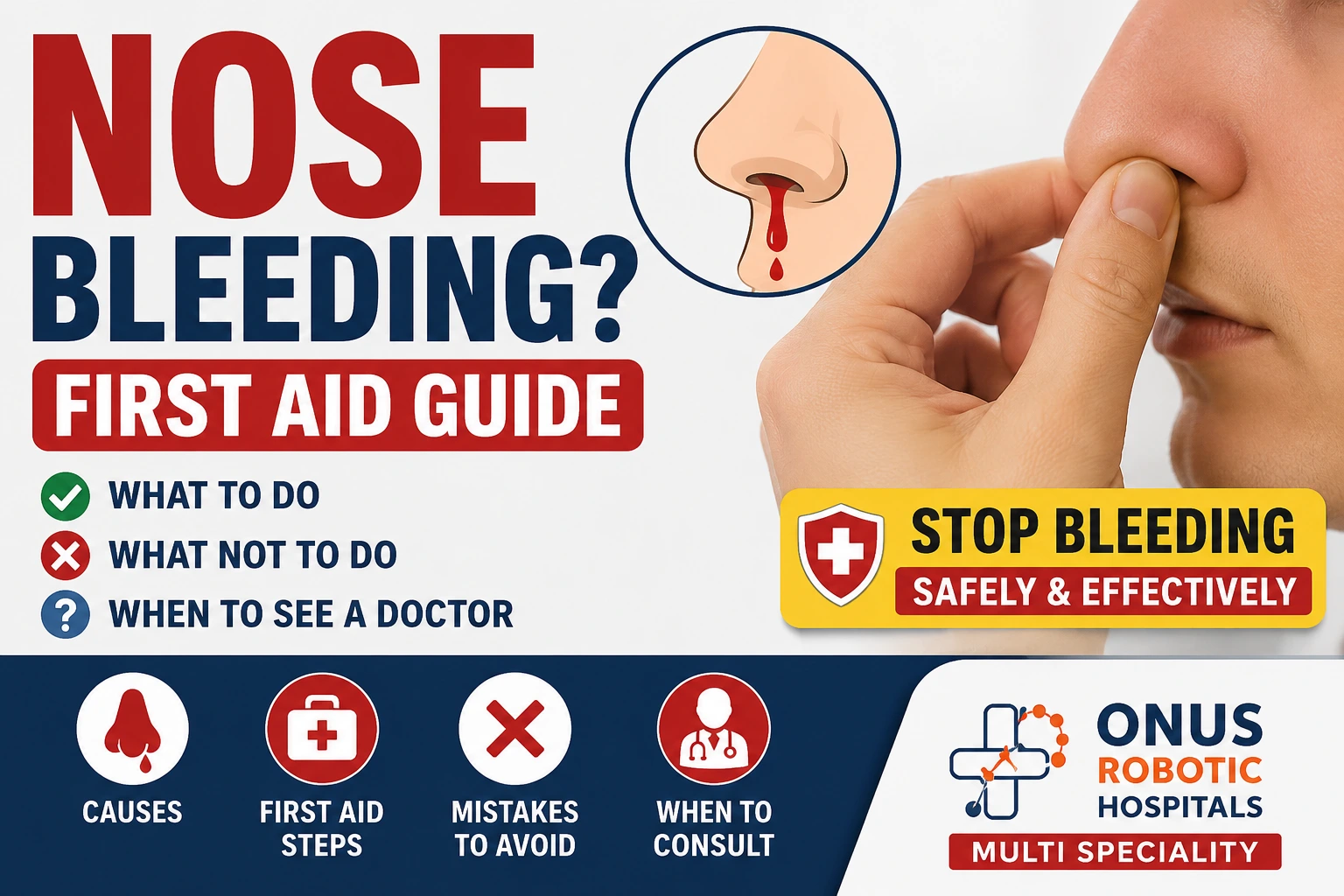
A nosebleed, medically known as epistaxis, is a common condition that can affect people of all ages. Although seeing blood coming from the nose can be alarming, most nosebleeds are not serious and can be managed safely at home with proper first aid.
However, recurrent or prolonged nosebleeds may indicate an underlying health condition that requires medical attention.
In this article, Consultant ENT Surgeon at ONUS Robotic Hospitals, explains why nosebleeds occur, the correct first aid steps, common mistakes to avoid, and when you should consult an ENT specialist.
What Is a Nosebleed (Epistaxis)?
A nosebleed occurs when the tiny blood vessels inside the nose rupture and start bleeding. The inside of the nose contains a rich network of delicate blood vessels that can easily become damaged due to dryness, irritation, injury, or certain medical conditions.
Most nosebleeds originate from the front part of the nose (anterior nosebleed), which is usually easy to control. Less commonly, bleeding may occur from deeper blood vessels at the back of the nose (posterior nosebleed), which often requires medical treatment.
Common Causes of Nosebleeds
Nosebleeds can happen for several reasons. Some are harmless, while others may require medical evaluation.
1. Dry Air
Dry weather, air conditioning, or excessive indoor heating can dry out the nasal lining, causing cracks and bleeding.
2. Nose Picking
This is one of the most common causes of nosebleeds, especially in children. Repeated irritation can damage delicate blood vessels inside the nose.
3. Allergies and Sinus Infections
Frequent sneezing, nasal irritation, and excessive blowing of the nose can lead to bleeding.
4. Minor Injury
A blow to the nose during sports, falls, or accidents can cause bleeding from damaged blood vessels.
5. High Blood Pressure
In some adults, uncontrolled hypertension may contribute to recurrent nosebleeds, particularly in older individuals.
6. Blood-Thinning Medications
Medicines such as aspirin or anticoagulants can make bleeding last longer.
7. Nasal Polyps or Growths
Occasionally, structural abnormalities or nasal growths may be responsible for repeated bleeding.
Common Causes of Nosebleeds in Children
Children frequently experience nosebleeds because the blood vessels inside their noses are delicate.
Common causes include:
- Nose picking
- Dry weather
- Frequent colds
- Allergies
- Minor injuries while playing
- Foreign objects inserted into the nose
Most childhood nosebleeds are harmless but should be evaluated if they occur frequently.
Common Causes of Nosebleeds in Adults
Adults may experience nosebleeds due to:
- High blood pressure
- Sinus infections
- Nasal allergies
- Smoking
- Dry indoor air
- Blood-thinning medicines
- Nasal trauma
- Chronic medical conditions
Persistent or recurrent nosebleeds should not be ignored.
First Aid for a Nosebleed
Knowing the correct first aid can stop most nosebleeds within a few minutes.
Step 1: Stay Calm
Remain calm and reassure the person experiencing the nosebleed.
Step 2: Sit Upright
Sit upright with your head slightly tilted forward.
Do not lie down or tilt your head backward.
Step 3: Pinch the Soft Part of the Nose
Using your thumb and index finger, firmly pinch the soft part of the nose just below the nasal bridge.
Maintain continuous pressure for 10–15 minutes without checking repeatedly.
Step 4: Breathe Through the Mouth
Continue breathing normally through your mouth while keeping pressure on the nose.
Step 5: Apply a Cold Compress
Place an ice pack or cold cloth over the bridge of the nose and cheeks to help reduce bleeding.
Consultant ENT Head & Neck Surgeon
ONUS Robotic Hospitals – Hyderabad
👉 link: contact-us or book-appointment