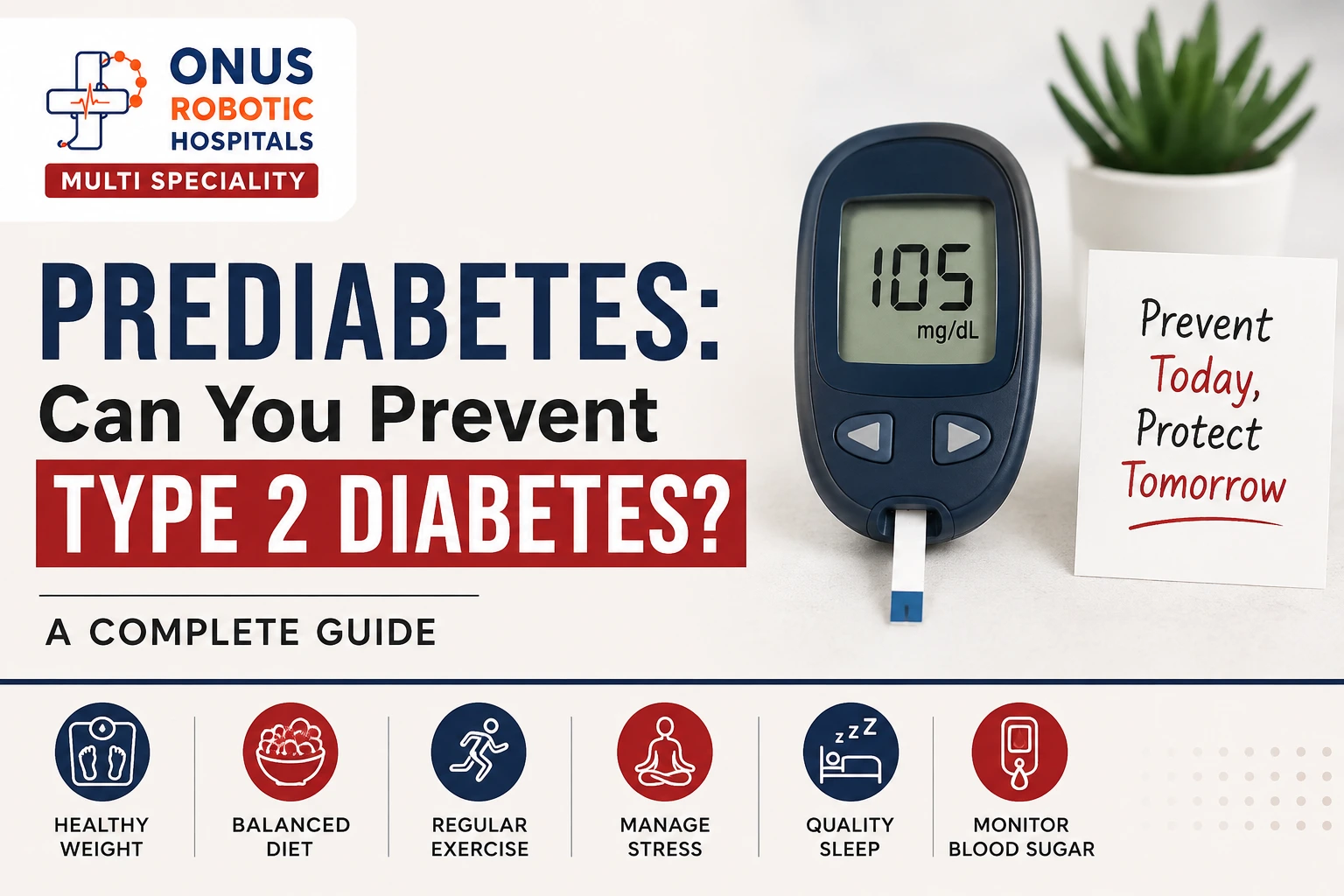
Prediabetes: Can You Prevent Type 2 Diabetes? – By Dr. Ravi Kiran | Diabetologist, Onus Robotic Hospital
A Complete Guide by Dr. P. Ravi Kiran
Introduction
Imagine visiting your doctor for a routine health check-up and hearing the words, “Your blood sugar is slightly high, but you don’t have diabetes.”
For many people, this sounds reassuring. However, what your doctor may actually be telling you is that you have prediabetes—a condition that serves as an early warning sign that your body is beginning to lose its ability to regulate blood sugar effectively.
Prediabetes is one of the fastest-growing health concerns worldwide, affecting millions of people who often have no symptoms at all. Left untreated, it can progress to Type 2 Diabetes, increasing the risk of heart disease, kidney damage, nerve disorders, fatty liver disease, stroke, and other serious complications.
The good news is that prediabetes is often reversible. With timely diagnosis, healthy lifestyle modifications, and expert medical guidance, many individuals can restore normal blood sugar levels and significantly reduce their future risk of diabetes.
At Health Vision General & Sugar Clinic, Dr. P. Ravi Kiran, General Physician, Diabetologist, and Preventive Medicine Specialist, focuses on preventing diabetes before it develops through personalized, evidence-based care.
What Is Prediabetes?
Prediabetes is a metabolic condition where blood sugar levels are higher than normal but not yet high enough to be classified as Type 2 diabetes.
Normally, insulin helps move glucose from the bloodstream into the body’s cells, where it is used for energy. In people with prediabetes, the body’s cells gradually become resistant to insulin, making it harder for glucose to enter the cells.
To compensate, the pancreas produces more insulin. Over time, however, the pancreas cannot keep up with the body’s increasing demand, leading to persistently elevated blood sugar levels.
Without intervention, many people with prediabetes develop Type 2 diabetes within a few years.
Why Does Prediabetes Develop?
Prediabetes usually develops due to a combination of genetic, lifestyle, and metabolic factors.
Common causes include:
- Insulin resistance
- Overweight and obesity
- Excess abdominal (belly) fat
- Lack of regular physical activity
- Family history of diabetes
- High-calorie and processed food consumption
- Poor sleep quality
- Chronic stress
- Fatty liver disease
- Polycystic Ovary Syndrome (PCOS)
- Increasing age
Although genetics can increase your risk, lifestyle choices often determine whether prediabetes progresses or improves.
Symptoms of Prediabetes
One of the biggest challenges with prediabetes is that most people experience no noticeable symptoms.
Some individuals may develop:
- Increased hunger
- Persistent fatigue
- Mild increase in thirst
- Frequent urination
- Difficulty losing weight
- Dark patches around the neck or armpits (Acanthosis Nigricans)
- Blurred vision in some cases
Since symptoms are often absent, routine health check-ups are the best way to detect prediabetes early.
Who Is at Risk?
You may be at higher risk if you:
- Are overweight or obese
- Have excess abdominal fat
- Have a family history of diabetes
- Have high blood pressure
- Have abnormal cholesterol or triglyceride levels
- Have fatty liver disease
- Have PCOS
- Experienced gestational diabetes during pregnancy
- Lead a sedentary lifestyle
- Are over 35 years of age
- Have a history of cardiovascular disease
Early screening is especially important for people with multiple risk factors.
How Is Prediabetes Diagnosed?
Doctors diagnose prediabetes using simple blood tests.
Common investigations include:
Fasting Blood Sugar (FBS)
Measures blood sugar after fasting for 8–10 hours.
Postprandial Blood Sugar (PPBS)
Measures blood sugar two hours after a meal.
HbA1c Test
Provides the average blood sugar level over the previous 2–3 months and is one of the most reliable tests for diagnosing prediabetes.
Oral Glucose Tolerance Test (OGTT)
Used when additional confirmation is required, especially in high-risk individuals.
Regular screening helps detect blood sugar abnormalities before permanent damage occurs.
Why Prediabetes Should Never Be Ignored
Prediabetes is not merely “slightly high sugar.”
It is an early metabolic disorder associated with increased risks of:
- Type 2 Diabetes
- Heart attack
- Stroke
- Fatty liver disease
- Kidney disease
- Nerve damage
- Vision problems
- Obesity-related complications
Ignoring prediabetes allows these risks to grow over time.
📍 Dr. Ravi Kiran
Diabetologist & Preventive Medicine Specialist
Onus Robotic Hospital, Hyderabad