Rainy Season Fevers: Why Are Fevers More Common During the Monsoon? – By Dr. Ravi Kiran | Diabetologist, Onus Robotic Hospital
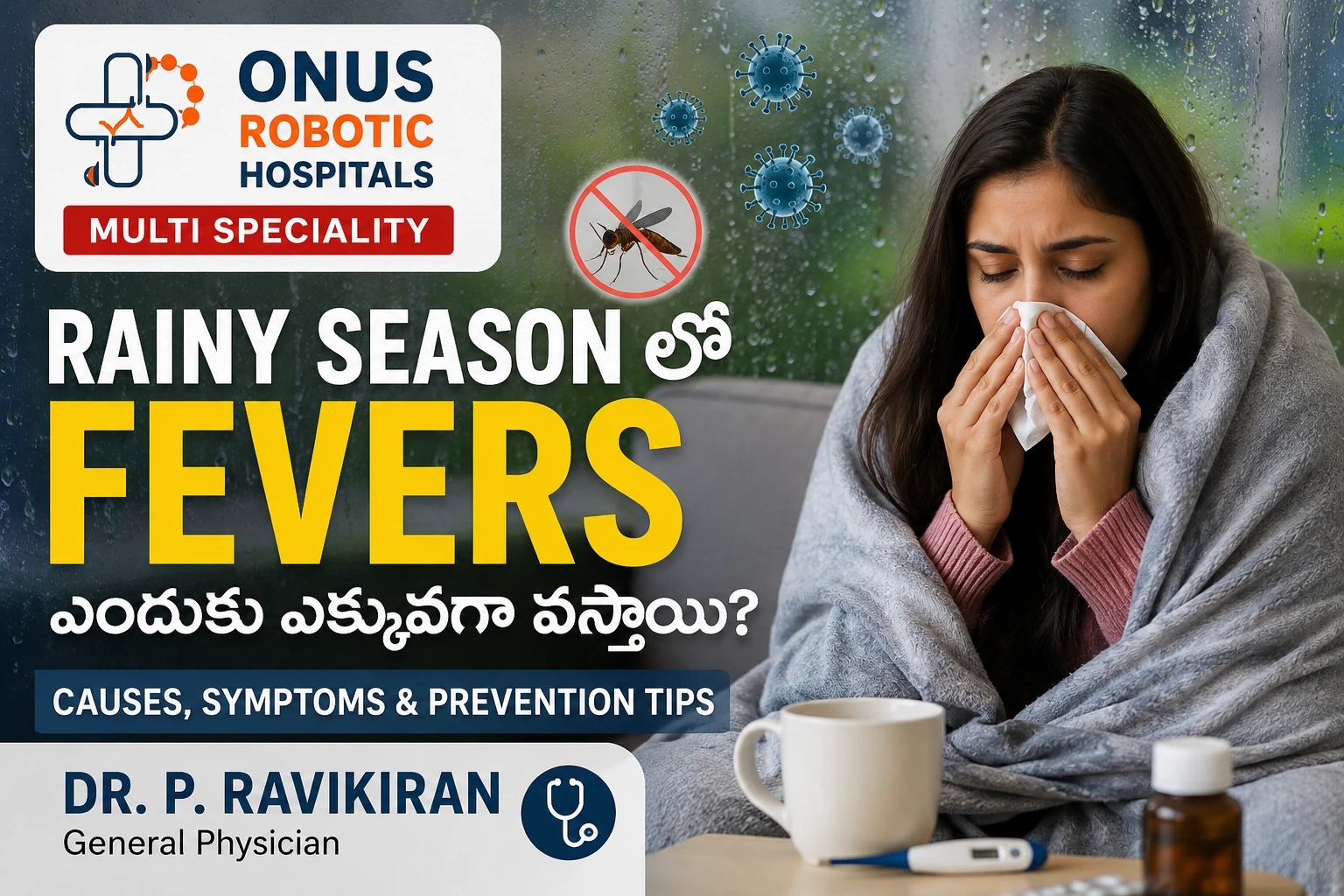
The rainy season brings much-needed relief from the summer heat, but it also increases the risk of several infections. Every year during the monsoon, hospitals witness a significant rise in patients suffering from viral fevers, dengue, malaria, stomach infections, and other seasonal illnesses.
Many people wonder why fevers become so common during the rainy season. The answer lies in the environmental changes that favor the growth and spread of disease-causing organisms.
In this article, Dr. P. Ravikiran, General Physician at ONUS Robotic Hospitals, explains the common causes of rainy season fevers, their symptoms, preventive measures, and when you should seek medical attention.
Why Do Fevers Increase During the Rainy Season?
Several factors contribute to the higher incidence of fevers during the monsoon.
These include:
- Mosquito breeding due to stagnant water
- Contaminated drinking water
- Consumption of unhygienic food
- Increased humidity that helps viruses survive longer
- Lower immunity in some individuals
Because of these factors, bacterial, viral, and mosquito-borne infections become more common during the rainy season.
Common Causes of Rainy Season Fevers
1. Mosquito-Borne Diseases
Rainwater often collects in open containers, construction sites, coolers, flower pots, discarded tyres, and drains. These stagnant water sources become breeding grounds for mosquitoes.
Mosquitoes spread serious diseases such as:
- Dengue Fever
- Malaria
- Chikungunya
These infections commonly present with high fever, body pain, weakness, headaches, and joint pain.
2. Contaminated Drinking Water
Heavy rains may contaminate drinking water with bacteria, viruses, and parasites.
Drinking unsafe water increases the risk of infections such as:
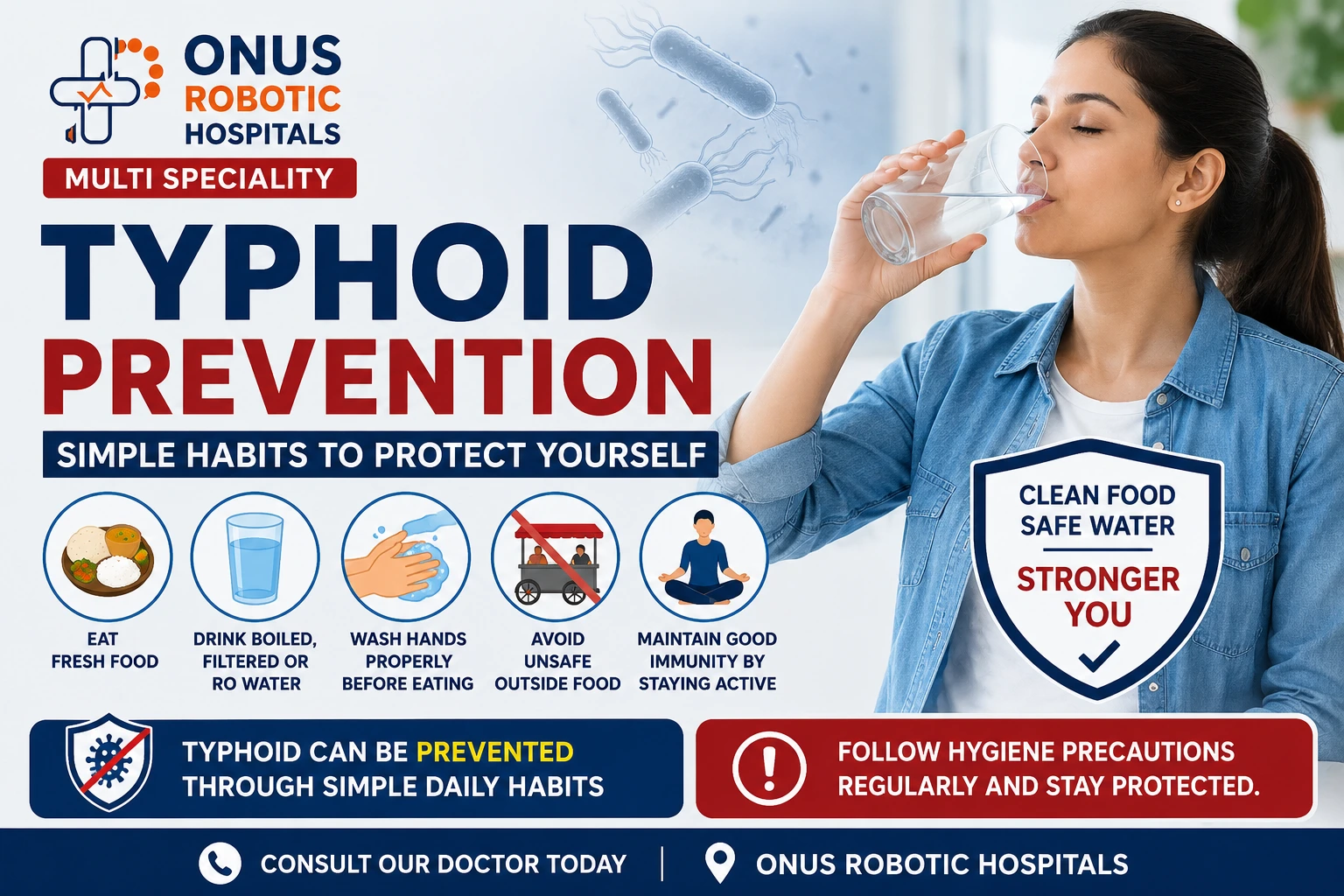
- Typhoid
- Gastroenteritis
- Cholera
- Viral stomach infections
These illnesses often cause fever along with vomiting, diarrhea, stomach pain, and dehydration.
3. Food-Borne Infections
Street food and improperly stored food are more likely to become contaminated during the rainy season.
Eating contaminated food may lead to:
- Food poisoning
- Gastrointestinal infections
- Bacterial infections
Maintaining proper food hygiene significantly reduces the risk.
4. Viral Infections
The humid weather during the rainy season allows certain viruses to survive longer in the environment.
This increases the spread of viral illnesses through:
- Sneezing
- Coughing
- Close contact
- Contaminated surfaces
Viral fever usually presents with:
- Fever
- Sore throat
- Runny nose
- Body pain
- Fatigue
5. Low Immunity
Individuals with weakened immunity are more susceptible to seasonal infections.
People at higher risk include:
- Children
- Elderly individuals
- Diabetic patients
- Pregnant women
- People with chronic illnesses
Maintaining a healthy immune system helps reduce infection risk.
Common Symptoms of Rainy Season Fevers
Symptoms vary depending on the underlying infection but may include:
- High fever
- Chills
- Headache
- Body aches
- Joint pain
- Fatigue
- Loss of appetite
- Nausea or vomiting
- Loose motions
- Stomach pain
- Weakness
- Sore throat
- Cough
Persistent or severe symptoms require immediate medical evaluation.
How Can You Protect Yourself During the Rainy Season?
Following a few simple precautions can significantly reduce your risk of infection.
Maintain Hand Hygiene
Wash your hands frequently using soap and clean water, especially:
- Before eating
- After using the restroom
- After returning home
- After touching public surfaces
📍 Dr. Ravi Kiran
Diabetologist & Preventive Medicine Specialist
Onus Robotic Hospital, Hyderabad