Sharp Heel Pain When You Wake Up – Is It Plantar Fasciitis? – By Dr. Balaraju Naidu, Robotic Orthopedic Surgeon, ONUS Robotic Hospitals
Causes, Symptoms & Treatment for Morning Heel Pain
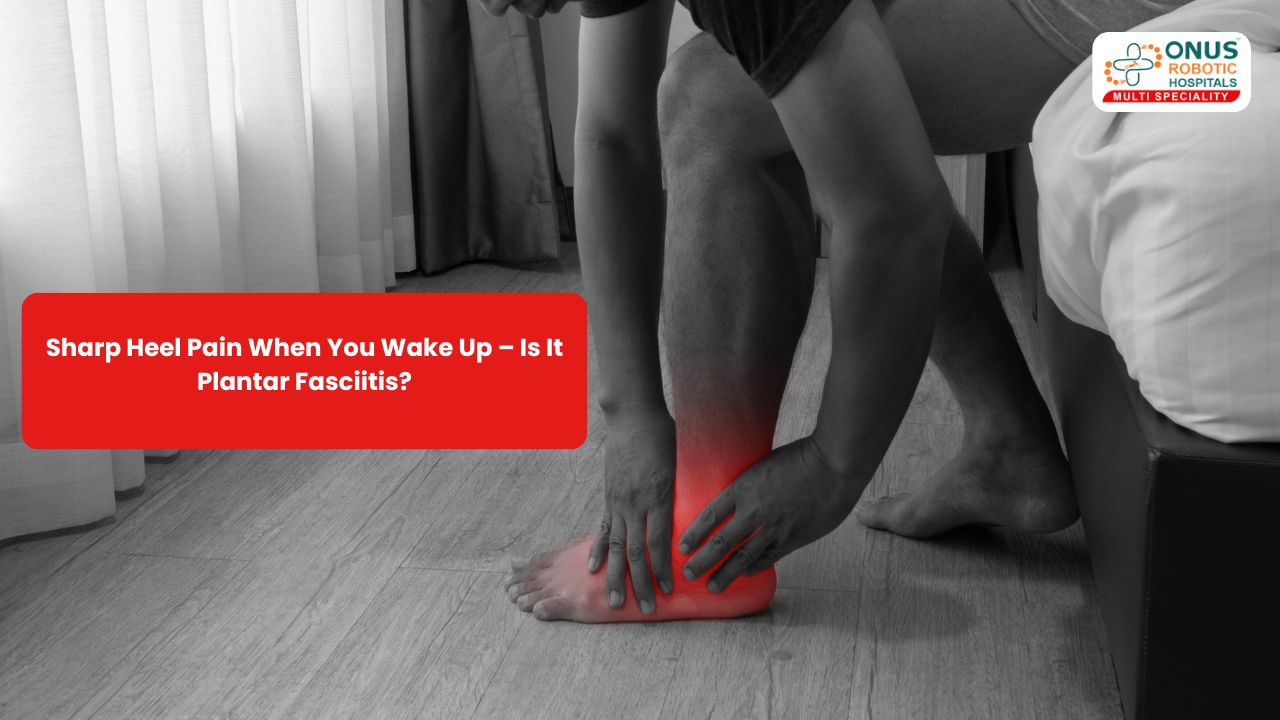
Do you feel sharp heel pain when you wake up and take your first step in the morning?
Does the pain reduce after walking for a few minutes but return after rest?
This pattern is a classic sign of Plantar Fasciitis, one of the most common causes of heel pain.
Although plantar fasciitis is painful, it is highly treatable with early care and simple lifestyle changes.
What Is Plantar Fasciitis?
The plantar fascia is a thick band of tissue that connects the heel bone to the toes and supports the arch of the foot.
Plantar fasciitis occurs when this ligament becomes:
- Inflamed
- Irritated
- Overstretched
This leads to heel pain, especially after rest.
Why Does Heel Pain Occur in the Morning?
During sleep, the plantar fascia tightens.
When you take the first step in the morning:
- The ligament suddenly stretches
- Small micro-tears become painful
- Inflammation increases
This causes the typical sharp first-step pain.
After walking for some time, the ligament warms up and pain may reduce.
Common Causes of Heel Pain
1. Prolonged Standing
Standing for long hours increases pressure on the heel.
Common in:
- Teachers
- Factory workers
- Nurses
- Shopkeepers
2. Obesity or Weight Gain
Excess body weight increases stress on the heel.
Important fact:
Every extra kilogram increases pressure on the foot.
3. Poor Footwear
Improper footwear can strain the plantar fascia.
Examples:
- Flat shoes
- Hard soles
- Worn-out footwear
- High heels
4. Tight Calf Muscles
Tight muscles increase tension on the plantar fascia.
This increases the risk of injury.
Risk Factors for Plantar Fasciitis
You may be at higher risk if you:
- Stand for long hours
- Walk barefoot frequently
- Are overweight
- Have flat feet or high arches
- Wear improper footwear
- Are aged between 30 and 60
These factors increase stress on the heel.
Common Symptoms of Plantar Fasciitis
Typical symptoms include:
- Sharp heel pain in the morning
- Pain during the first step
- Pain after long sitting or rest
- Stiffness in the foot
- Difficulty walking
- Heel tenderness
Pain may gradually worsen if untreated.
How Is Heel Pain Diagnosed?
Diagnosis usually involves:
Clinical Examination
Doctors assess:
- Pain location
- Foot movement
- Tenderness
Imaging Tests (If Needed)
In some cases:
- X-ray
- Ultrasound
- MRI scan
These tests help rule out other conditions.
Treatment Options for Plantar Fasciitis
Most patients recover without surgery.
1. Stretching Exercises
One of the most effective treatments.
Benefits:
- Reduces tension
- Improves flexibility
- Relieves pain
Common exercises:
- Calf stretch
- Foot stretch
- Toe stretch
2. Proper Footwear
Supportive footwear reduces stress on the heel.
Recommended features:
- Cushioned sole
- Arch support
- Shock absorption
3. Physiotherapy
Physiotherapy helps:
- Reduce inflammation
- Improve mobility
- Strengthen foot muscles
4. Medications
Doctors may prescribe:
- Pain relief medication
- Anti-inflammatory drugs
These help control symptoms.
5. Injection Therapy (If Needed)
Used for persistent pain.
Examples:
- Steroid injection
- PRP injection
These reduce inflammation and promote healing.
Home Remedies for Heel Pain
Simple measures can relieve symptoms.
Daily Home Care
- Apply ice to the heel
- Stretch regularly
- Avoid walking barefoot
- Use supportive footwear
- Maintain healthy body weight
Consistency is key.
Prevention Tips for Heel Pain
Preventive habits reduce recurrence.
Preventive Measures
- Maintain healthy weight
- Wear proper footwear
- Stretch daily
- Avoid prolonged standing
- Use cushioned shoes
Prevention protects long-term foot health.
When Should You See an Orthopedic Specialist?
Consult a doctor if:
- Heel pain lasts more than 2 weeks
- Pain worsens over time
- Walking becomes difficult
- Swelling develops
- Home remedies fail
Early treatment prevents chronic pain.
Final Takeaway
Heel pain is:
✔ Common
✔ Treatable
✔ Preventable
Ignoring heel pain can lead to chronic inflammation and mobility problems.
Early treatment ensures faster recovery.
For Appointments:
Dr. Balaraju Naidu, Robotic Orthopedic Surgeon
ONUS Robotic Hospitals – Hyderabad
👉 link: contact-us or book-appointment