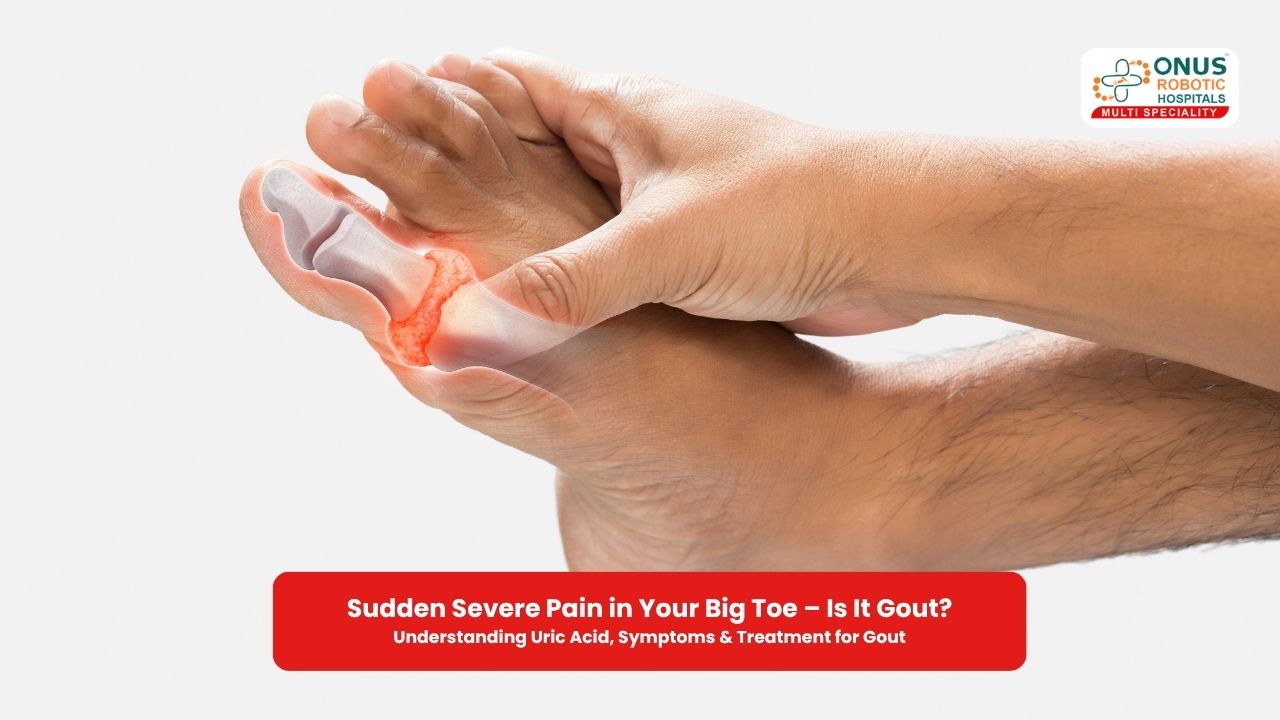
Sudden Severe Pain in Your Big Toe – Is It Gout? – By Dr. Balaraju Naidu, Robotic Orthopedic Surgeon, ONUS Robotic Hospitals
Understanding Uric Acid, Symptoms & Treatment for Gout
Do you experience sudden severe joint pain, especially in your big toe, often at night or early morning?
Does the joint become swollen, red, and extremely painful to touch?
This could be Gout, a common type of inflammatory arthritis caused by high levels of uric acid in the body.
Gout is becoming increasingly common due to lifestyle changes, dietary habits, and sedentary routines. Early diagnosis and proper management can prevent permanent joint damage and repeated attacks.
What Is Gout?
Gout is a type of arthritis that occurs when uric acid builds up in the blood and forms sharp crystals inside joints.
These crystals cause:
- Sudden severe pain
- Swelling
- Redness
- Joint inflammation
The condition often affects:
- Big toe
- Ankle
- Knee
- Foot joints
- Wrist
The big toe is the most commonly affected joint.
What Causes High Uric Acid?
Uric acid is produced when the body breaks down substances called purines, found in many foods.
Normally, uric acid dissolves in the blood and is removed through urine.
However, uric acid levels increase when:
- The body produces too much uric acid
- The kidneys cannot remove it properly
This leads to crystal formation in joints.
Common Causes of Gout
1. High-Purine Diet
Certain foods increase uric acid levels.
Examples:
- Red meat
- Organ meat
- Seafood
- Alcohol
- Sugary beverages
2. Obesity
Excess body weight increases uric acid production.
It also increases stress on joints.
3. Kidney Problems
Kidneys remove uric acid from the body.
Poor kidney function leads to:
- Uric acid buildup
- Increased gout risk
4. Sedentary Lifestyle
Lack of physical activity contributes to:
- Weight gain
- Poor metabolism
- Increased uric acid levels
Common Symptoms of Gout
Gout symptoms often start suddenly.
Typical symptoms include:
- Sudden severe joint pain
- Swelling and redness
- Pain in big toe
- Difficulty walking
- Warmth in the joint
- Tenderness
Pain is usually worst at night.
Why Gout Attacks Happen Suddenly
Gout attacks are triggered when uric acid crystals suddenly inflame the joint.
Common triggers include:
- Heavy meals
- Alcohol consumption
- Dehydration
- Stress
- Infection
These triggers can cause sudden flare-ups.
Complications of Untreated Gout
Ignoring gout can lead to serious joint damage.
Possible complications include:
- Chronic joint pain
- Joint deformity
- Kidney stones
- Reduced mobility
- Permanent joint damage
Early treatment prevents these complications.
How Is Gout Diagnosed?
Diagnosis usually involves:
Blood Tests
Used to measure:
- Uric acid levels
Joint Examination
Doctors assess:
- Swelling
- Pain
- Joint movement
Imaging Tests (If Needed)
- X-ray
- Ultrasound
These help confirm diagnosis.
Treatment Options for Gout
Treatment focuses on relieving pain and preventing future attacks.
1. Medications
Doctors may prescribe:
- Anti-inflammatory drugs
- Pain relief medications
- Uric acid–lowering medications
These help control symptoms and prevent recurrence.
2. Lifestyle Modifications
Simple changes can significantly reduce gout attacks.
Important steps:
- Maintain healthy body weight
- Drink adequate water
- Reduce alcohol intake
- Follow a balanced diet
3. Joint Protection
Protecting joints helps reduce pain.
Recommended measures:
- Rest the affected joint
- Apply cold packs
- Avoid excessive walking
4. Long-Term Uric Acid Control
Managing uric acid levels prevents recurrence.
This includes:
- Regular monitoring
- Diet control
- Medication adherence
Foods to Avoid in Gout
Patients with gout should limit:
- Red meat
- Organ meat
- Shellfish
- Alcohol
- Sugary drinks
Reducing these foods helps control uric acid levels.
Foods That Help Reduce Uric Acid
Healthy dietary choices include:
- Fruits and vegetables
- Low-fat dairy products
- Whole grains
- Plenty of water
Hydration is especially important.
Prevention Tips for Gout
Simple daily habits can reduce risk.
Preventive Measures
- Maintain healthy body weight
- Exercise regularly
- Drink adequate water
- Avoid high-purine foods
- Control blood pressure and diabetes
Prevention reduces repeated attacks.
When Should You See an Orthopedic Specialist?
Consult a doctor if:
- Sudden severe joint pain occurs
- Swelling persists
- Pain interferes with walking
- Attacks occur repeatedly
- Uric acid levels remain high
Early treatment protects joint health.
Final Takeaway
Gout is:
✔ Common
✔ Painful
✔ Preventable
Ignoring gout can lead to permanent joint damage.
Early treatment and lifestyle changes protect long-term joint health.
For Appointments:
Dr. Balaraju Naidu, Robotic Orthopedic Surgeon
ONUS Robotic Hospitals – Hyderabad
👉 link: contact-us or book-appointment