Tonsilloliths: Causes, Symptoms & Treatment for Tonsil Stones- By Dr. Akshitha Reddy, ENT Specialist, ONUS Robotic Hospitals
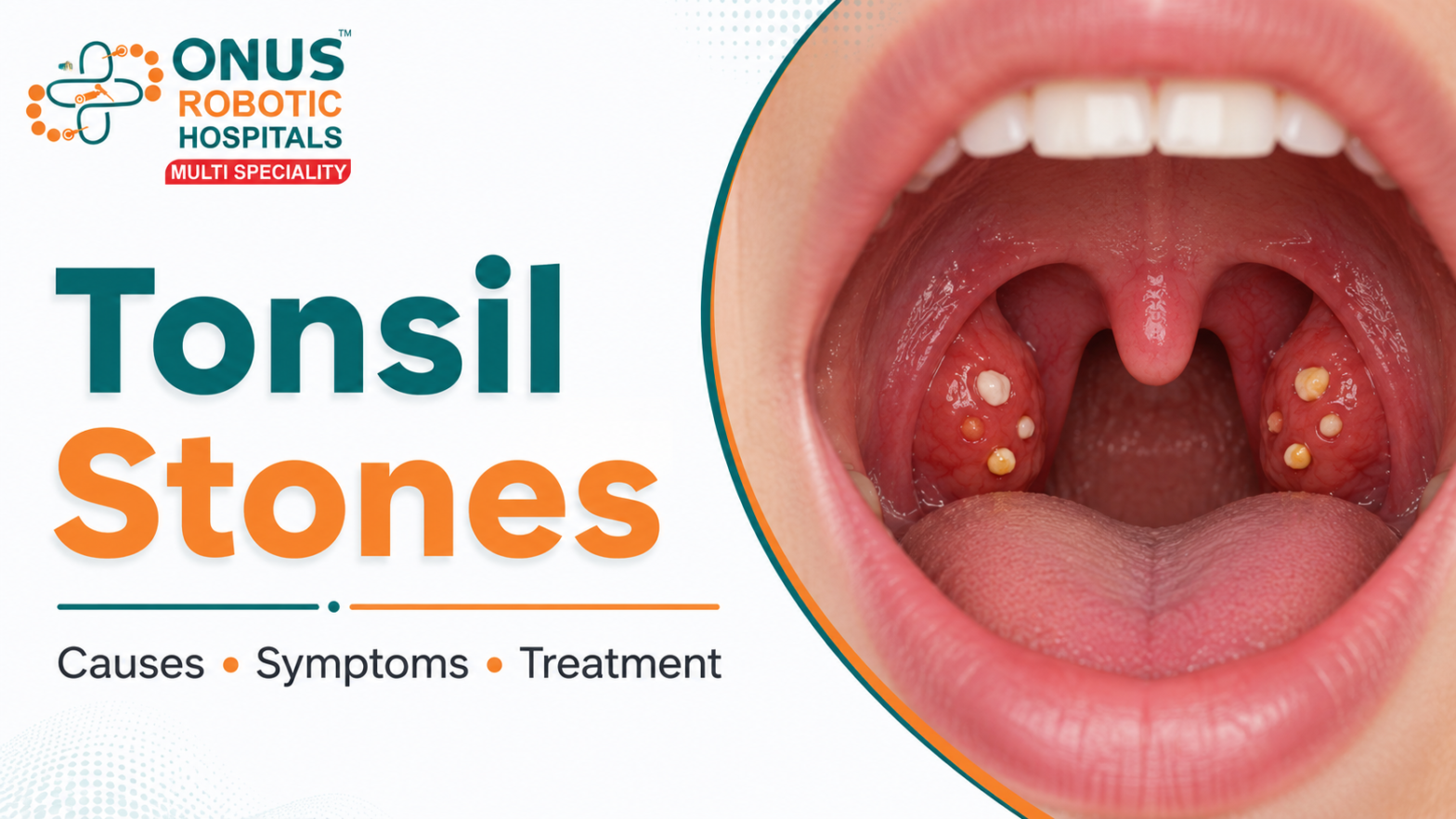
Tonsilloliths, commonly known as tonsil stones, are small white or yellow deposits that form inside the tiny pits and crevices of the tonsils. These stones are made of trapped food particles, dead cells, mucus, bacteria, fungi, and minerals that harden over time. They are usually not dangerous, but they can cause persistent bad breath, throat irritation, ear pain, difficulty swallowing, and repeated discomfort in some patients.
Many people first notice tonsil stones while looking in the mirror, coughing out small white particles, or because of bad breath that does not improve even after brushing.
What Are Tonsilloliths?
The tonsils are soft tissue structures located at the back of the throat. They contain natural folds and pits called tonsillar crypts. In some people, these crypts are deeper, making it easier for debris and bacteria to get trapped.
Over time, the trapped material may harden and form tonsil stones. These stones may be very small and symptom-free, or they may become larger and cause throat symptoms.
Why Do Tonsil Stones Form?
Tonsil stones form when debris gets collected in the tonsil crypts and hardens. Common contributing factors include:
Poor oral hygiene
Recurrent throat infections
Chronic tonsillitis
Post-nasal drip
Food particle accumulation
Bacterial growth in tonsillar crypts
Smoking
Dehydration
Deep tonsil crypts
People with frequent throat infections or chronic tonsil inflammation may be more prone to developing tonsilloliths.
Common Symptoms of Tonsil Stones
Small tonsil stones may not cause any symptoms. Larger or recurrent stones may cause:
Persistent bad breath
Foreign body sensation in the throat
Difficulty swallowing
Throat irritation or discomfort
Ear pain due to referred pain
White or yellow spots on the tonsils
Bad taste in the mouth
Repeated throat infections
Cough or throat clearing
Swollen or irritated tonsils
Bad breath is one of the most common and disturbing symptoms. Tonsil stones can also cause sore throat, earache, and difficulty swallowing in some patients.
Tonsil Stones or Throat Infection?
Many patients mistake tonsil stones for pus points or infection. White or yellow spots on the tonsils can be seen in both tonsil stones and tonsillitis. Tonsillitis may also cause red swollen tonsils, sore throat, fever, painful swallowing, bad breath, and neck gland swelling.
This is why proper ENT evaluation is important, especially if symptoms are recurrent, painful, or associated with fever.
How Are Tonsil Stones Diagnosed?
Diagnosis is usually simple and is done through ENT examination. In many cases, the stones are visible on the tonsils.
The ENT specialist may perform:
Throat examination
Oral cavity examination
Tonsil inspection
Nasal or throat endoscopy if needed
Imaging such as CT scan only in rare or unclear cases
Most tonsil stones do not need advanced testing unless they are hidden, recurrent, unusually large, or associated with other symptoms.
Treatment Options for Tonsilloliths
Treatment depends on the size of the stones, frequency of recurrence, symptoms, and whether the patient also has chronic tonsillitis.
1. Home Care for Small Tonsil Stones
Small tonsil stones may come out on their own. Helpful care includes:
Warm salt water gargles
Brushing twice daily
Tongue cleaning
Flossing
Drinking enough water
Avoiding smoking
Gargling after meals
The American Academy of Family Physicians notes that tonsil stones often fall out on their own and that brushing and warm salt water gargles may help.
2. Medical Treatment
If there is infection, inflammation, tonsillitis, or throat pain, the doctor may prescribe medicines based on the cause. Antibiotics are used only when bacterial infection is suspected or confirmed. For bacterial tonsillitis, antibiotics may be prescribed by a healthcare professional.
3. Clinic-Based Tonsil Stone Removal
For larger stones or stones causing discomfort, an ENT specialist can remove them safely in the clinic. Avoid using sharp objects, pins, toothpicks, or forceful self-removal because this can injure the tonsils and cause bleeding or infection.
4. Tonsillectomy
In patients with recurrent tonsillitis, frequent tonsil stones, severe bad breath, repeated discomfort, or persistent symptoms, tonsil removal surgery may be considered. Large or repeatedly recurring tonsil stones may need ENT removal, and if they continue to reform and cause health problems, tonsillectomy may become an option.
Can Tonsil Stones Be Prevented?
Prevention is possible in many patients, especially when oral hygiene and throat health are improved.
Helpful prevention tips include:
Brush teeth twice daily
Clean the tongue regularly
Gargle after meals
Drink plenty of water
Treat sinus allergy and post-nasal drip
Avoid smoking
Maintain dental hygiene
Get ENT evaluation for recurrent throat infections
When Should You Visit an ENT Specialist?
Consult an ENT doctor if you have:
Persistent bad breath despite brushing
Recurrent white or yellow deposits in the throat
Difficulty swallowing
Repeated throat infections
Throat pain or irritation
Ear pain with throat discomfort
Bleeding from the tonsil area
Large or painful tonsil stones
Symptoms that keep coming back
Mayo Clinic Health System advises seeing an ENT professional if the tonsils look red, bleed easily, or if sore throat or ear pain occurs, especially after trying to remove or manipulate tonsil stones.
Expert ENT Care at ONUS Robotic Hospitals
If you are suffering from recurrent tonsil stones, bad breath, throat discomfort, or repeated throat infections, proper ENT evaluation is important to identify the underlying cause and provide the right treatment.
At ONUS Robotic Hospitals, patients with tonsilloliths, chronic tonsillitis, throat infections, bad breath related to tonsil problems, sinus allergy, post-nasal drip, and other ENT conditions receive expert evaluation and personalized treatment.
For Appointments:
👩⚕️ Dr. Akshitha Reddy
ENT Specialist
Providing ethical, evidence-based care for ear, nose, throat, sinus, and airway conditions.
ONUS Robotic Hospitals – Hyderabad
👉 link: contact-us or book-appointment