Introduction
A hip dislocation is a serious orthopedic injury that requires immediate medical attention. However, in some cases, the condition may remain untreated or inadequately treated for months or even years. This is known as Neglected Hip Dislocation.
Patients with neglected hip dislocation often experience persistent hip pain, lower back pain, limping while walking, reduced mobility, and difficulty performing daily activities. Over time, these problems can significantly affect quality of life.
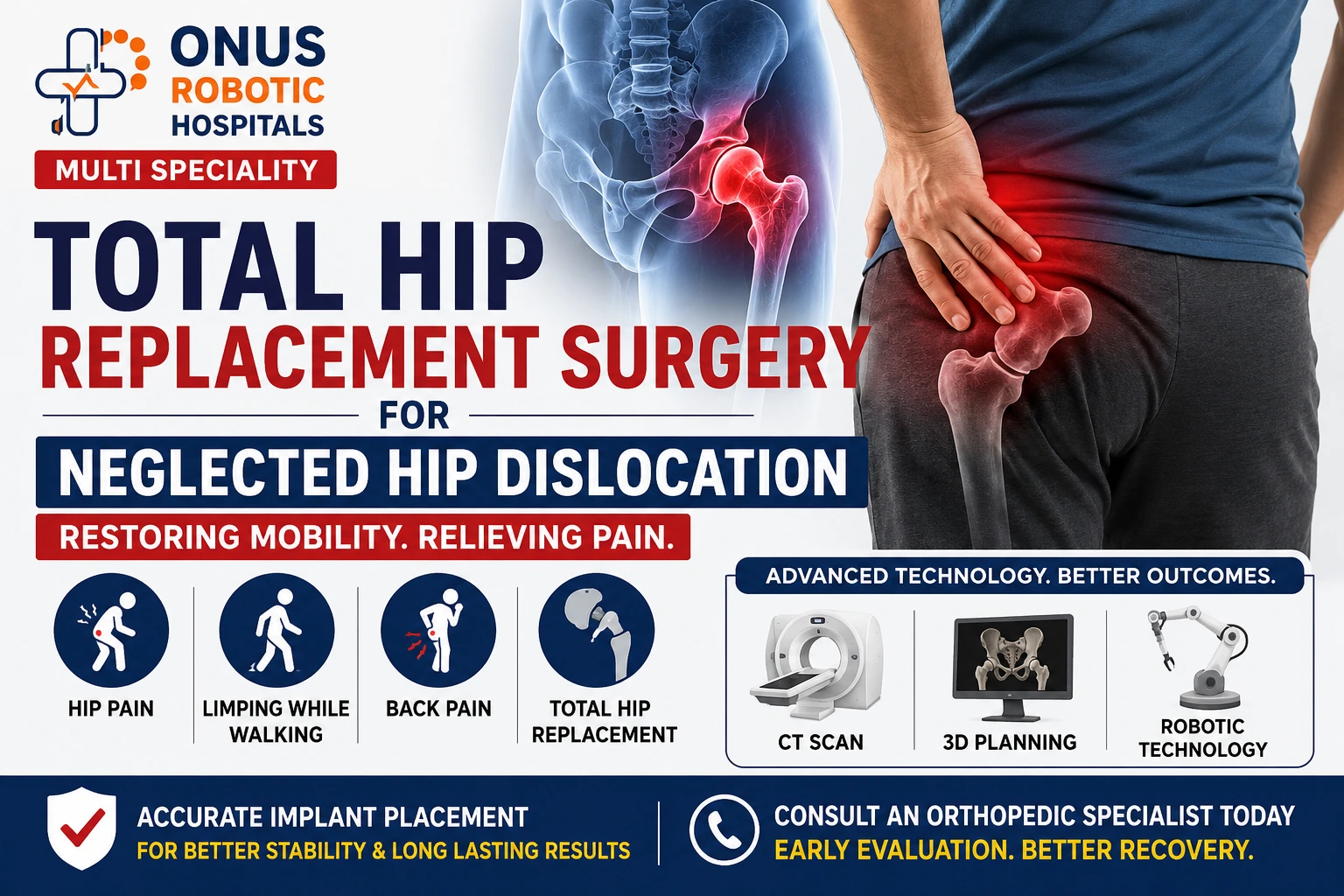
Fortunately, advances in orthopedic surgery such as CT scan-based planning, 3D surgical planning, and robotic-assisted Total Hip Replacement (THR) have made it possible to successfully treat many of these complex cases.
According to Dr. Balaraju Naidu, Robotic Orthopedic Surgeon, accurate pre-operative planning and robotic technology help improve implant positioning, joint stability, and long-term outcomes.
What is Neglected Hip Dislocation?
A hip dislocation occurs when the ball of the thigh bone (femoral head) comes out of the hip socket.
When this injury is not treated promptly—or healing occurs in an abnormal position—it is referred to as Neglected Hip Dislocation.
Over time, untreated dislocations can lead to:
- Damage to the hip joint
- Joint deformity
- Cartilage wear
- Muscle shortening
- Limb length difference
- Arthritis
- Chronic pain
These changes make treatment more challenging but not impossible.
Common Symptoms of Neglected Hip Dislocation
Patients may experience:
- Persistent hip pain
- Lower back pain
- Limping while walking
- Difficulty standing for long periods
- Reduced hip movement
- Stiffness
- Difficulty climbing stairs
- Unequal leg length
- Difficulty sitting cross-legged
- Walking instability
Symptoms usually worsen gradually if left untreated.
Why Early Evaluation is Important
Long-standing hip problems can affect more than just the hip joint.
Patients may begin to develop:
- Back pain due to altered posture
- Knee pain caused by abnormal walking patterns
- Muscle weakness
- Reduced balance
- Increased risk of falls
Early evaluation allows orthopedic surgeons to assess joint damage and determine the most suitable treatment plan.
How is Neglected Hip Dislocation Diagnosed?
A detailed orthopedic evaluation includes:
Clinical Examination
Your orthopedic specialist assesses:
- Hip movement
- Limb length
- Walking pattern
- Muscle strength
- Joint stability
X-rays
X-rays help evaluate:
- Joint damage
- Bone alignment
- Arthritis
- Existing deformities
CT Scan
A CT scan provides detailed information about:
- Bone anatomy
- Acetabular defects
- Femoral deformities
- Bone loss
- Implant planning
CT imaging plays a vital role in complex hip replacement surgeries.
Importance of 3D Surgical Planning
Modern orthopedic surgery uses 3D planning to understand the patient’s unique anatomy before entering the operating room.
Benefits include:
- Better understanding of bone defects
- Accurate implant size selection
- Precise implant positioning
- Reduced surgical uncertainty
- Improved joint biomechanics
This planning is especially valuable in neglected hip dislocation cases where normal anatomy has changed.
How Robotic Technology Improves Hip Replacement Surgery
Robotic-assisted Total Hip Replacement combines the surgeon’s expertise with advanced computer-guided precision.
The robotic system helps surgeons:
- Position implants accurately
- Restore leg length
- Improve joint alignment
- Optimize implant orientation
- Reduce the risk of implant malposition
- Enhance joint stability
Robotic assistance supports precision but does not replace the surgeon’s judgment or experience.
What is Total Hip Replacement?
Total Hip Replacement (THR) is a surgical procedure in which damaged parts of the hip joint are replaced with artificial implants.
The procedure replaces:
- The damaged femoral head (ball)
- The damaged acetabulum (socket)
The goal is to restore pain-free movement and improve overall function.
Benefits of Total Hip Replacement
Patients may experience:
- Significant reduction in hip pain
- Improved walking ability
- Better hip movement
- Correction of limping
- Improved quality of life
- Greater independence in daily activities
- Enhanced joint stability
Recovery depends on individual health, rehabilitation, and adherence to medical advice.
Why Implant Position Matters
One of the most important factors in successful hip replacement is accurate implant placement.
Improper implant positioning may increase the risk of:
- Hip dislocation
- Uneven leg length
- Implant loosening
- Reduced mobility
- Early implant wear
This is why CT scan-based planning, 3D planning, and robotic-assisted surgery are especially beneficial in complex hip reconstruction cases.
Recovery After Hip Replacement
Recovery usually includes:
- Early mobilization
- Physiotherapy
- Walking with support initially
- Muscle strengthening exercises
- Gradual return to daily activities
Following rehabilitation protocols plays a key role in achieving the best outcomes.
When Should You Consult an Orthopedic Specialist?
Consult an orthopedic surgeon if you or your loved one has:
- Persistent hip pain
- Difficulty walking
- Limping
- Long-standing hip dislocation
- Hip stiffness
- Unequal leg length
- Difficulty climbing stairs
- Reduced hip movement
- Chronic back pain associated with hip problems
Timely consultation can help determine whether advanced treatment options such as Total Hip Replacement are appropriate.
Tips for Maintaining Hip Health
- Avoid delaying treatment for hip injuries.
- Maintain a healthy body weight.
- Stay physically active within your comfort level.
- Follow prescribed physiotherapy exercises.
- Prevent falls, especially in older adults.
- Attend regular orthopedic follow-up appointments.
Conclusion
Neglected hip dislocation can lead to chronic pain, limping, and significant limitations in daily life. However, modern advances such as CT scan-based evaluation, 3D surgical planning, and robotic-assisted Total Hip Replacement have transformed the treatment of these complex cases.
With careful planning, precise implant placement, and expert surgical care, many patients can experience meaningful pain relief, improved mobility, and a better quality of life.
If you or a family member has long-standing hip pain or difficulty walking after a previous hip injury, consult an orthopedic specialist for a comprehensive evaluation.
Frequently Asked Questions (FAQs)
What is neglected hip dislocation?
It is a hip dislocation that remains untreated or improperly treated for a prolonged period, leading to pain, deformity, and reduced mobility.
Can neglected hip dislocation be treated?
Yes. Many patients can benefit from Total Hip Replacement after careful evaluation and surgical planning.
Why is a CT scan needed before hip replacement?
A CT scan provides detailed images of the hip anatomy, helping surgeons plan implant size, position, and alignment more accurately.
How does robotic technology help?
Robotic-assisted technology supports precise implant placement, restores joint alignment, and helps improve the accuracy of hip replacement surgery.
Is Total Hip Replacement successful?
Total Hip Replacement is a well-established procedure that has helped many patients reduce pain and improve mobility. Outcomes depend on the patient’s condition, surgical planning, rehabilitation, and overall health.
For Appointments:
Dr. Balaraju Naidu, Robotic Orthopedic Surgeon
ONUS Robotic Hospitals – Hyderabad
👉 link: contact-us or book-appointment