Tympanoplasty: Safe & Effective Surgery to Repair a Hole in the Eardrum- By Dr. Akshitha Reddy, ENT Specialist, ONUS Robotic Hospitals
Ear discharge that keeps coming back, reduced hearing, or a hole in the eardrum should never be ignored. Many patients continue to live with chronic ear infections for years, thinking it is a “small problem.” However, untreated eardrum perforations can lead to repeated infections, hearing loss, and long-term ear damage.
Tympanoplasty is a modern ENT surgical procedure designed to repair the damaged eardrum and restore proper ear function. With advanced surgical techniques and proper post-operative care, most patients experience excellent healing and improvement in hearing.
At ONUS Robotic Hospitals, advanced ENT care is provided for chronic ear infections, hearing problems, and eardrum repair surgeries.
What is Tympanoplasty?
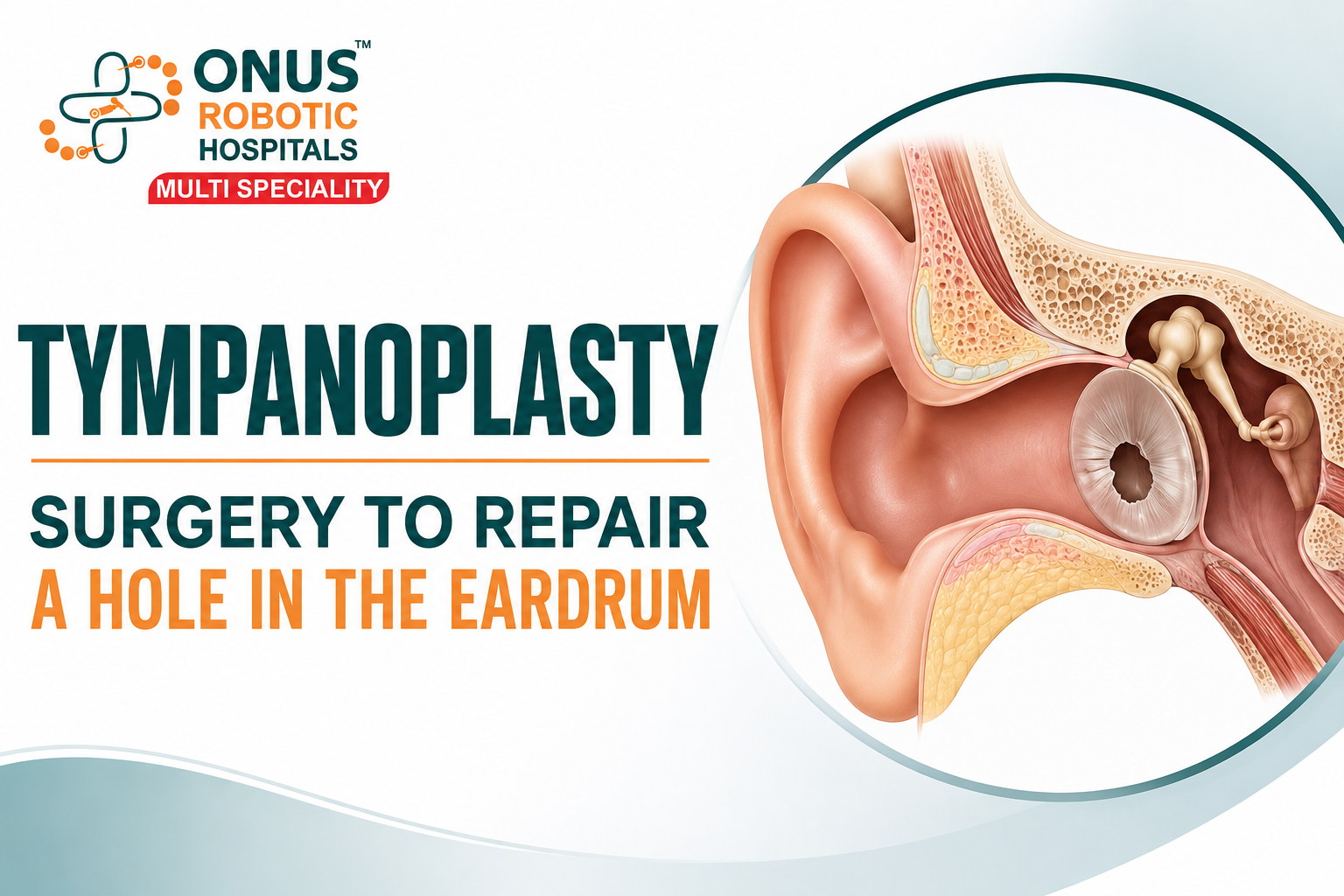
Tympanoplasty is a surgical procedure performed to repair a perforated eardrum (tympanic membrane). In some patients, the surgery may also involve reconstruction of the tiny hearing bones inside the middle ear if they are damaged due to chronic infection.
The eardrum plays an important role in:
✔ Protecting the middle ear from infection
✔ Helping in sound transmission
✔ Maintaining proper hearing
When the eardrum develops a hole, bacteria and water can enter the middle ear easily, leading to repeated infections and hearing difficulty.
Why is Tympanoplasty Needed?
Your ENT specialist may recommend tympanoplasty if:
- Ear discharge keeps recurring
- There is a permanent hole in the eardrum
- Hearing loss is affecting daily life
- Ear infections occur repeatedly while bathing or swimming
- Conservative treatment is not helping
Ignoring a perforated eardrum for a long time may increase the risk of chronic middle ear disease and hearing deterioration.
Common Causes of Eardrum Perforation
1. Chronic Ear Infections
Repeated infections are one of the most common causes of eardrum damage. Persistent infection weakens the membrane and may eventually create a perforation.
2. Ear Trauma
Using earbuds, hairpins, matchsticks, or other sharp objects to clean the ear can accidentally injure the eardrum.
3. Childhood Ear Problems
Some patients develop perforations after untreated childhood ear infections.
4. Sudden Pressure Changes
Air travel, diving injuries, or sudden blasts can sometimes rupture the eardrum.
5. Previous Ear Surgery or Injury
Past surgical procedures or trauma may also contribute to eardrum damage.
Symptoms of Eardrum Perforation
Patients with a perforated eardrum commonly experience:
👉 Ear discharge (watery or pus-like)
👉 Hearing loss
👉 Recurrent ear infections
👉 Ear fullness or discomfort
👉 Occasional ear pain
👉 Whistling sound while sneezing or blowing nose
👉 Difficulty swimming or bathing due to water entering ear
If these symptoms persist, ENT evaluation is important.
Is Tympanoplasty a Major Surgery?
No. Tympanoplasty is generally considered a routine and safe ENT procedure.
Important Facts About Tympanoplasty
✔ Usually performed under local or general anesthesia
✔ Procedure duration: around 1–2 hours
✔ Minimally invasive modern techniques available
✔ Most patients go home the same day or next day
✔ High success rates when done properly
With current ENT surgical advancements, recovery is smoother and complications are uncommon.
How is Tympanoplasty Performed?
The surgery is done carefully using microscopic or endoscopic ENT techniques.
Step-by-Step Overview
1. Preparation
The patient receives anesthesia for comfort and pain control.
2. Graft Harvesting
A small piece of tissue (graft) is usually taken from behind the ear or nearby muscle covering tissue.
3. Eardrum Repair
The graft is positioned carefully to close the hole in the eardrum.
4. Middle Ear Reconstruction (If Needed)
If hearing bones are damaged due to infection, they may also be repaired during surgery.
5. Dressing & Recovery
The ear is packed gently to support healing.
Types of Tympanoplasty
Depending on the severity and condition of the middle ear, tympanoplasty may involve:
- Simple eardrum repair
- Reconstruction of hearing bones
- Combined infection clearance and repair procedures
Your ENT surgeon decides the appropriate approach after ear examination and hearing tests.
Recovery After Tympanoplasty
Recovery is usually smooth when post-operative instructions are followed properly.
What Patients Can Expect
✔ Mild pain or discomfort for 2–3 days
✔ Ear fullness sensation temporarily
✔ Gradual hearing improvement over weeks
✔ Return to normal routine within a week in many cases
Important Post-Surgery Precautions
After tympanoplasty, patients should:
👉 Avoid water entering the ear
👉 Avoid forceful nose blowing
👉 Avoid heavy lifting for a few weeks
👉 Take medications regularly
👉 Attend follow-up appointments
Proper aftercare significantly improves surgical success.
When Does Hearing Improve?
Hearing improvement is gradual.
Most patients notice:
- Reduced discharge first
- Improved ear comfort
- Better hearing over several weeks to months
Final hearing results depend on:
✔ Size of perforation
✔ Presence of infection
✔ Condition of middle ear bones
✔ Post-operative healing
Success Rate of Tympanoplasty
Tympanoplasty has excellent outcomes in experienced hands.
Success Rates
✔ Eardrum closure success: around 90–95%
✔ Significant improvement in hearing in many patients
✔ Reduced risk of recurrent infections
Results are best when the ear is dry before surgery and proper post-operative care is followed.
Possible Risks and Complications
Although complications are uncommon, all surgeries carry some risks.
Rare complications include:
- Infection
- Graft failure
- Persistent perforation
- Temporary dizziness
- Hearing not improving fully
Choosing an experienced ENT specialist helps reduce these risks significantly.
When Should You Consult an ENT Specialist?
Do not ignore these warning signs:
🚨 Ear discharge lasting more than 1–2 weeks
🚨 Hearing loss
🚨 Recurrent infections
🚨 Ear pain with discharge
🚨 Water entering ear repeatedly
🚨 Persistent hole in the eardrum
Early diagnosis and treatment prevent long-term hearing damage.
Final Takeaway
A small hole in the eardrum can become a major problem if left untreated. Chronic infections and hearing loss can affect daily life and quality of hearing permanently.
Tympanoplasty is a safe, effective, and commonly performed ENT surgery that helps:
✔ Repair the eardrum
✔ Prevent repeated infections
✔ Improve hearing
✔ Restore ear health
With modern ENT surgical techniques, recovery is smoother and outcomes are highly successful.
For Appointments:
👩⚕️ Dr. Akshitha Reddy
ENT Specialist
Providing ethical, evidence-based care for ear, nose, throat, sinus, and airway conditions.
ONUS Robotic Hospitals – Hyderabad
👉 link: contact-us or book-appointment