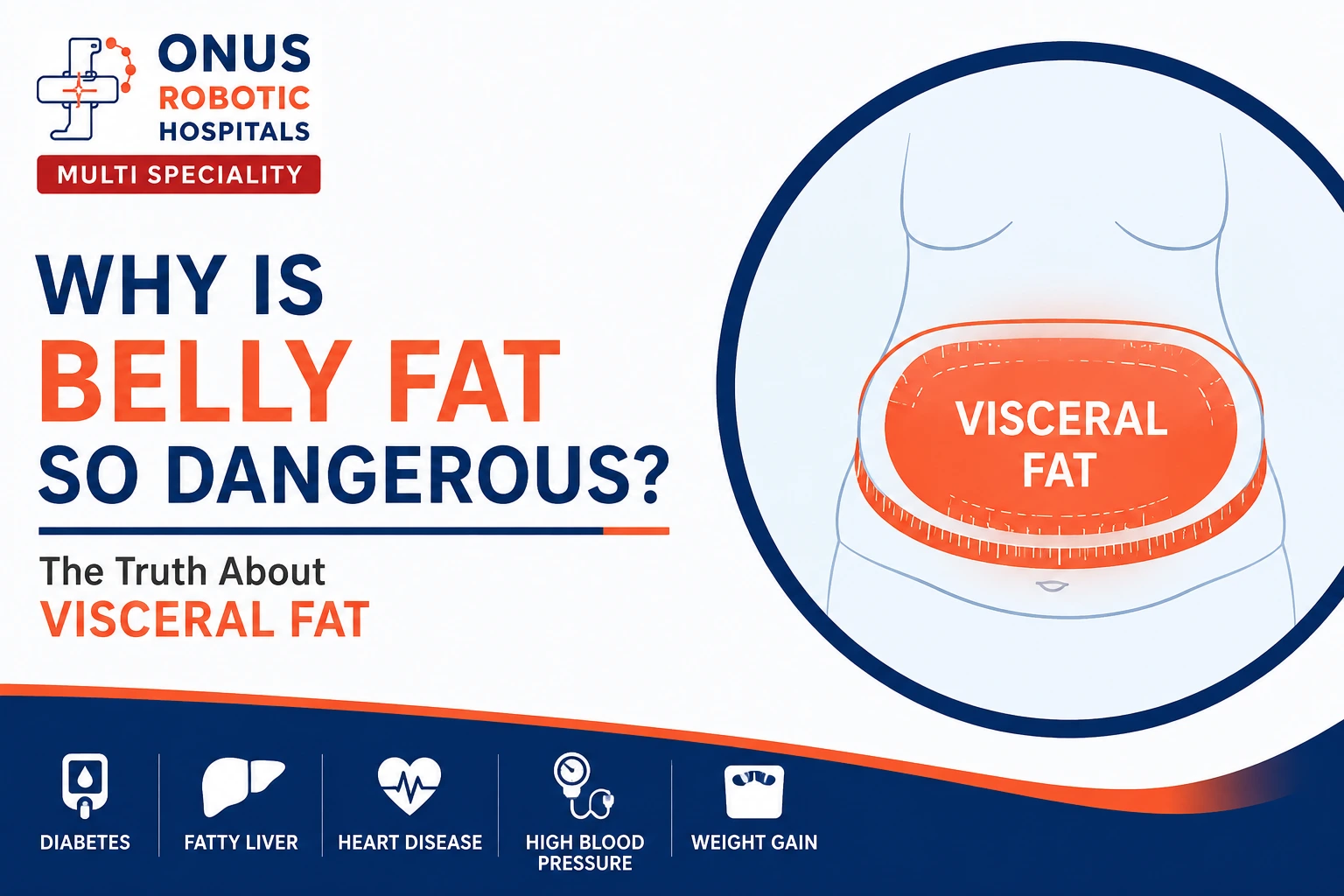
Why Is Belly Fat So Dangerous? The Truth About Visceral Fat – By Dr. Ravi Kiran | Diabetologist, Onus Robotic Hospital
When people think about belly fat, they often focus on appearance. A larger waistline may affect confidence, clothing choices, and body image. However, the real concern goes far beyond looks.
The fat that accumulates around the abdomen—particularly around vital internal organs—can significantly increase the risk of serious health conditions, including Type 2 diabetes, fatty liver disease, heart disease, stroke, hypertension, and metabolic syndrome.
This hidden fat, known as visceral fat, is considered one of the most harmful forms of body fat because of its direct impact on metabolism and overall health.
At Health Vision General & Sugar Clinic, Dr. P. Ravi Kiran helps patients identify and reduce harmful visceral fat through evidence-based lifestyle interventions, medical evaluation, and personalized metabolic health programs.
Understanding Belly Fat
Not all fat stored in the body behaves the same way.
Belly fat consists of two distinct types:
1. Subcutaneous Fat
Subcutaneous fat is located directly beneath the skin.
This is the soft layer of fat that can be pinched around the abdomen, hips, thighs, and arms.
Although excessive subcutaneous fat contributes to obesity, it is generally less harmful than visceral fat.
2. Visceral Fat
Visceral fat is stored deep inside the abdomen and surrounds major organs such as:
- Liver
- Pancreas
- Kidneys
- Intestines
- Stomach
Unlike subcutaneous fat, visceral fat is not always visible externally. Even individuals who appear relatively slim may have excessive visceral fat and increased metabolic risk.
Because visceral fat actively releases hormones and inflammatory chemicals, it directly influences the body’s metabolic processes.
Why Visceral Fat Is Called “Active Fat”
Visceral fat is often referred to as active fat because it functions almost like an endocrine organ.
It releases substances that can:
- Increase inflammation
- Reduce insulin sensitivity
- Raise blood pressure
- Disrupt cholesterol metabolism
- Promote fat accumulation in the liver
- Increase cardiovascular risk
These biological effects explain why excess abdominal fat is associated with numerous chronic diseases.
Health Risks Associated with Excess Belly Fat
Type 2 Diabetes
One of the strongest links between visceral fat and disease is its role in insulin resistance.
When visceral fat increases:
- Cells become less responsive to insulin.
- Blood sugar levels rise.
- The pancreas works harder to produce insulin.
- Prediabetes and diabetes become more likely.
Studies consistently show that reducing abdominal fat improves insulin sensitivity and blood sugar control.
Fatty Liver Disease (MASLD)
The liver receives excess fatty acids released from visceral fat.
Over time, this can lead to Metabolic Dysfunction-Associated Steatotic Liver Disease (MASLD), commonly referred to as fatty liver disease.
If left untreated, fatty liver disease may progress to:
- Liver inflammation
- Fibrosis
- Cirrhosis
- Liver failure in severe cases
Reducing visceral fat is one of the most effective ways to improve liver health.
Heart Disease and Stroke
Visceral fat contributes to multiple cardiovascular risk factors, including:
- High blood pressure
- Elevated triglycerides
- Increased LDL cholesterol
- Chronic inflammation
- Atherosclerosis
These factors increase the likelihood of:
- Coronary artery disease
- Heart attack
- Stroke
- Peripheral vascular disease
Maintaining a healthy waistline is an important step toward protecting heart health.
Metabolic Syndrome
People with excess belly fat often develop a cluster of conditions known as metabolic syndrome, which includes:
- Increased waist circumference
- High blood sugar
- High blood pressure
- Elevated triglycerides
- Low HDL (good cholesterol)
Metabolic syndrome significantly increases the risk of diabetes and cardiovascular disease.
📍 Dr. Ravi Kiran
Diabetologist & Preventive Medicine Specialist
Onus Robotic Hospital, Hyderabad