Introduction
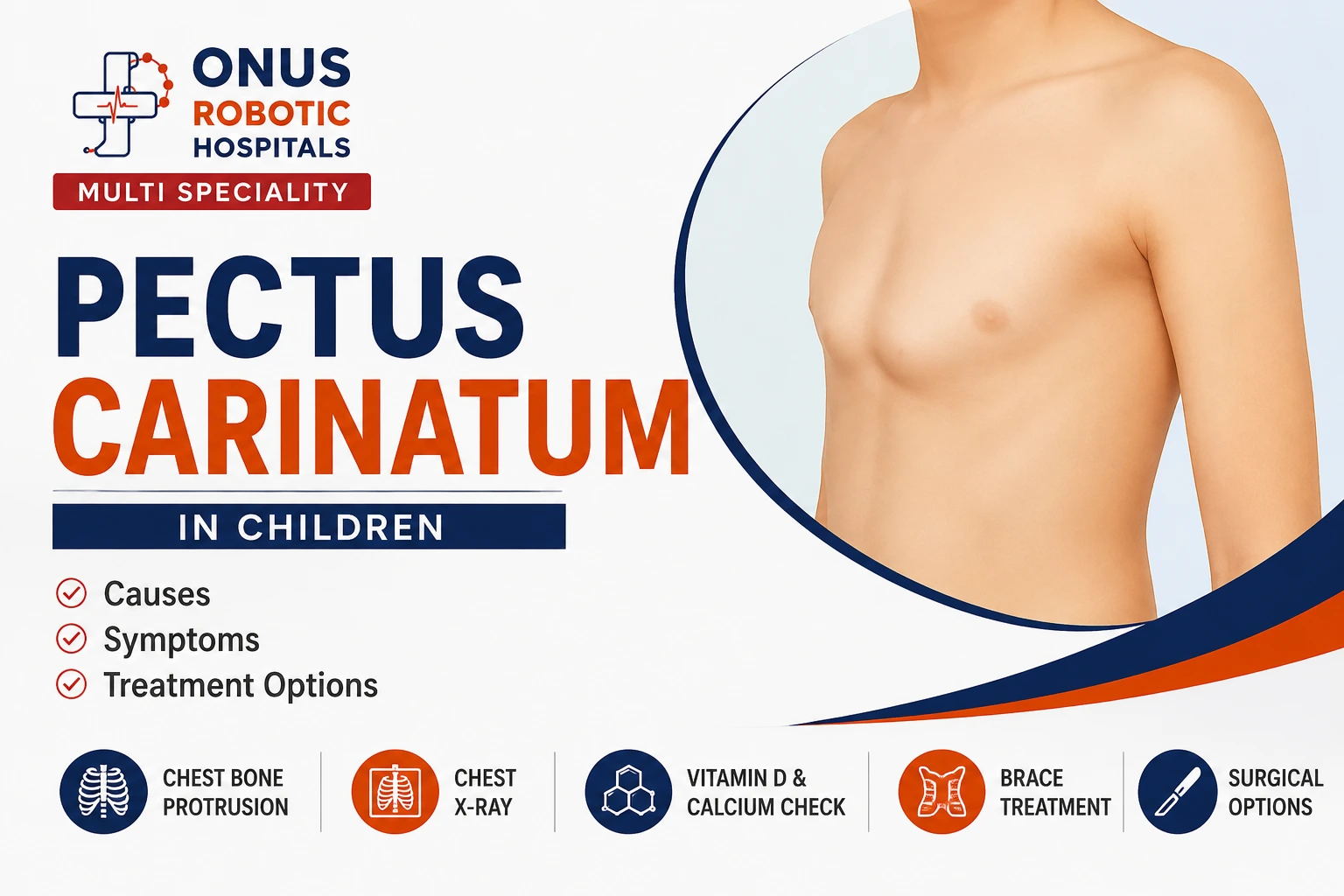
Have you noticed your child’s chest bone protruding outward? While it may seem like a simple cosmetic concern, it could be a condition known as Pectus Carinatum, commonly referred to as Pigeon Chest.
Pectus Carinatum is a chest wall deformity where the breastbone (sternum) and ribs project outward, giving the chest a raised appearance. Although many children do not experience pain, the condition can affect self-confidence, posture, physical activity, and, in some cases, breathing.
The encouraging news is that early diagnosis and treatment can significantly improve outcomes, especially while a child is still growing.
In this article, Dr. Balaraju Naidu, Robotic Orthopedic Surgeon at ONUS Robotic Hospitals, explains the causes, symptoms, diagnosis, treatment options, and when parents should seek medical advice.
What Is Pectus Carinatum?
Pectus Carinatum is a structural deformity of the chest wall in which the breastbone protrudes outward more than normal.
It usually becomes more noticeable during periods of rapid growth, particularly between 10 and 16 years of age, though it may be present earlier.
The condition may affect:
- The center of the chest
- One side of the chest more than the other
- Both sides equally
Unlike Pectus Excavatum, where the chest appears sunken inward, Pectus Carinatum causes the chest to project outward.
What Causes Pectus Carinatum?
The exact cause is not always known, but several factors may contribute.
Common causes include:
- Abnormal growth of the cartilage connecting the ribs to the breastbone
- Genetic predisposition
- Family history of chest wall deformities
- Connective tissue disorders
- Rapid growth during adolescence
Some children may also have nutritional deficiencies that affect bone development.
Is It Related to Vitamin D Deficiency or Rickets?
Yes, in some cases.
Children with Vitamin D deficiency, Calcium deficiency, or Rickets may develop abnormalities in bone growth, including chest wall deformities.
Rickets softens the growing bones, making the chest more susceptible to structural changes.
Because of this, doctors may recommend evaluating:
- Vitamin D levels
- Calcium levels
- Phosphorus
- Alkaline phosphatase (when indicated)
Treating these deficiencies early can support healthy bone development.
Signs and Symptoms
Many children have no physical discomfort and are brought to the doctor because parents notice the appearance of the chest.
Possible symptoms include:
- Chest bone protruding outward
- Uneven chest shape
- Rounded shoulders
- Poor posture
- Mild chest pain
- Shortness of breath during exercise
- Fatigue during physical activity
- Reduced self-confidence due to cosmetic appearance
Symptoms vary depending on the severity of the condition.
Can Pectus Carinatum Cause Complications?
In mild cases, there may be no functional problems.
However, untreated moderate to severe cases may lead to:
- Cosmetic concerns
- Poor posture
- Reduced exercise tolerance
- Emotional distress
- Low self-esteem
- Difficulty participating in sports
Early treatment helps improve both physical and psychological well-being.
How Is Pectus Carinatum Diagnosed?
Diagnosis begins with a detailed physical examination by an orthopedic specialist.
To assess the condition, the doctor may recommend:
Chest X-ray
Helps evaluate the shape and severity of the chest wall deformity.
Vitamin D and Calcium Tests
These identify nutritional deficiencies that may contribute to abnormal bone development.
CT Scan (if required)
Used in selected cases to assess complex chest wall anatomy.
Pulmonary Function Tests
Recommended if breathing problems are present.
A complete evaluation ensures that any underlying bone or metabolic disorders are identified and treated.
Treatment Options
Treatment depends on the child’s age, severity of the deformity, and flexibility of the chest wall.
1. Observation
Mild cases without symptoms may only require regular monitoring as the child grows.
2. Brace Treatment
For growing children with flexible chest walls, a custom chest brace is often the first choice.
The brace works by gradually applying pressure to reshape the chest over time.
Benefits include:
- Non-surgical treatment
- Excellent results when started early
- Improved chest appearance
- Better posture
- Increased confidence
Success depends on wearing the brace consistently as advised by the orthopedic specialist.
3. Surgery
Surgery may be recommended if:
- The deformity is severe
- The chest wall is rigid
- Brace treatment is unsuccessful
- Cosmetic or functional problems are significant
Surgical correction reshapes the chest wall and provides long-term improvement.
Why Early Diagnosis Matters
The chest wall is more flexible during childhood and adolescence.
This means early treatment often produces the best results.
Delaying evaluation may reduce the effectiveness of brace therapy and increase the likelihood of surgery later.
Parents should not ignore visible chest deformities, even if the child does not complain of pain.
When Should Parents Consult an Orthopedic Specialist?
Seek medical evaluation if your child has:
- A chest bone protruding outward
- Uneven chest shape
- Difficulty exercising
- Chest discomfort
- Poor posture
- Breathing difficulties
- Rapid worsening during growth
Early consultation allows for timely diagnosis and appropriate treatment.
Frequently Asked Questions
Is Pectus Carinatum dangerous?
Most cases are not life-threatening, but evaluation is important to determine severity and identify any associated conditions.
Can brace treatment avoid surgery?
Yes. Many growing children respond very well to brace treatment when started early and worn consistently.
Does Vitamin D deficiency cause Pectus Carinatum?
Vitamin D deficiency does not directly cause every case, but it can contribute to abnormal bone growth and chest wall deformities in some children.
Can adults be treated?
Yes. Adults can also receive treatment, although the chest wall is less flexible, making brace treatment less effective than in children.
Tips for Parents
- Observe your child’s chest during growth spurts.
- Ensure a diet rich in calcium and Vitamin D.
- Encourage outdoor activities for natural Vitamin D exposure.
- Maintain good posture.
- Schedule regular pediatric check-ups.
- Seek early orthopedic evaluation if you notice chest deformity.
Conclusion
Pectus Carinatum is a treatable chest wall condition, especially when identified early. Although it is often painless, ignoring the condition may lead to cosmetic concerns, posture problems, and reduced confidence as your child grows.
With timely evaluation, appropriate investigations such as Chest X-ray and Vitamin D assessment, and treatment through bracing or surgery when necessary, children can achieve excellent outcomes and improved quality of life.
If you notice your child’s chest bone protruding outward, consult an orthopedic specialist for an expert assessment.
About Dr. Balaraju Naidu
Dr. Balaraju Naidu is a Robotic Orthopedic Surgeon at ONUS Robotic Hospitals, specializing in advanced orthopedic care, pediatric bone disorders, joint deformities, robotic-assisted surgeries, and musculoskeletal health. He is committed to early diagnosis and evidence-based treatment to help children and adults lead active, healthy lives.
For Appointments:
Dr. Balaraju Naidu, Robotic Orthopedic Surgeon
ONUS Robotic Hospitals – Hyderabad
👉 link: contact-us or book-appointment