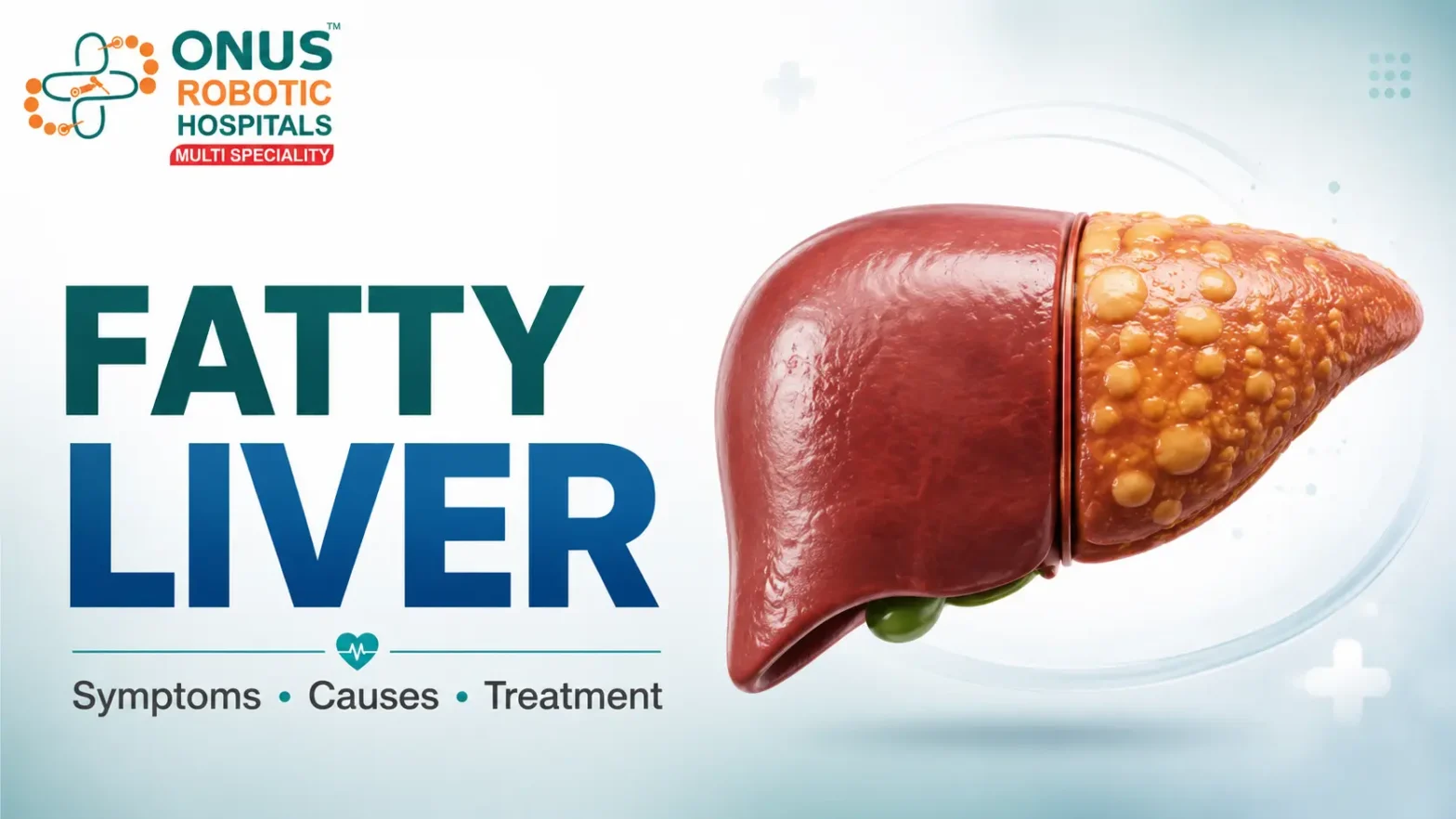
What Is Fatty Liver Disease? Symptoms, Causes, and Fatty Liver Treatment Options: Dr. Ravi Kiran | Diabetologist, Onus Robotic Hospital
Introduction: The Silent Liver Disease Affecting Millions
Fatty liver disease is one of the most common yet most ignored health conditions today. In India, fatty liver is becoming increasingly common due to obesity, diabetes, sedentary lifestyle, high carbohydrate intake, and insulin resistance. Some reports estimate that nearly one-third of Indian adults may be affected by fatty liver disease.
The biggest problem is that most patients feel completely normal in the early stages.
No pain.
No major warning signs.
No obvious symptoms.
But inside the body, excess fat slowly accumulates in the liver. If left untreated, fatty liver disease can progress to liver inflammation, fibrosis, cirrhosis, liver failure, and even liver cancer.
This is why early diagnosis and proper fatty liver treatment are very important.
What Is Fatty Liver Disease?
Fatty liver disease occurs when excess fat builds up inside liver cells.
A small amount of fat in the liver is normal. But when fat accumulation becomes excessive, it affects liver function and increases the risk of long-term liver damage.
Fatty liver is not just a liver problem. It is often a sign of an underlying metabolic problem such as insulin resistance, obesity, diabetes, high triglycerides, or poor lifestyle habits.
Types of Fatty Liver Disease
1. Non-Alcoholic Fatty Liver Disease
Non-Alcoholic Fatty Liver Disease, also called NAFLD, is the most common type of fatty liver disease.
It is commonly linked to:
- Obesity
- Type 2 diabetes
- Insulin resistance
- High triglycerides
- High carbohydrate diet
- Sedentary lifestyle
- Poor sleep and stress
Many patients are surprised to know that fatty liver can happen even without alcohol consumption.
2. Alcoholic Fatty Liver Disease
Alcoholic fatty liver disease occurs due to excessive alcohol intake. In the early stage, it may improve after stopping alcohol, but continued drinking can lead to severe liver damage.
Fatty Liver Symptoms
Fatty liver is often called a silent disease because many patients do not have symptoms in the early stage.
However, some people may experience:
- Persistent tiredness
- Weakness
- Heaviness or discomfort in the right upper abdomen
- Bloating
- Loss of appetite
- Unexplained weight gain
- Increased belly fat
In advanced liver disease, symptoms may include:
- Jaundice
- Swelling of abdomen
- Leg swelling
- Easy bruising
- Confusion
- Severe weakness
Do not wait for symptoms. Fatty liver is often detected during routine ultrasound or blood tests.
What Causes Fatty Liver Disease?
1. Insulin Resistance
Insulin resistance is one of the main causes of fatty liver. When the body does not respond properly to insulin, more fat gets released into the blood and deposited in the liver.
This is why fatty liver is very common in people with prediabetes and type 2 diabetes.
2. High Carbohydrate and Sugar Intake
Excess intake of white rice, sweets, sugary drinks, bakery foods, processed snacks, and refined carbohydrates can increase fat production in the liver.
3. Obesity and Belly Fat
Visceral fat, especially belly fat, is strongly linked to fatty liver disease. Even people with normal weight can develop fatty liver if they have high abdominal fat.
4. Diabetes and High Triglycerides
People with diabetes and high triglycerides have a higher risk of fatty liver progression and liver inflammation.
5. Sedentary Lifestyle
Long sitting hours, low physical activity, lack of exercise, poor sleep, and stress all contribute to fatty liver disease.
Stages of Fatty Liver Disease
Stage 1: Simple Fatty Liver
Fat accumulation is present, but there may be no inflammation or damage.
Stage 2: NASH
Fat accumulation is associated with liver inflammation. This stage needs careful monitoring and treatment.
Stage 3: Liver Fibrosis
Scar tissue starts forming in the liver.
Stage 4: Cirrhosis
Severe and often irreversible liver damage occurs.
Early-stage fatty liver is reversible with proper treatment, weight loss, diet correction, and lifestyle changes.
How Is Fatty Liver Diagnosed?
If you are searching for fatty liver treatment near me or a liver specialist for fatty liver, proper diagnosis is the first step.
Common tests include:
Liver Function Test
ALT and AST levels help assess liver inflammation, but they may be normal in many fatty liver patients.
Ultrasound Abdomen
Ultrasound can detect fatty liver and grade it as grade 1, grade 2, or grade 3 fatty liver.
FibroScan
FibroScan helps measure liver stiffness and fat content. It is useful for assessing fibrosis risk.
Blood Tests
Important tests may include:
- Lipid profile
- HbA1c
- Fasting blood sugar
- Fasting insulin
- Thyroid profile
- Liver function test
A complete metabolic evaluation is important because fatty liver is often connected with diabetes, cholesterol, obesity, and insulin resistance.
Can Fatty Liver Be Reversed?
Yes. Fatty liver reversal is possible, especially in the early stages.
The liver has a strong ability to recover when the root causes are corrected. Weight loss, diet changes, regular exercise, sugar control, triglyceride control, and alcohol avoidance can significantly reduce liver fat.
Fatty Liver Treatment Options
1. Diet Modification
Diet correction is the foundation of fatty liver treatment.
Recommended changes include:
- Reduce white rice, sugar, sweets, and refined carbohydrates
- Avoid soft drinks and packaged juices
- Avoid bakery foods and processed snacks
- Increase protein intake
- Add vegetables, salads, pulses, eggs, fish, paneer, or lean meat as advised
- Prefer whole foods over processed foods
- Follow a Mediterranean-style diet pattern
2. Exercise
Regular exercise helps reduce liver fat and improve insulin sensitivity. Aerobic exercise and resistance training both have benefits. Many guidelines recommend at least 150 minutes per week of moderate physical activity for metabolic health.
Good options include:
- Brisk walking
- Cycling
- Swimming
- Strength training
- Resistance exercises
- Yoga with lifestyle correction
3. Weight Loss
Weight loss is one of the most effective treatments for fatty liver. Losing around 7–10% of body weight can significantly reduce liver fat, inflammation, and fibrosis risk.
4. Diabetes and Cholesterol Control
Fatty liver treatment is incomplete without controlling:
- Diabetes
- Prediabetes
- High triglycerides
- High LDL cholesterol
- High blood pressure
- Obesity
This is why fatty liver should be treated as a full metabolic health problem, not just a liver scan finding.
5. Medical Management
In selected patients, doctors may prescribe medicines for insulin resistance, diabetes, cholesterol, obesity, or liver inflammation.
Medicines should be taken only under medical supervision. Self-medication or “liver tonics” without proper diagnosis may delay real treatment.
6. Lifestyle Correction
Important lifestyle changes include:
- Sleep 7–8 hours daily
- Avoid alcohol
- Stop smoking
- Reduce stress
- Avoid late-night eating
- Maintain regular meal timing
- Reduce long sitting hours
Grade 1 Fatty Liver Treatment
Grade 1 fatty liver is an early stage and is usually reversible.
Treatment focuses on:
- Weight reduction
- Sugar and carbohydrate control
- Regular walking and exercise
- Diabetes and cholesterol screening
- Avoiding alcohol
- Follow-up ultrasound or FibroScan when advised
Do not ignore grade 1 fatty liver. It is an early warning sign of metabolic imbalance.
Why You Should Not Ignore Fatty Liver
Untreated fatty liver can increase the risk of:
- Liver inflammation
- Liver fibrosis
- Cirrhosis
- Liver failure
- Liver cancer
- Diabetes progression
- Heart disease
- Stroke
Fatty liver is also strongly linked with lifestyle-related diseases such as diabetes, obesity, hypertension, and high cholesterol.
When Should You Consult a Fatty Liver Doctor?
You should consult a specialist if you have:
- Fatty liver on ultrasound
- Diabetes or prediabetes
- Belly fat
- High triglycerides
- Abnormal liver function test
- Obesity
- Family history of liver disease
- Alcohol intake
- Fatigue or right upper abdominal discomfort
If you are searching for the best fatty liver doctor in Hyderabad or a fatty liver doctor near me, choose a doctor who evaluates both liver health and metabolic health.
Frequently Asked Questions
Is fatty liver dangerous?
Yes. Fatty liver can be dangerous if ignored. It may progress to liver inflammation, fibrosis, cirrhosis, liver failure, or liver cancer.
Can fatty liver be reversed?
Yes. Fatty liver reversal is possible, especially in early stages, with proper diet, exercise, weight loss, diabetes control, and medical supervision.
What is the best treatment for fatty liver?
The best treatment includes weight loss, diet correction, exercise, diabetes control, cholesterol control, alcohol avoidance, and regular follow-up.
Can grade 1 fatty liver be cured?
Grade 1 fatty liver can usually be reversed with early lifestyle and metabolic correction.
Who is the best fatty liver doctor in Hyderabad?
A doctor experienced in fatty liver, insulin resistance, diabetes, obesity, and metabolic health can provide a structured fatty liver treatment and reversal plan.
Final Takeaway
Fatty liver disease is common, silent, and often ignored. But the good news is that early-stage fatty liver can be reversed.
If you have diabetes, belly fat, high triglycerides, abnormal liver tests, or fatty liver on ultrasound, do not delay treatment.
Early diagnosis and proper fatty liver treatment can prevent serious liver and heart complications.
Consult the best fatty liver doctor in Hyderabad and start your fatty liver reversal journey today.
Consultation
📍 Dr. Ravi Kiran
Diabetologist & Preventive Medicine Specialist
Onus Robotic Hospital, Hyderabad