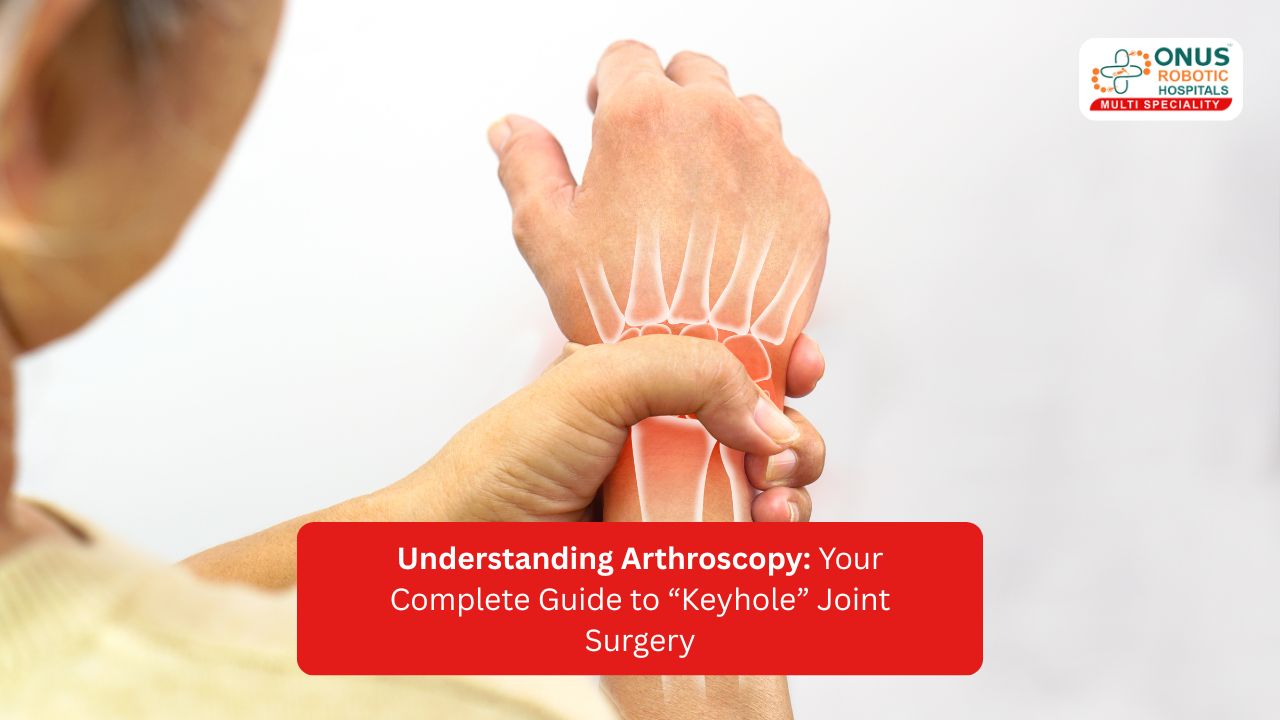
Understanding Arthroscopy: Your Complete Guide to “Keyhole” Joint Surgery- By Dr. K. Sai Prajwal Reddy, Consultant Arthroscopy, ONUS Robotic Hospitals
If you have been struggling with persistent joint pain, swelling, or reduced movement that has not improved with rest or physiotherapy, your doctor may recommend Arthroscopy.
Arthroscopy is one of the most advanced and commonly performed orthopedic procedures today. Instead of a large incision, surgeons use a tiny camera (arthroscope) and specialized instruments inserted through small openings to view and repair the joint.
At centers like ONUS Robotic Hospitals, arthroscopy is widely used to treat sports injuries, ligament tears, cartilage damage, and joint instability with faster recovery and minimal scarring.
What Is Arthroscopy?
Arthroscopy is a minimally invasive surgical technique used to:
- Diagnose joint problems
- Repair damaged tissues
- Remove loose fragments
- Restore joint function
It is commonly called:
“Keyhole Surgery”
because it uses very small incisions instead of traditional open surgery.
Which Joints Can Be Treated with Arthroscopy?
Arthroscopy can be performed on several joints.
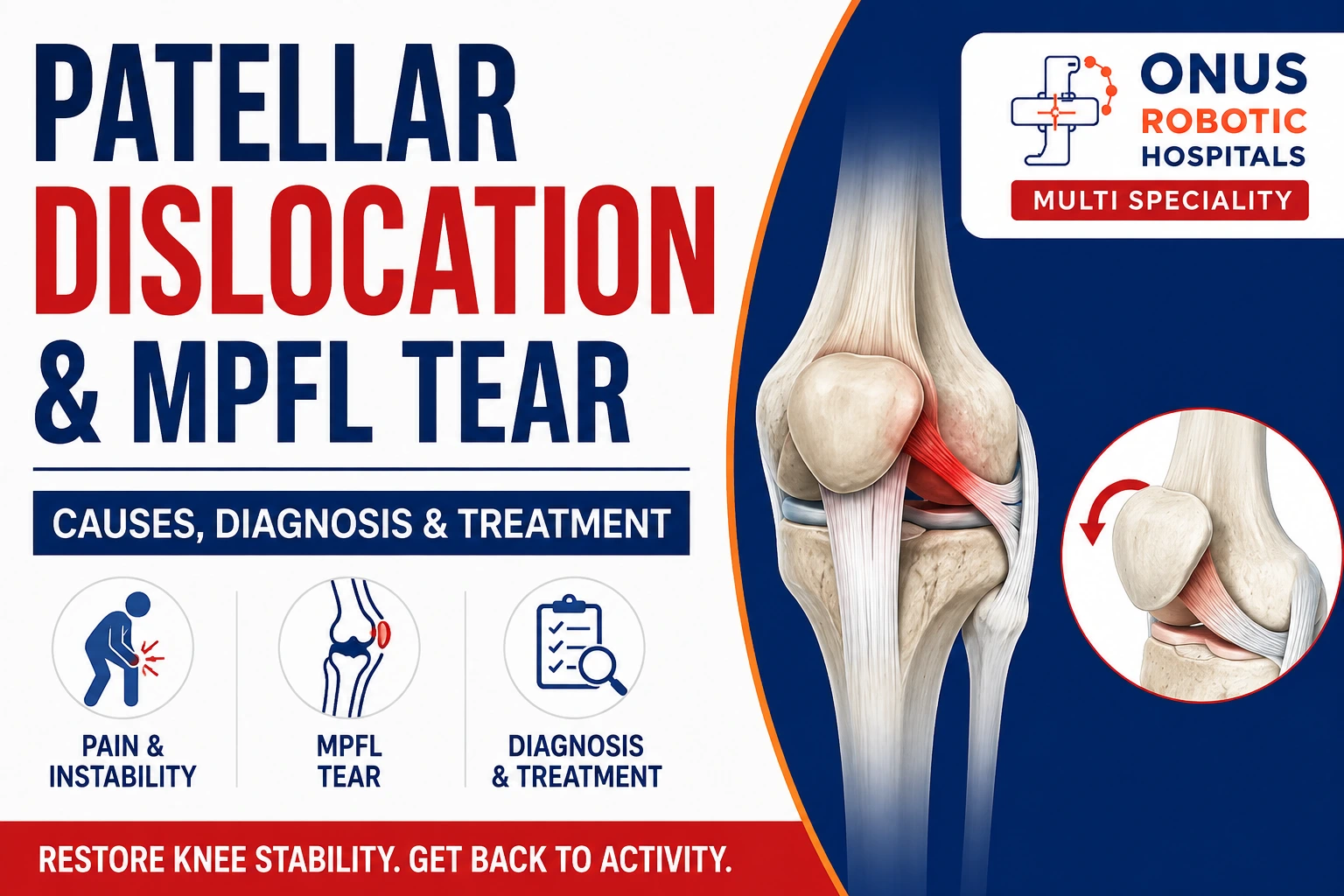
Knee Arthroscopy
Most common procedure.
Used for:
- Meniscus tear repair
- ACL reconstruction
- Cartilage repair
- Removal of loose bodies
Shoulder Arthroscopy
Widely used in sports injuries.
Used for:
- Rotator cuff tear repair
- Shoulder dislocation stabilization
- Labral tear treatment
- Bone spur removal
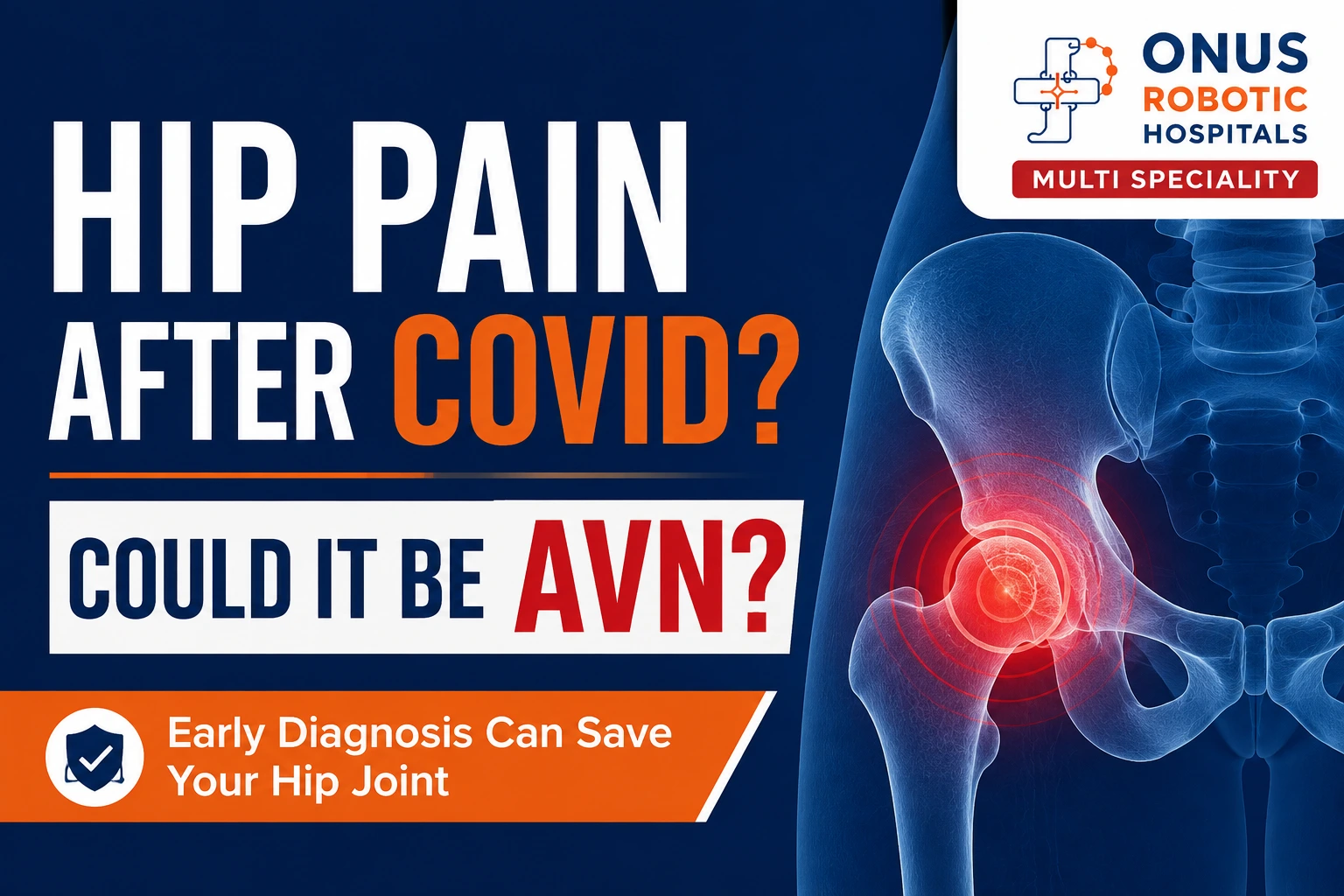
Hip Arthroscopy
Used to treat:
- Labral tear
- Femoroacetabular impingement (FAI)
- Hip joint pain
Ankle and Wrist Arthroscopy
Used for:
- Ligament injury
- Synovitis
- Joint instability
- Severe sprains
When Is Arthroscopy Needed?
Your doctor may recommend arthroscopy if you have:
- Persistent joint pain
- Swelling in the joint
- Limited movement
- Locking or catching sensation
- Sports injury
- Ligament tear
- Cartilage damage
It is usually considered when:
Conservative treatment fails
Advantages of Arthroscopy Over Open Surgery
Modern arthroscopic surgery offers several benefits.
Key Benefits
- Smaller incisions
- Less pain
- Minimal blood loss
- Faster recovery
- Reduced infection risk
- Minimal scarring
- Short hospital stay
Most arthroscopic procedures are:
Day-care surgeries
Preparing for Arthroscopy: The Dos and Don’ts
Preparation plays a major role in recovery.
The Dos
1) Pre-Surgery Exercises (Prehabilitation)
Strengthening muscles before surgery helps:
- Speed recovery
- Improve outcomes
- Reduce complications
2) Medical Clearances
Common tests include:
- Blood tests
- ECG
- Medical evaluation
These ensure surgical safety.
3) Home Preparation
Set up a recovery space with:
- Pillows
- Ice packs
- Easy access to essentials
This improves comfort after surgery.
The Don’ts
Do Not Eat or Drink
Follow:
NPO instructions
Usually starting from midnight before surgery.
Do Not Shave the Area
Shaving can cause small cuts that increase infection risk.
Do Not Ignore Illness
Inform your doctor if you develop:
- Fever
- Cold
- Skin infection
Surgery may need rescheduling.
What Happens on the Day of Surgery?
Most arthroscopy procedures follow a predictable process.
Step 1: Anesthesia
You may receive:
- General anesthesia
- Regional anesthesia
- Local anesthesia with sedation
This ensures a pain-free procedure.
Step 2: The Procedure
The surgeon:
- Makes small incisions (portals)
- Inserts a camera into the joint
- Inflates the joint with sterile fluid
- Repairs damaged tissue
The procedure typically takes:
30 to 90 minutes
Step 3: Closure
The incisions are:
- Closed with small stitches
- Covered with a protective dressing
Scars are minimal.
Recovery After Arthroscopy
Recovery depends on the joint and procedure.
However, early rehabilitation is critical.
First 48 Hours: The R.I.C.E Protocol
R — Rest
I — Ice
C — Compression
E — Elevation
This helps reduce:
- Pain
- Swelling
- Inflammation
Wound Care Instructions
Patients should:
- Keep the bandage clean
- Keep the area dry
- Avoid soaking in water
- Follow medical instructions
Proper care prevents infection.
Importance of Early Movement
Doctors may recommend:
- Gentle exercises
- Controlled movement
- Blood circulation exercises
This prevents:
- Stiffness
- Blood clots
- Joint scarring
Role of Physiotherapy
Physiotherapy is essential after arthroscopy.
It helps:
- Restore movement
- Strengthen muscles
- Improve stability
- Prevent re-injury
Skipping physiotherapy is one of the most common causes of delayed recovery.
Recovery Timeline After Arthroscopy
Typical recovery varies by procedure.
Minor procedures
1–2 weeks
Ligament repair
6–12 weeks
Complex repairs
3–6 months
Internal tissues take longer to heal than skin.
Patience is critical.
What to Expect After Surgery
Normal experiences include:
- Mild pain
- Joint stiffness
- Swelling
- Temporary weakness
These symptoms usually improve within days.
Warning Signs After Arthroscopy
Contact your doctor immediately if you experience:
- High fever
- Severe calf pain
- Excessive swelling
- Persistent bleeding
- Fluid discharge from wound
These may indicate complications.
Final Takeaway
Arthroscopy is:
✔ Safe
✔ Minimally invasive
✔ Effective
✔ Fast recovery
The key message:
Arthroscopy treats joint problems with less pain and quicker return to normal life.
For Appointments:
Dr.K.Sai Prajwal Reddy, Robotic Orthopedic Surgeon
ONUS Robotic Hospitals – Hyderabad
👉 link: contact-us or book-appointment