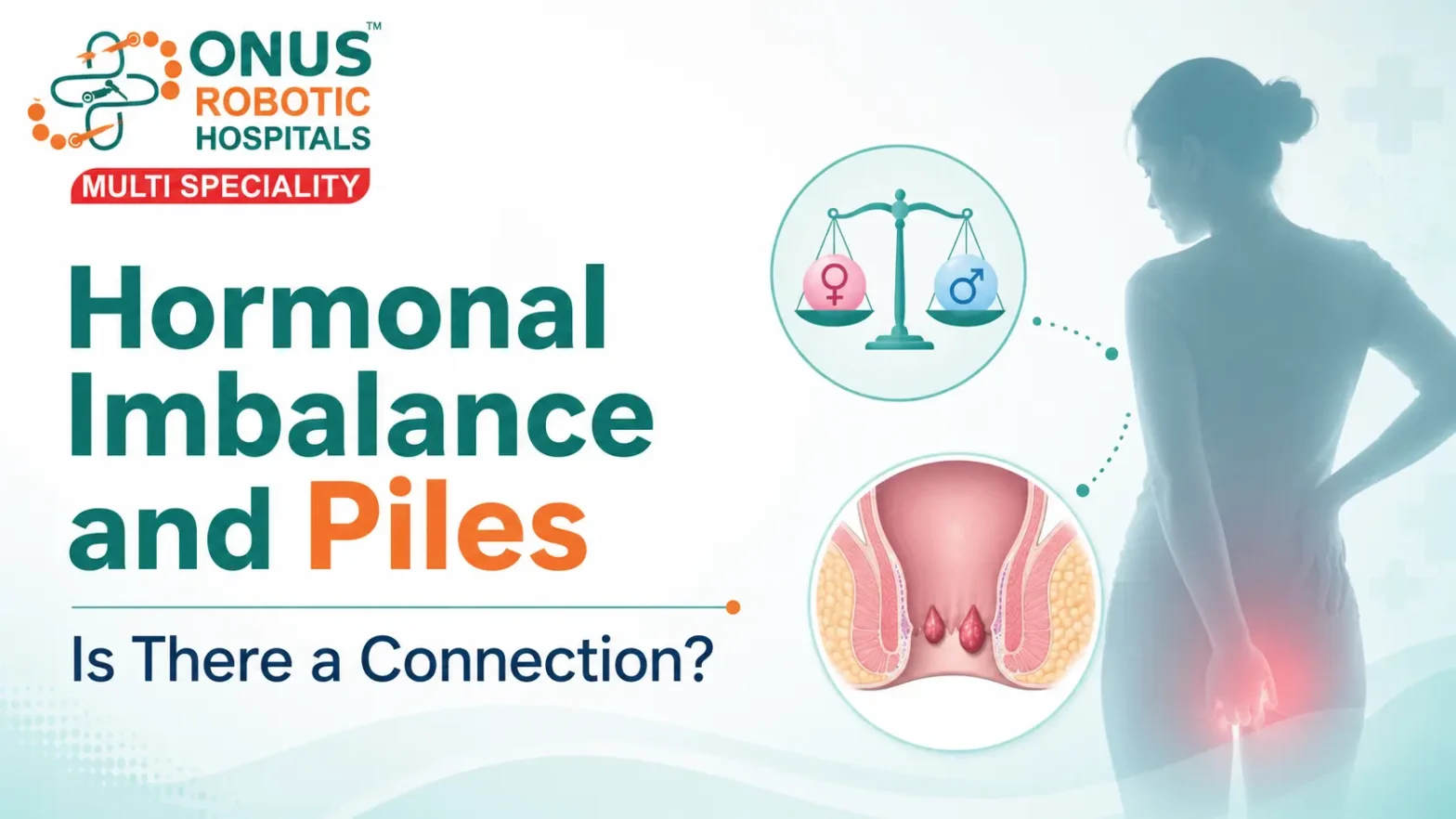
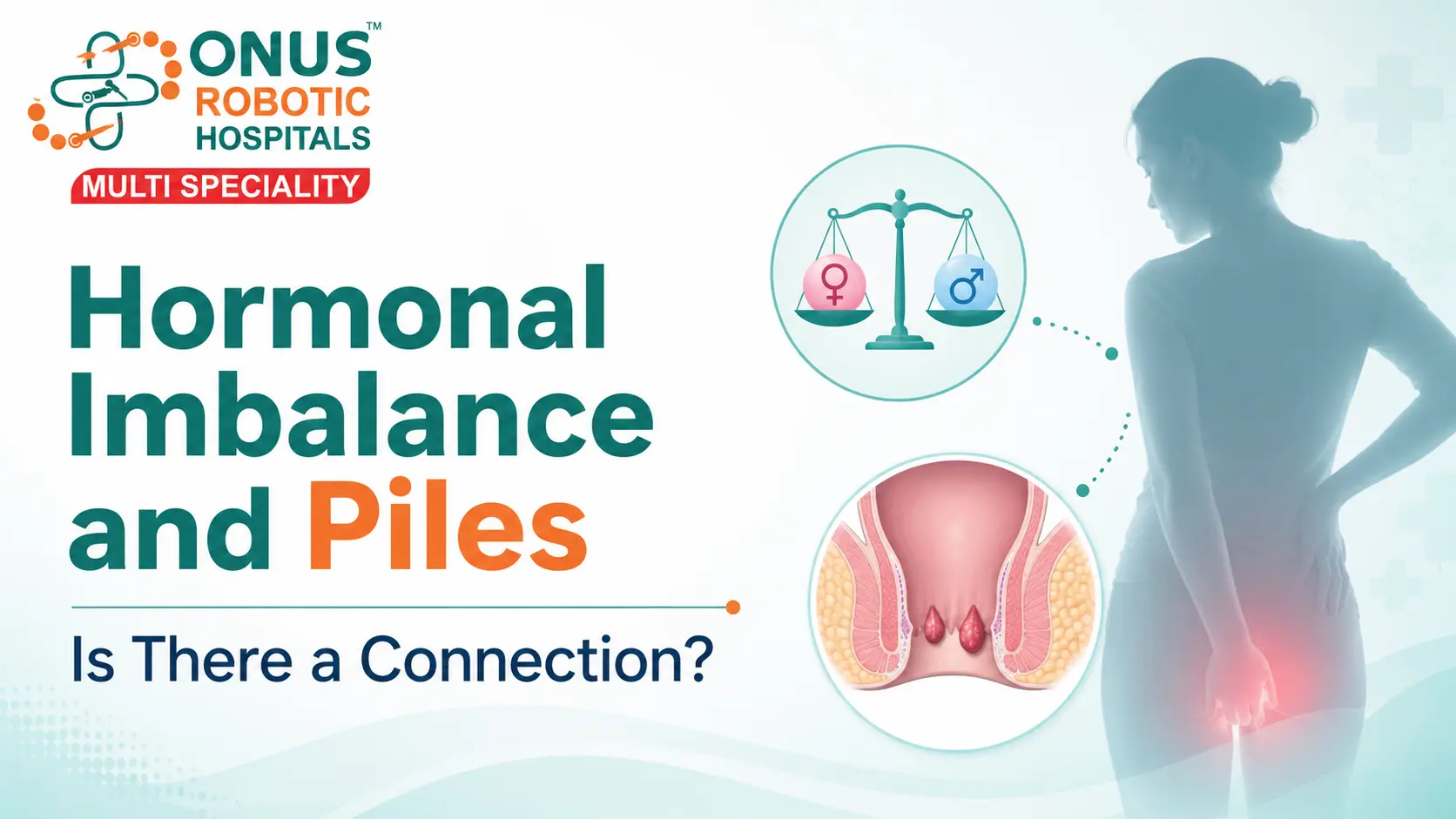
Hormonal Imbalance and Piles: Is There a Connection?- By Senior Consultant – General, Laser & Laparoscopic Surgery, ONUS Robotic Hospitals
Piles, also called hemorrhoids, are swollen veins in and around the anus and lower rectum. They can cause bleeding during stool, pain, swelling, itching, discomfort while sitting, and repeated irritation. Hemorrhoids are common and may occur due to constipation, long sitting, low-fiber diet, obesity, pregnancy, childbirth, heavy lifting, and poor toilet habits.
Many people ask: “Hormonal imbalance and piles మధ్య సంబంధం ఉందా?”
The direct cause of piles is usually increased pressure on the rectal and anal veins. However, hormonal changes can indirectly worsen piles by affecting digestion, bowel movement, constipation, weight gain, water retention, and pregnancy-related pressure.
How Hormonal Changes May Affect Piles
Hormonal imbalance itself may not directly create piles in every patient. But hormonal changes can influence the body in ways that increase piles risk.
Hormonal changes may contribute to:
Constipation
Slower digestion
Weight gain
Bloating
Reduced physical activity
Pregnancy-related pressure
Changes in bowel habits
Increased straining during stool
When constipation and straining increase, pressure around the anal veins also increases. This can trigger piles or worsen existing hemorrhoids.
Why Constipation Increases Piles Risk
Constipation is one of the most common triggers for piles. Hard stool and repeated straining increase pressure on the veins around the anus and rectum. Over time, this pressure can lead to swelling, bleeding, pain, and prolapse.
Common constipation triggers include:
Low-fiber diet
Low water intake
Long sitting
Poor toilet habits
Lack of exercise
Pregnancy
Certain medicines
Hormonal changes
Ignoring the urge to pass stool
Mayo Clinic lists straining during bowel movements, sitting for long periods on the toilet, chronic constipation or diarrhea, obesity, pregnancy, low-fiber diet, and regular heavy lifting as risk factors for hemorrhoids.
Pregnancy, Hormonal Changes and Piles
Pregnancy is one of the most common situations where hormonal changes and piles are connected. During pregnancy, hormonal changes can slow digestion and increase constipation. At the same time, the growing uterus increases pressure on pelvic veins, making hemorrhoids more likely. Cleveland Clinic notes that pregnancy-related hormone changes can slow digestion and increase constipation, which can increase hemorrhoid risk.
Pregnancy and childbirth can increase piles risk because of:
Hormonal changes
Constipation
Increased abdominal pressure
Pressure from the growing uterus
Straining during delivery
Reduced mobility in late pregnancy
Post-delivery bowel changes
Many women develop piles during pregnancy or after childbirth. Johns Hopkins Medicine also notes that pregnancy and childbirth put extra pressure on pelvic blood vessels, increasing hemorrhoid risk.
Lifestyle Disorders, Weight Gain and Hemorrhoids
Hormonal imbalance may also contribute to weight gain in some patients. Obesity and increased abdominal pressure can worsen piles symptoms. Long sitting hours, lack of exercise, poor diet, and constipation further increase the risk.
Lifestyle-related piles are commonly seen in people with:
Desk jobs
Long driving hours
Sedentary lifestyle
Low-fiber diet
Frequent constipation
Obesity
Poor hydration
High intake of processed food
Low physical activity
Common Symptoms of Piles
Piles symptoms may vary depending on whether the hemorrhoids are internal or external.
Common symptoms include:
Bleeding during stool
Pain around the anus
Swelling near the anus
Itching or irritation
Discomfort while sitting
Burning sensation
Mucus discharge
Tender lump near the anus
Feeling of incomplete stool passage
Repeated constipation
Pain during bowel movement
Do not assume every bleeding episode is piles. Rectal bleeding can also occur due to fissure, infection, inflammatory bowel disease, polyps, or other serious conditions. Proper medical evaluation is important.
Warning Signs You Should Not Ignore
Consult a surgeon if you have:
Bleeding during stool
Severe anal pain
Swelling or painful lump near the anus
Repeated constipation
Piles symptoms not improving
Black stool or heavy bleeding
Dizziness or weakness with bleeding
Fever, pus, or infection signs
Unexplained weight loss with bowel changes
Repeated piles episodes
Early diagnosis can help prevent complications and avoid worsening symptoms.
Prevention Tips for Piles
Many piles episodes can be prevented or controlled with better bowel habits and lifestyle correction.
Helpful tips include:
Eat high-fiber foods
Drink enough water
Avoid straining during stool
Do not sit too long on the toilet
Avoid using mobile phone in the toilet
Walk daily
Maintain healthy weight
Treat constipation early
Avoid repeated heavy lifting during active symptoms
Do not delay bowel movements
Reduce processed and low-fiber foods
Mayo Clinic recommends high-fiber foods and adequate fluids to soften stool and reduce straining, which helps prevent hemorrhoids.