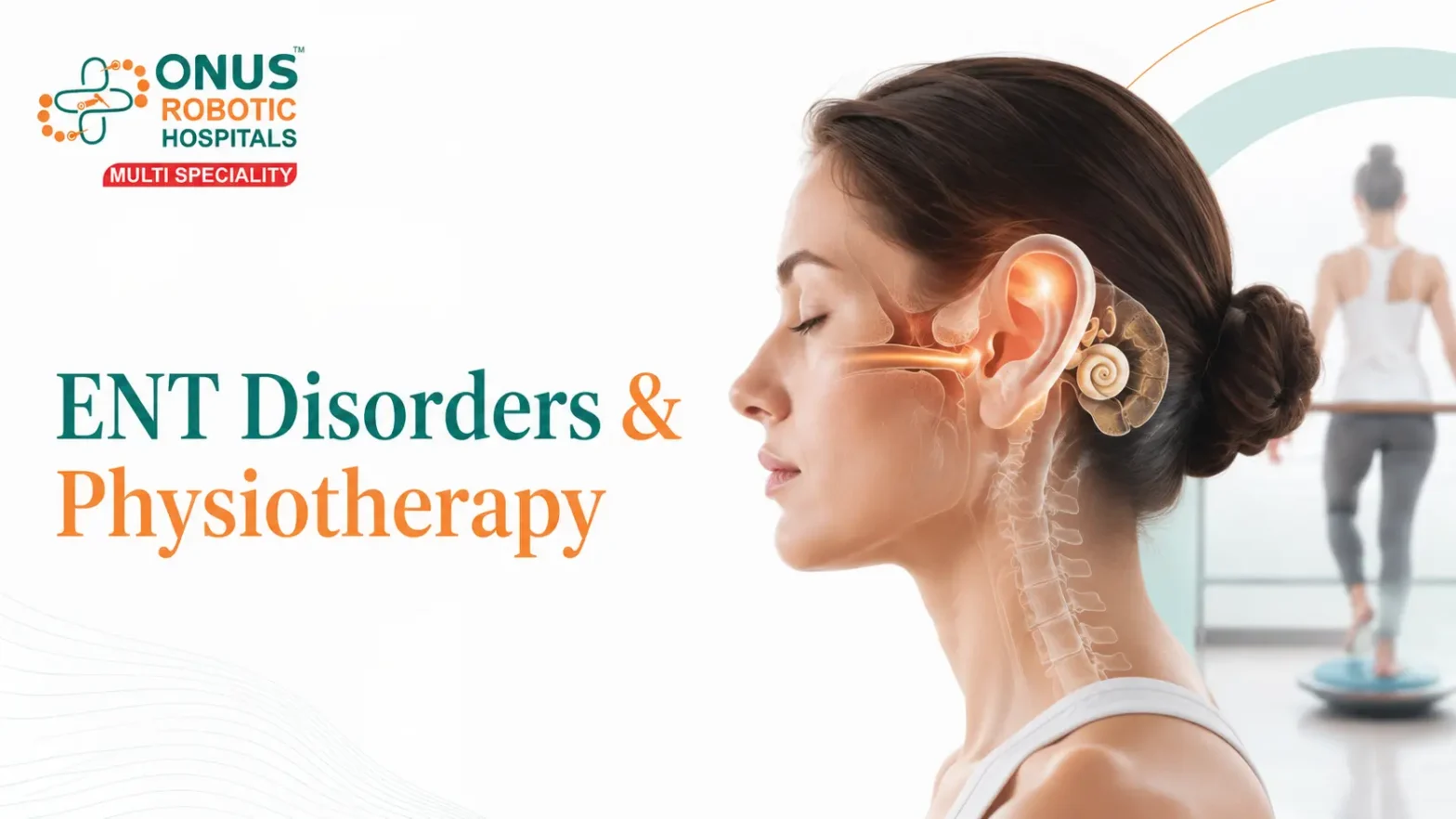
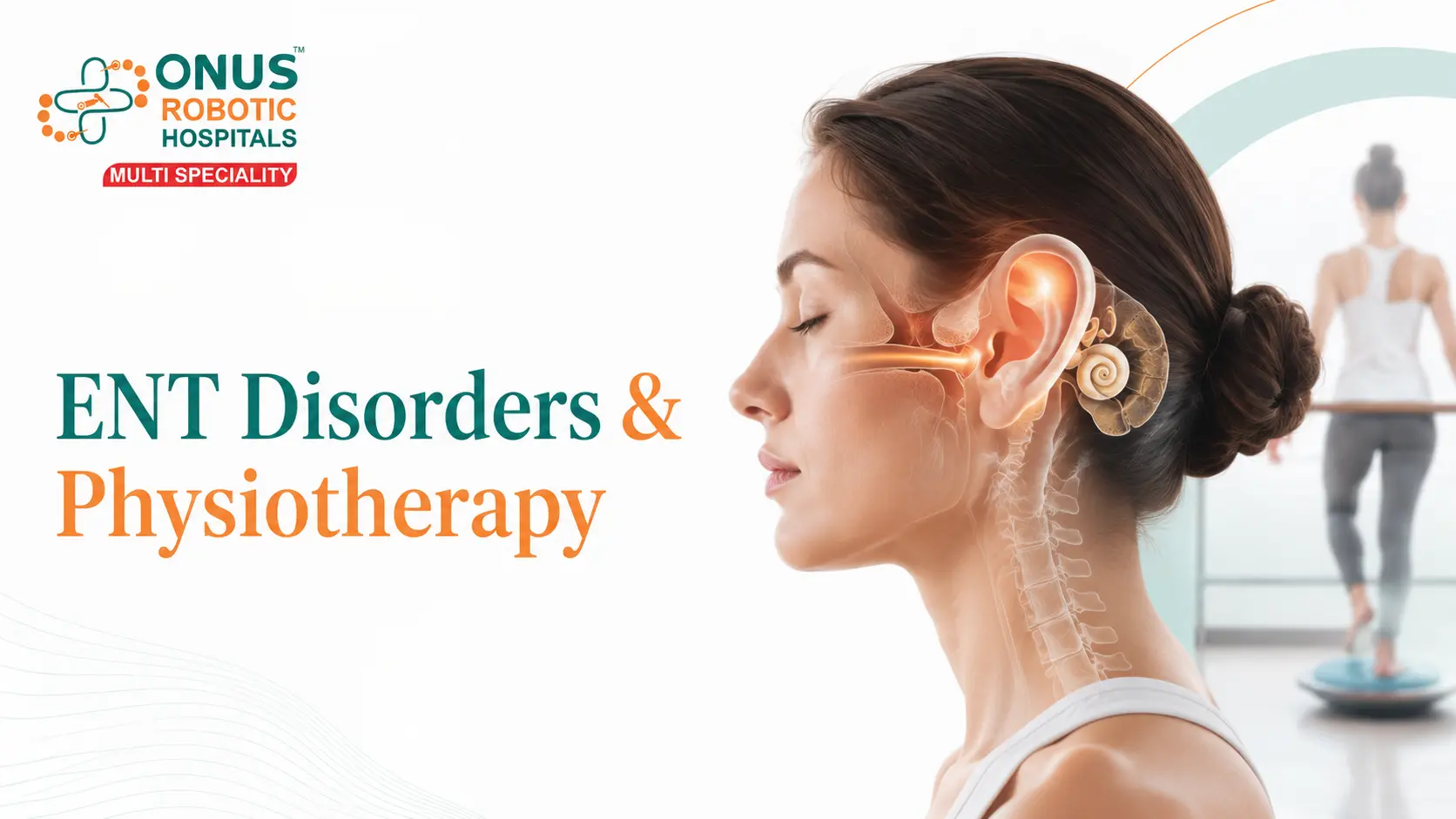
ENT Disorders from a Physiotherapy Perspective: Bell’s Palsy, Balance Rehabilitation & Patient Recovery- By Senior Consultant – General, Laser & Laparoscopic Surgery, ONUS Robotic Hospitals
ENT Disorders from a Physiotherapy Perspective: Bell’s Palsy, Balance Rehabilitation & Patient Recovery- By Senior Consultant – General, Laser & Laparoscopic Surgery, ONUS Robotic Hospitals
Understanding ENT disorders from a physiotherapy perspective is very important for better rehabilitation and patient recovery. Many ENT-related conditions do not end with medicines or surgery alone. Some patients need structured rehabilitation, facial muscle training, balance exercises, vestibular therapy, posture correction, swallowing support, and coordinated care between ENT specialists and physiotherapists.
In this informative educational session, Dr. Akshitha Reddy, Consultant ENT Head & Neck Surgeon at ONUS Robotic Hospitals, explains important ENT-related conditions, rehabilitation approaches, and multidisciplinary care insights for physiotherapists.
This session helps physiotherapists understand practical ENT rehabilitation strategies and improve patient outcomes through coordinated care.
Why Physiotherapy Is Important in ENT Disorders
ENT conditions can affect facial movement, balance, posture, breathing comfort, swallowing, voice, and daily function. Physiotherapists play an important role in helping patients regain confidence and functional independence after ENT-related problems.
Physiotherapy may support patients with:
Bell’s palsy Facial nerve weakness Vertigo and dizziness Balance disorders Vestibular dysfunction Post-surgical head and neck recovery Swallowing and posture-related issues Breathing and airway-related rehabilitation support General functional recovery after ENT illness
ENT and physiotherapy collaboration helps patients receive more complete care.
Bell’s Palsy: Why Rehabilitation Matters
Bell’s palsy is a condition where sudden weakness or paralysis occurs on one side of the face. It is usually caused by inflammation or dysfunction of the facial nerve. Patients may notice facial drooping, difficulty closing the eye, drooling, altered smile, reduced facial expression, and difficulty speaking or eating.
The American Academy of Otolaryngology–Head and Neck Surgery describes Bell’s palsy as acute facial weakness or paralysis of peripheral nerve origin, and it can affect oral control and eyelid closure, which may lead to eye-related risk if not managed properly.
Symptoms of Bell’s Palsy
Common symptoms include:
Sudden facial weakness Drooping of one side of the face Difficulty closing one eye Watering or dryness of the eye Drooling Difficulty smiling Difficulty blowing or whistling Altered taste Ear discomfort in some cases Speech or eating difficulty
Early medical evaluation is important because facial weakness can also occur due to stroke, infection, trauma, tumor, or other neurological conditions.
Physiotherapy Role in Bell’s Palsy
Physiotherapy can support facial nerve recovery by helping patients maintain muscle flexibility, improve coordination, and retrain facial movements. Mayo Clinic notes that a physical therapist may teach patients how to massage and exercise facial muscles to help prevent muscle shortening and support recovery.
Physiotherapy may include:
Facial muscle exercises Mirror feedback training Gentle facial massage Eye closure training Smile retraining Lip control exercises Facial coordination activities Education to avoid forceful over-exercise Home exercise guidance
In severe or prolonged facial palsy, rehabilitation may also focus on preventing abnormal movement patterns and improving symmetry.
Facial Nerve Weakness Management
Facial nerve weakness can occur due to Bell’s palsy, trauma, ear disease, surgery, infections, or neurological conditions. Rehabilitation should be individualized based on severity, duration, eye closure status, and facial movement pattern.
Important goals include:
Protecting the eye Improving facial symmetry Supporting eating and speech Reducing stiffness Improving controlled facial movement Preventing compensatory movements Restoring confidence and expression
A systematic review on physical therapy for facial nerve paralysis reports that facial exercise interventions may include strengthening, stretching, endurance, therapeutic, and facial mimic exercises.
Vestibular System and Balance Disorders
The vestibular system is part of the inner ear and helps maintain balance, posture, and eye stability during head movement. When this system is affected, patients may experience dizziness, vertigo, imbalance, nausea, fear of walking, or repeated falls.
Common vestibular-related symptoms include:
Spinning sensation Dizziness Unsteadiness Difficulty walking in dark areas Imbalance while turning Nausea with head movement Blurred vision during movement Fear of falling Reduced confidence in daily activities
Vestibular Rehabilitation: How Physiotherapy Helps
Vestibular rehabilitation is a specialized exercise-based therapy used for dizziness and balance problems. Cleveland Clinic explains that vestibular rehabilitation therapy involves exercises that help manage dizziness and balance issues.
Vestibular rehabilitation may include:
Gaze stabilization exercises Balance training Habituation exercises Walking and turning practice Posture correction Fall prevention training Coordination exercises Functional mobility training
The Vestibular Disorders Association describes vestibular rehabilitation as an exercise-based program designed to reduce vertigo, dizziness, gaze instability, imbalance, and fall risk.
ENT Conditions Where Physiotherapists Can Support Recovery
Physiotherapists can contribute to care in many ENT-related conditions, including:
Bell’s palsy Facial nerve palsy Vestibular neuritis recovery BPPV-related balance issues after ENT evaluation Chronic dizziness and imbalance Post-operative head and neck recovery Neck stiffness after ENT procedures Breathing and posture-related rehabilitation Elderly fall-risk management related to balance disorders
Physiotherapy should be done under proper diagnosis and coordinated care. Not every dizziness case is treated the same way. Some patients may need urgent medical or neurological evaluation.
Importance of Multidisciplinary Treatment
ENT specialists, physiotherapists, neurologists, audiologists, speech therapists, and rehabilitation teams may need to work together depending on the patient’s condition.
Multidisciplinary care helps in:
Accurate diagnosis Safe rehabilitation planning Better recovery monitoring Improved patient education Reduced recurrence risk Better functional outcomes Early identification of red flags
For example, a patient with facial weakness needs ENT or neurological evaluation first to rule out serious causes. A patient with vertigo needs diagnosis before exercise planning. A patient after head and neck surgery may need coordinated rehab for posture, swallowing, speech, and movement.
Red Flags Physiotherapists Should Not Ignore
Physiotherapists should refer patients for urgent medical evaluation if they notice:
Sudden facial weakness with arm or leg weakness Slurred speech Severe headache Double vision Loss of consciousness New severe dizziness with neurological signs Sudden hearing loss Facial weakness after trauma Severe ear pain with facial palsy Uncontrolled vomiting with vertigo Repeated falls Difficulty swallowing or breathing
These symptoms may indicate conditions beyond routine rehabilitation.
Practical Patient Care Approach
A safe ENT rehabilitation approach includes:
Start with proper diagnosis Understand medical restrictions Assess facial movement or balance function Set realistic recovery goals Use gentle, progressive exercises Avoid overloading weak muscles Monitor symptoms regularly Educate patients about home care Coordinate with ENT specialist when symptoms change Document progress clearly
Expert ENT & Rehabilitation Support at ONUS Robotic Hospitals
At ONUS Robotic Hospitals, patients with ENT disorders, Bell’s palsy, facial nerve weakness, vertigo, balance disorders, head and neck concerns, and rehabilitation needs receive expert evaluation and multidisciplinary care.