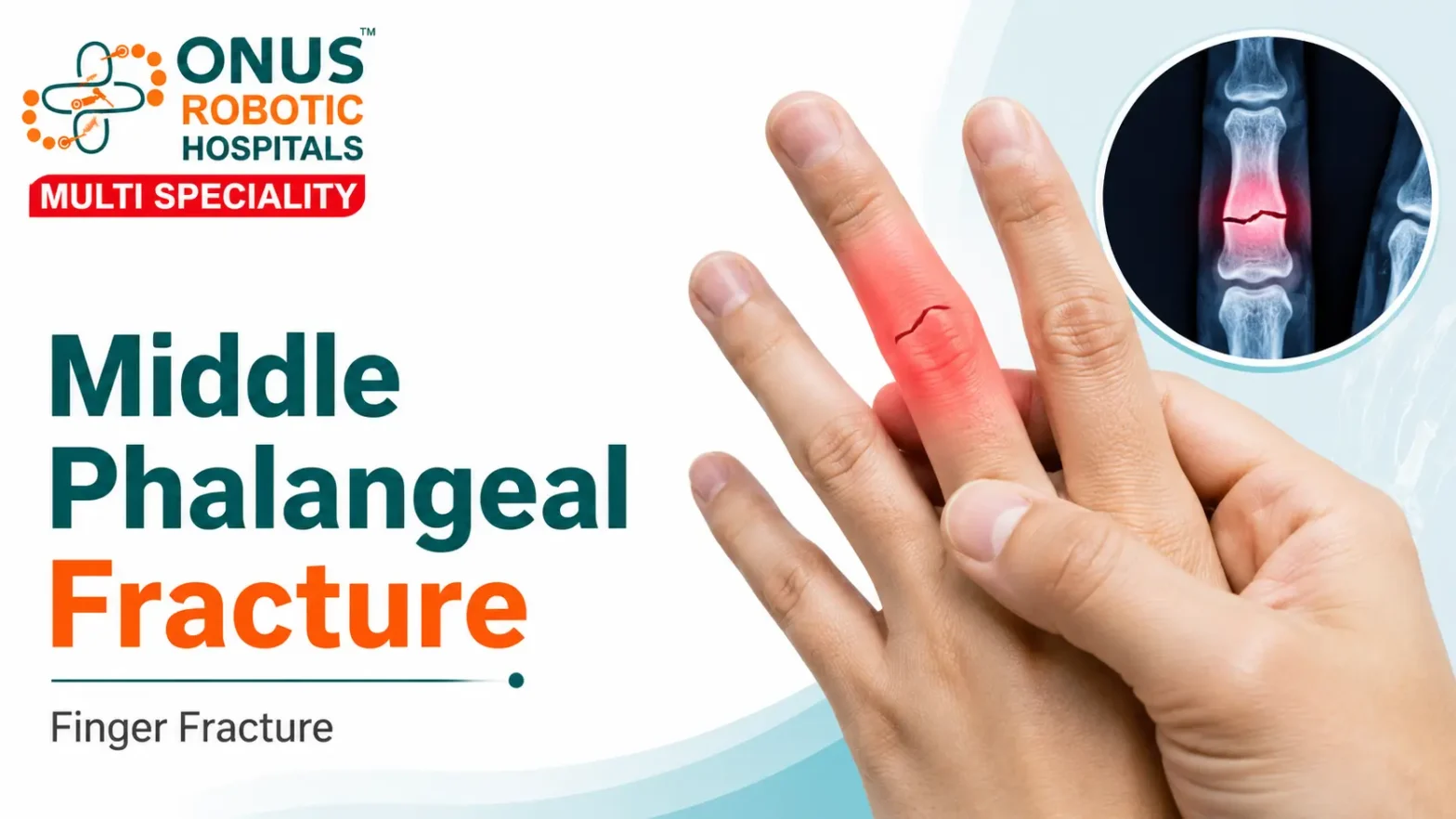
Middle Phalangeal Fractures are injuries that occur in the middle bone of the finger. These fractures may happen due to falls, sports injuries, workplace accidents, direct trauma, twisting injuries, or crushing injuries.
Finger fractures may look small, but they should not be ignored. If not treated properly, they can lead to finger stiffness, deformity, swelling, pain, reduced grip strength, and difficulty in hand function. Finger fractures are usually diagnosed with X-rays, and treatment may include splinting or surgery depending on fracture severity.
What Is a Middle Phalangeal Fracture?
Each finger has three small bones called phalanges: proximal phalanx, middle phalanx, and distal phalanx. The middle phalanx is the bone between the first and last finger bones.
A middle phalangeal fracture means this middle finger bone is cracked or broken. The fracture may be simple, displaced, unstable, open, intra-articular, or associated with tendon and soft tissue injury.
Common Causes
Middle phalangeal fractures commonly occur due to:
Falls on the hand
Sports injuries
Cricket, football, basketball, volleyball, or gym injuries
Workplace accidents
Finger getting trapped in doors or machines
Direct hit to the finger
Crushing injury
Road traffic accidents
Twisting injury
Heavy object falling on the hand
Symptoms You Should Not Ignore
Common symptoms include:
Finger pain after injury
Swelling around the finger
Bruising
Tenderness
Difficulty bending or straightening the finger
Visible bending deformity
Finger stiffness
Pain while holding objects
Reduced grip strength
Numbness or tingling in severe injury
Open wound in crush injuries
AAOS notes that finger fractures may cause swelling, tenderness, bruising, deformity, and difficulty moving the finger, and proper treatment is important to restore function.
Why Early Treatment Is Important
Finger bones are small, and even a minor alignment problem can affect hand function. Untreated or poorly treated fractures may lead to:
Permanent stiffness
Finger deformity
Malunion
Reduced movement
Weak grip
Pain during daily work
Joint stiffness
Difficulty writing, typing, cooking, or holding objects
Prolonged immobilization, joint involvement, and severe injuries can increase the risk of stiffness after phalangeal fractures.
Diagnosis
Diagnosis usually starts with clinical examination. The orthopedic specialist checks pain, swelling, deformity, finger alignment, movement, circulation, sensation, and tendon function.
X-Ray
X-ray is the most important test to confirm the fracture, identify the exact bone involved, and assess alignment. Phalanx fractures are commonly confirmed with X-rays, and treatment depends on location, severity, and alignment.
Advanced Evaluation
MRI, CT scan, or further imaging may be advised if there is joint involvement, complex fracture, tendon injury, ligament injury, or unclear X-ray findings.
Treatment Options
Treatment depends on fracture type, alignment, stability, pain, swelling, age, occupation, and hand function needs.
1. Non-Surgical Treatment
Stable and properly aligned fractures may be treated without surgery. Options include:
Finger splint
Buddy taping
Cast or protective support
Pain control
Swelling reduction
Follow-up X-rays
Early guided finger movement when safe
AAOS explains that many broken fingers can be treated by putting the bone back in place and using a splint or cast; a fractured finger splint is often worn for about three weeks, depending on the case.
2. Surgical Treatment
Surgery may be required if the fracture is:
Displaced
Unstable
Rotated
Open
Involving the joint
Associated with tendon or ligament injury
Causing severe deformity
Not maintaining alignment in splint
Linked with multiple finger injuries
Surgical options may include pins, screws, plates, or other fixation methods depending on the fracture pattern. Unstable or displaced phalanx fractures may need reduction or surgical fixation.
Importance of Physiotherapy
Physiotherapy and hand therapy are very important after finger fractures. The goal is to prevent stiffness, restore finger movement, improve grip strength, and help the patient return to daily activities.
Rehabilitation may include:
Finger range-of-motion exercises
Tendon gliding exercises
Grip strengthening
Swelling control
Scar care after surgery
Functional hand training
Gradual return to work or sports
Do not start exercises without doctor advice. Movement must begin only when the fracture is stable enough.
When Should You Consult an Orthopedic Specialist?
Consult immediately if you have:
Finger pain after injury
Swelling or bruising
Finger bending deformity
Difficulty moving the finger
Pain while gripping
Numbness or tingling
Open wound
Crush injury
Finger looks rotated or misaligned
Pain not improving after 24–48 hours
Early diagnosis and proper treatment can help prevent long-term stiffness and deformity.
Expert Finger Fracture Care at ONUS Robotic Hospitals
At ONUS Robotic Hospitals, patients with finger fractures, hand injuries, sports injuries, workplace trauma, crush injuries, and advanced orthopedic trauma receive expert evaluation and personalized treatment.
For Appointments:
Dr. Balaraju Naidu, Robotic Orthopedic Surgeon
ONUS Robotic Hospitals – Hyderabad
👉 link: contact-us or book-appointment