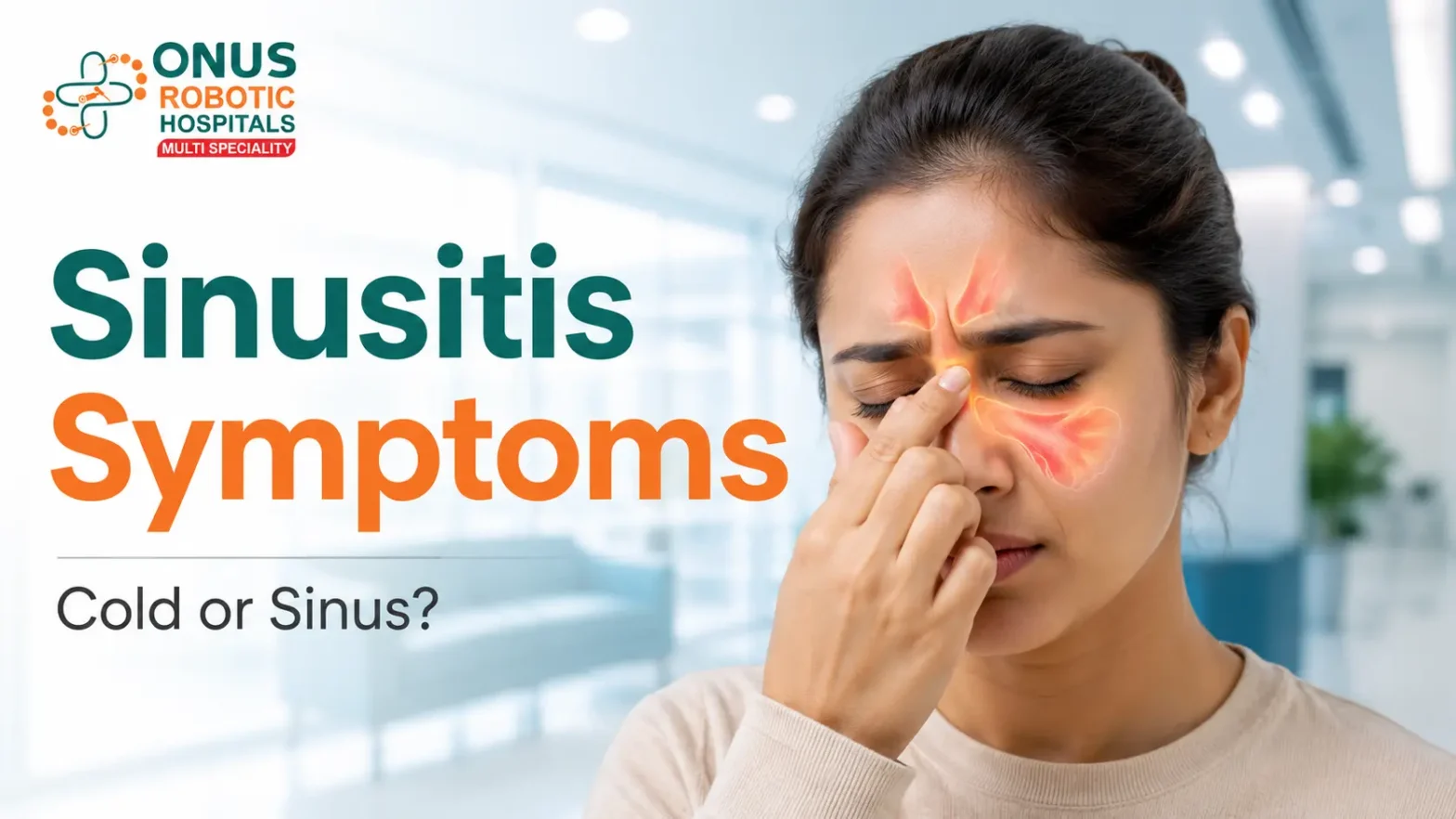
Difference Between Common Cold and Sinusitis
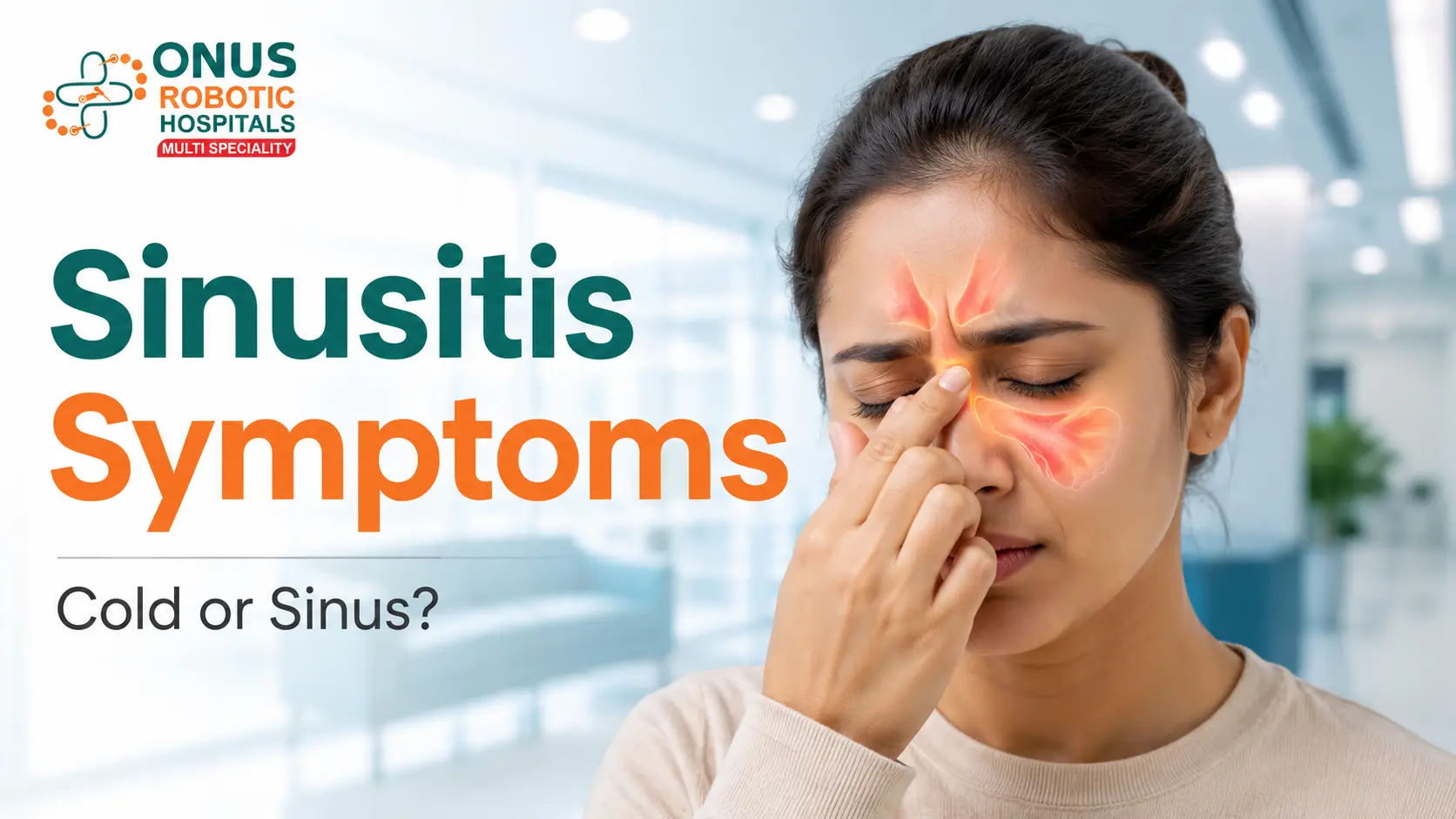
A common cold usually causes watery runny nose, sneezing, mild throat irritation, mild cough, and nasal congestion. It often improves within a few days.
Sinusitis is more likely when symptoms last longer, are more intense, or include facial pain, thick discharge, bad smell, fever, and breathing difficulty.
Common Cold Usually Has:
- Watery nasal discharge
- Sneezing
- Mild cough
- Mild throat irritation
- Mild nasal block
- Gradual improvement
Sinusitis May Have:
- Blocked nose
- Facial pain or pressure
- Sinus headache
- Thick nasal discharge
- Post-nasal drip
- Bad smell
- Fever
- Symptoms lasting many days
- Repeated episodes
Why Facial Pain and Headache Happen
Facial pain and sinus headache happen when mucus gets trapped inside swollen or blocked sinuses. This increases pressure around the forehead, cheeks, nose, and eyes.
Pain may worsen while bending forward, lying down, or during severe nasal blockage. Mayo Clinic describes sinus infection symptoms as nasal congestion with pain, swelling, and pressure around the eyes, nose, cheeks, or forehead that may worsen when bending over.
When Blocked Nose Becomes Serious
A blocked nose should not be ignored if it is persistent, severe, one-sided, associated with repeated infection, or affecting sleep and breathing.
Consult an ENT specialist if you have:
- Blocked nose lasting many days
- Breathing difficulty through the nose
- Facial pain or pressure
- Thick discharge
- Bad smell
- Fever
- Repeated sinus headache
- Snoring or sleep disturbance
- Symptoms not improving with routine care
- Frequent recurrence
- Role of Allergy and Infection
Allergy can cause repeated sneezing, watery nose, blocked nose, itching, and post-nasal drip. When allergy is not controlled, it can lead to repeated nasal swelling and sinus blockage.
Infection may occur after a viral cold or due to trapped mucus inside the sinuses. Sinusitis can also be linked to nasal polyps or swelling of the sinus lining due to allergy.
Common triggers include:
- Dust
- Pollution
- Weather changes
- Pollen
- Smoke
- Strong smells
- Viral infections
- Nasal blockage
- Deviated septum
- Nasal polyps
Diagnosis of Sinusitis
An ENT specialist may diagnose sinusitis based on symptoms, physical examination, and nasal evaluation. Depending on severity, recurrence, or duration, tests may include:
- ENT examination
- Nasal endoscopy
- Allergy evaluation
- Sinus assessment
- CT scan of paranasal sinuses in selected cases
- Evaluation for deviated septum, nasal polyps, or adenoids
- Throat and ear examination if symptoms are associated
Accurate diagnosis is important because common cold, allergy, migraine, deviated septum, nasal polyps, and sinusitis can overlap.
Treatment Options
Treatment depends on the cause and severity.
1. Common Cold-Related Sinus Symptoms
Many viral cold-related symptoms improve with supportive care such as rest, fluids, steam inhalation, saline spray, and doctor-advised medicines.
2. Allergy Control
If allergy is the main trigger, treatment may include allergy medicines, nasal sprays, saline rinses, and avoiding triggers.
3. Sinusitis Treatment
Sinusitis treatment may include:
- Nasal saline wash
- Steam inhalation
- Nasal sprays
- Pain and fever medicines
- Antibiotics only when bacterial infection is suspected
- Treatment of allergy or nasal blockage
- Follow-up if symptoms persist
4. Advanced ENT Treatment
If symptoms are chronic, recurrent, or due to structural blockage, the ENT specialist may advise further evaluation and advanced treatment. Surgery is not needed for every sinus problem; it is considered only in selected cases where medical treatment is not enough.
When Should You Consult an ENT Doctor?
Consult an ENT specialist if you have:
- Repeated cold
- Blocked nose
- Sinus headache
- Facial pressure
- Thick nasal discharge
- Post-nasal drip
- Bad smell
- Fever with sinus symptoms
- Breathing difficulty through the nose
- Symptoms lasting more than 7–10 days
- Symptoms that keep coming back
- Sleep disturbance due to nasal blockage
Early diagnosis and proper treatment can help prevent complications and improve breathing comfort.
Expert Sinus & Allergy Care at ONUS Robotic Hospitals
At ONUS Robotic Hospitals, patients with sinusitis, allergy, blocked nose, repeated sneezing, sinus headache, facial pain, post-nasal drip, and breathing-related ENT issues receive expert evaluation and personalized care.
For Appointments:
Consultant ENT Head & Neck Surgeon
ONUS Robotic Hospitals – Hyderabad
👉 link: contact-us or book-appointment