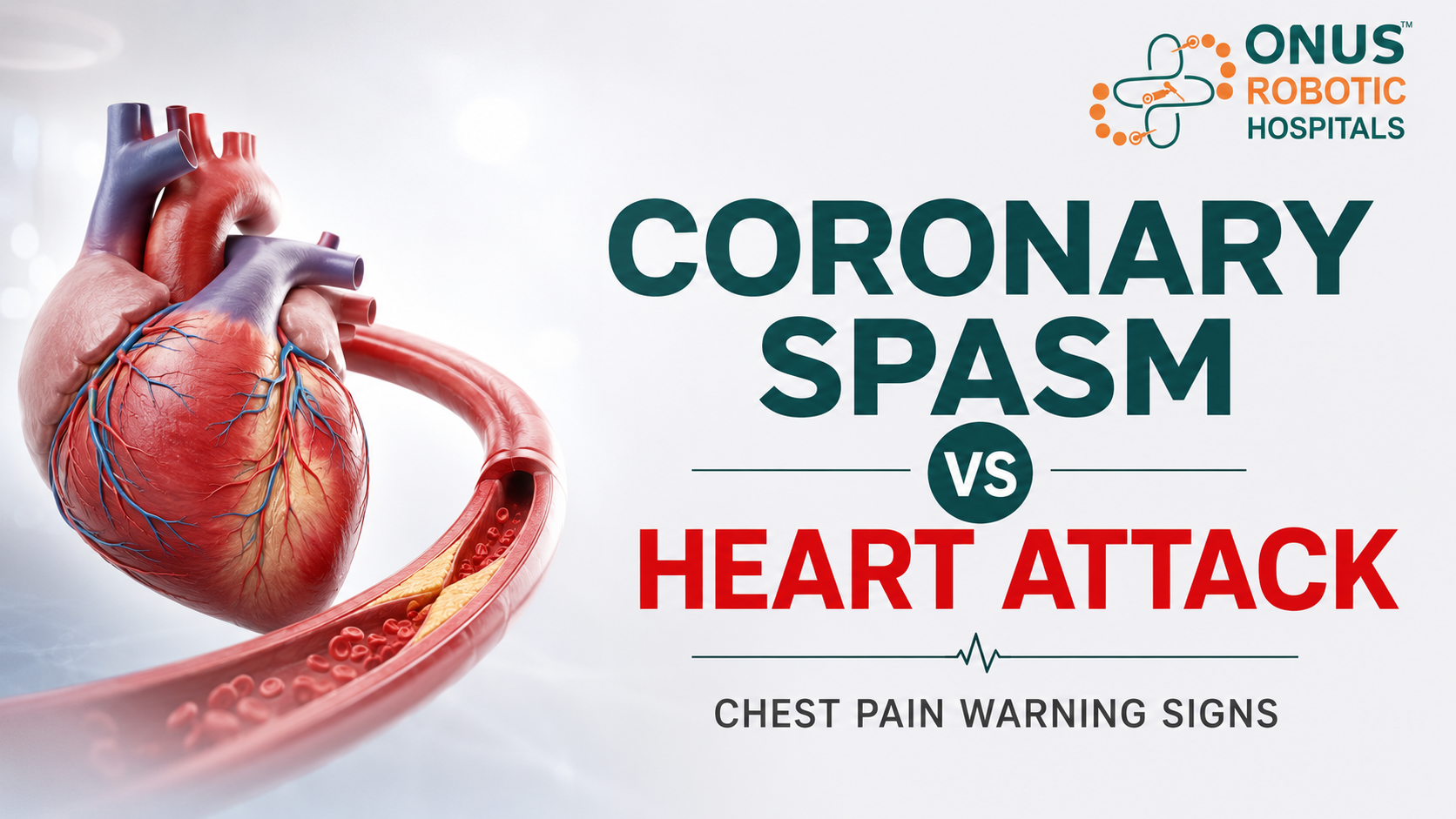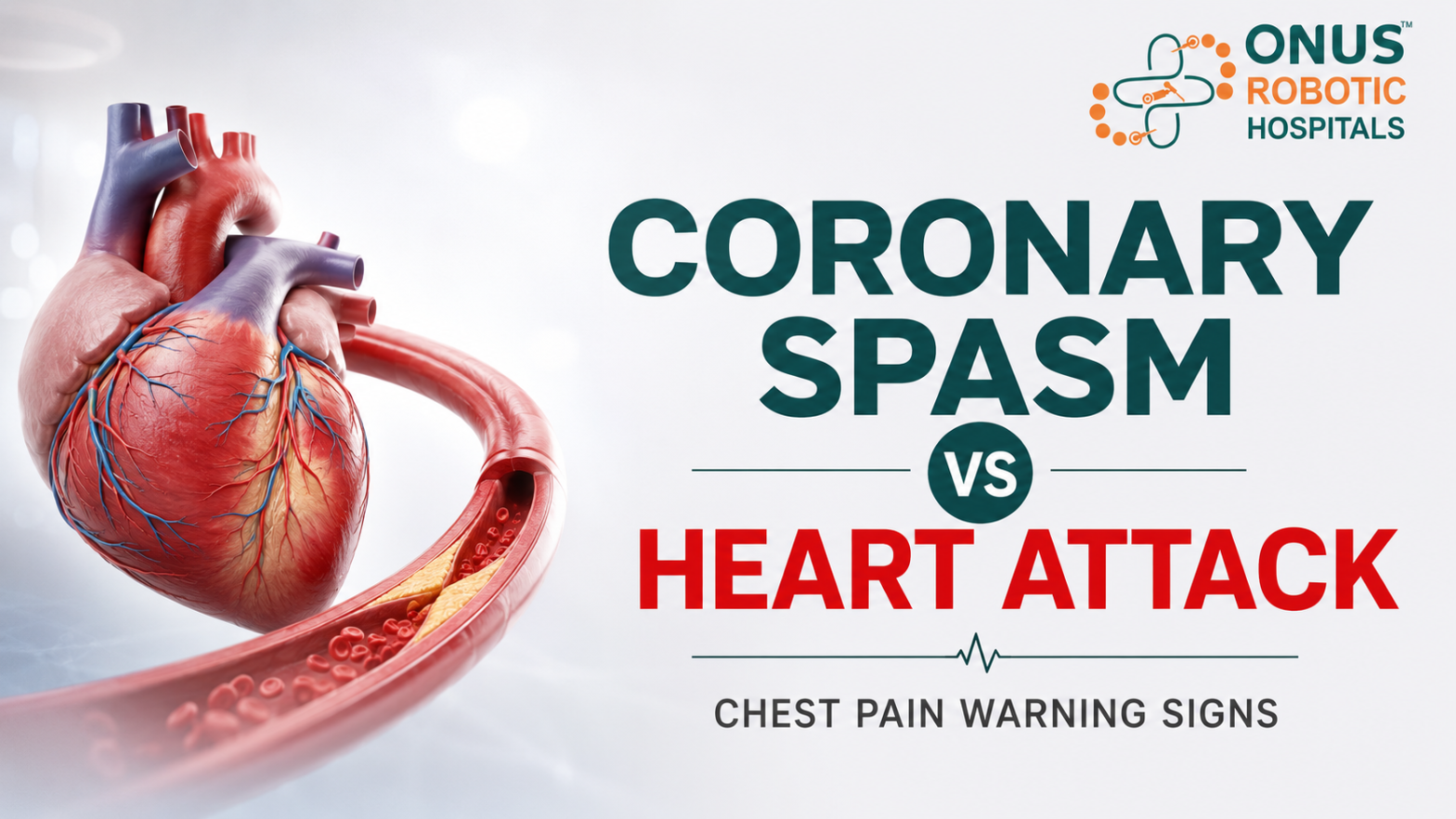
Common Symptoms of Coronary Spasm
Coronary spasm may cause:
Sudden chest pain
Chest tightness
Chest pressure at rest
Pain late night or early morning
Pain that comes and goes
Shortness of breath
Palpitations in some cases
Sweating or discomfort in severe cases
Some patients may have normal angiography between episodes, so diagnosis needs careful cardiology evaluation.
Common Heart Attack Symptoms
Heart attack symptoms may include:
Chest pressure, tightness, squeezing, heaviness, or pain
Pain spreading to the left arm, shoulder, back, neck, jaw, teeth, or upper abdomen
Shortness of breath
Cold sweating
Nausea or vomiting
Dizziness or lightheadedness
Unusual fatigue
Indigestion-like discomfort
Fainting in severe cases
The American Heart Association lists heart attack warning signs such as chest discomfort, discomfort in the arms, back, neck, jaw, or stomach, shortness of breath, cold sweat, nausea, and lightheadedness.
When Chest Pain Needs Emergency Care
Do not wait at home if chest pain is severe, recurrent, or associated with warning signs.
Seek emergency care immediately if chest pain is associated with:
Sweating
Breathlessness
Nausea
Vomiting
Jaw pain
Left arm pain
Back pain
Shoulder pain
Dizziness
Fainting
Unusual fatigue
Chest heaviness lasting more than a few minutes
Pain that goes and comes back
Mayo Clinic describes common heart attack symptoms as chest pain or pressure, pain spreading to the shoulder, arm, back, neck, jaw, teeth, or upper belly, cold sweat, fatigue, lightheadedness, nausea, and shortness of breath.
Diagnosis: ECG, 2D Echo, Blood Tests and Angiogram
Because coronary spasm and heart attack can look similar, diagnosis requires proper tests.
ECG
ECG helps detect electrical changes in the heart. During a heart attack or spasm episode, ECG may show signs of reduced blood flow.
Blood Tests
Cardiac blood tests such as troponin help identify heart muscle injury. If troponin is elevated, it may suggest myocardial injury and needs urgent evaluation.
2D Echo
2D Echo helps assess heart pumping function, wall motion, valve function, and complications.
Angiogram
An angiogram helps look at the coronary arteries. It can identify major blockages and may also help diagnose spasm in selected cases. Coronary angiography can reveal focal coronary artery spasm, especially when paired with typical symptoms and ECG changes.
Cardiac CT
In selected patients, cardiac CT may help evaluate coronary artery disease risk and anatomy.
Treatment Approach
Treatment depends on the diagnosis.
Coronary Spasm Treatment
Treatment may include medicines that relax the coronary arteries and prevent spasms. Mayo Clinic notes that nitrates can quickly ease chest pain and calcium channel blockers help relax arteries and reduce the risk of coronary artery spasms.
Lifestyle changes may include:
Avoid smoking
Avoid tobacco
Manage stress
Avoid stimulant drugs
Control BP, sugar, and cholesterol
Follow cardiology medicines correctly
Do not stop medicines without doctor advice
Heart Attack Treatment
Heart attack treatment is time-sensitive. It may include emergency medicines, blood thinners, angioplasty, stenting, cath lab procedure, ICU care, and cardiac rehabilitation depending on severity.
Do not drive yourself if you suspect a heart attack. Call emergency medical help.
Why Early Cardiology Consultation Matters
Chest pain can come from acidity, muscle pain, anxiety, lung problems, coronary spasm, angina, or heart attack. But because heart-related chest pain can be life-threatening, it is safer to evaluate early rather than wait.
Early consultation helps identify:
Heart attack
Coronary spasm
Angina
Coronary artery disease
Heart rhythm problems
Valve disease
Heart failure
Other cardiac risks
Expert Cardiac Care at ONUS Robotic Hospitals
At ONUS Robotic Hospitals, patients with chest pain, breathlessness, suspected heart attack, coronary spasm, heart disease, BP, diabetes-related heart risk, and emergency cardiac symptoms receive timely evaluation and personalized treatment.
For Appointments:
Senior Clinical Cardiologist
ONUS Robotic Hospitals – Hyderabad
👉 link: contact-us or book-appointment