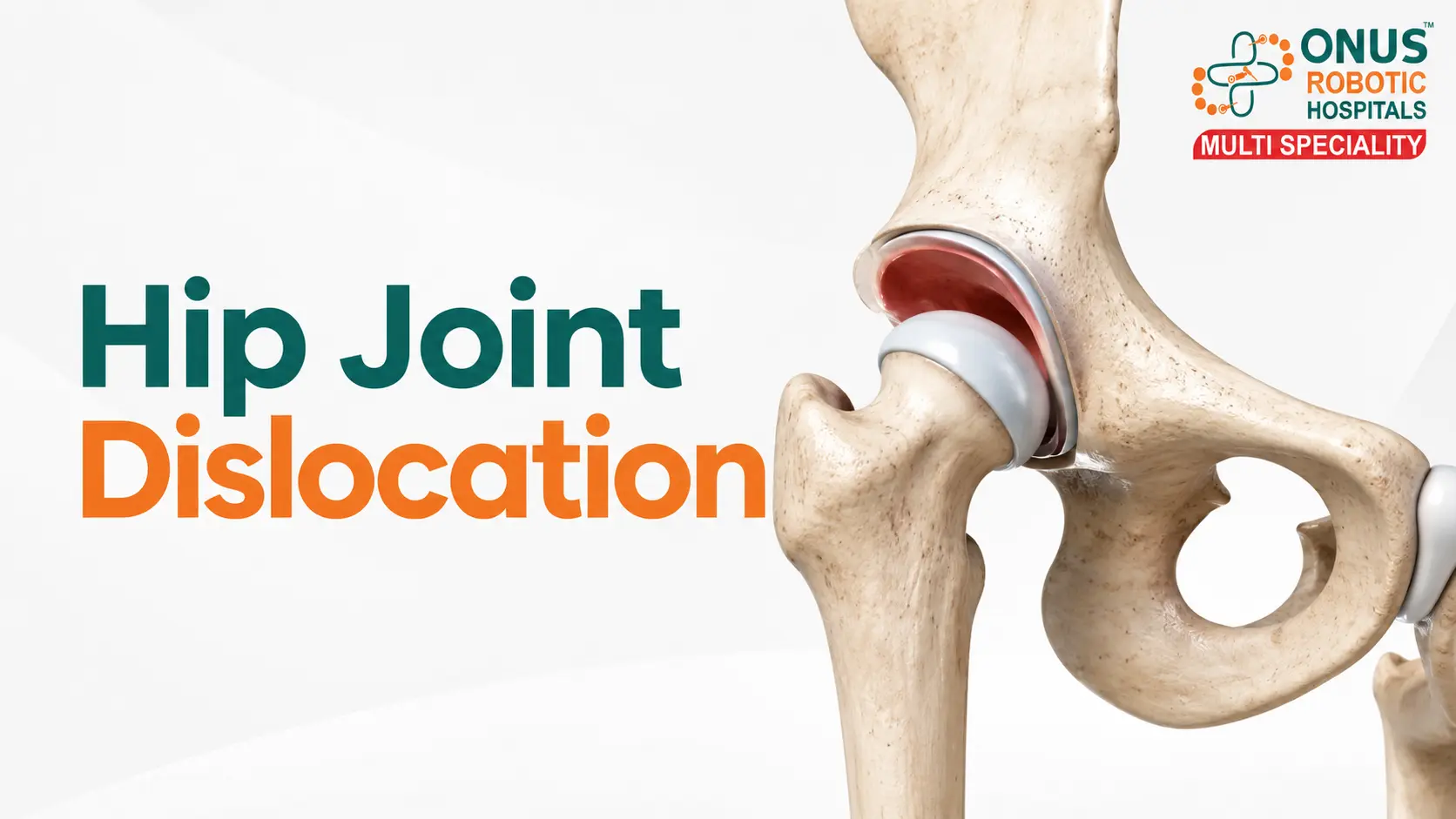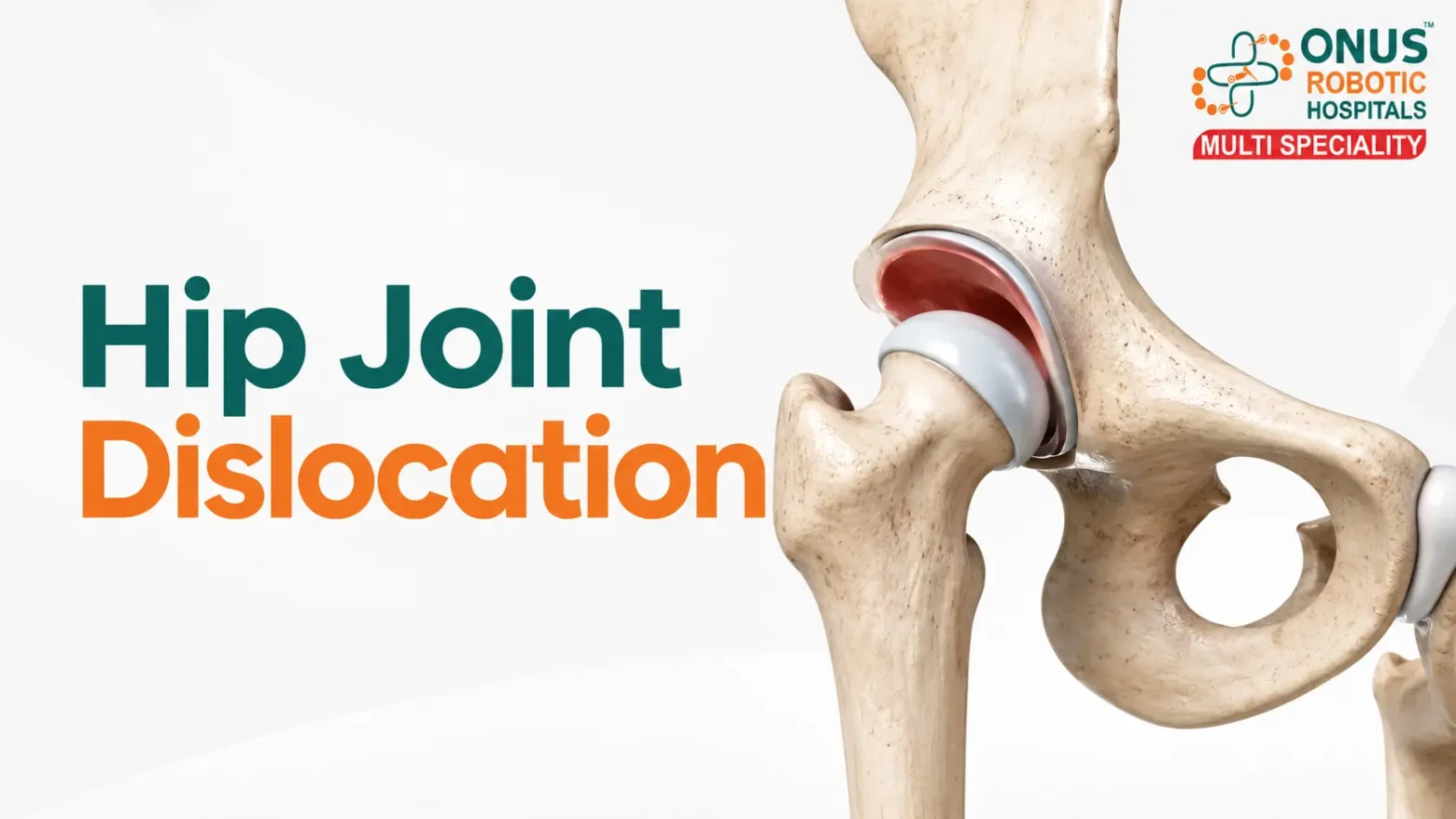
Hip joint dislocation is a serious orthopedic emergency where the thigh bone comes out of the hip socket. It usually happens due to road traffic accidents, falls from height, sports injuries, or major trauma. In some cases, patients with previous hip replacement can also develop hip dislocation.
A dislocated hip causes severe pain and usually makes it difficult or impossible to move the leg. Cleveland Clinic describes hip dislocation as a medical emergency because it can cause acute pain, disable the leg, and injure nearby blood vessels, nerves, ligaments, and tissues.
What Is Hip Joint Dislocation?
The hip is a ball-and-socket joint. The ball-shaped head of the thigh bone fits into the socket of the pelvis. In hip dislocation, this ball comes out of the socket.
This can happen in two major ways:
Posterior dislocation: The thigh bone moves backward out of the socket. This is the most common type and is often seen after road traffic accidents or dashboard injuries.
Anterior dislocation: The thigh bone moves forward out of the socket. This is less common but still serious.
Hip dislocation may occur alone or along with acetabular fracture, femoral head fracture, pelvic injury, ligament injury, cartilage injury, or nerve injury.
Common Causes of Hip Dislocation
Hip dislocation usually requires significant force because the hip joint is naturally stable.
Common causes include:
- Road traffic accidents
- Falls from height
- Major trauma
- Sports injuries
- Workplace injuries
- High-impact injury
- Dashboard injury during car accidents
- Previous hip replacement dislocation
- Elderly fall injuries in selected cases
In patients with hip replacement, dislocation is uncommon, but the risk is higher in the first few months after surgery while tissues are healing. AAOS notes that closed reduction can often put the artificial hip back into place, but repeated dislocation may need further surgery.
Symptoms You Should Not Ignore
Hip dislocation symptoms are usually severe and sudden.
Common symptoms include:
- Severe hip pain
- Inability to stand or walk
- Inability to move the leg
- Leg appearing shorter or rotated
- Hip deformity
- Pain after accident or fall
- Swelling around hip
- Numbness or tingling in the leg
- Weakness in foot or ankle
- Severe discomfort with any hip movement
If hip dislocation is suspected, the patient should not try to walk or force the leg into position. Emergency orthopedic care is required.
Why Hip Dislocation Is an Emergency
Hip dislocation needs urgent treatment because delayed reduction can increase the risk of long-term complications. Orthopedic references emphasize urgent reduction to reduce the risk of avascular necrosis, followed by CT scan evaluation for associated injuries such as loose bodies, femoral head fracture, or acetabular fracture.
When the femoral head comes out of the socket, blood supply to the hip joint can be affected. Delay in treatment may increase the chance of bone damage, cartilage injury, nerve injury, and future arthritis.
Diagnosis: X-Ray, CT Scan and MRI
Diagnosis begins with emergency clinical examination. The doctor checks limb position, pain, deformity, pulse, sensation, nerve function, and associated injuries.
X-Ray
X-ray is usually the first test. It confirms the dislocation, shows the direction of dislocation, and helps identify obvious fractures.
CT Scan
CT scan is commonly advised after reduction or in complex cases to check for acetabular fracture, femoral head fracture, loose bone fragments, joint surface damage, or incomplete reduction.
MRI
MRI may be advised later in selected cases to assess cartilage injury, soft tissue injury, femoral head blood supply, or suspected avascular necrosis.
Imaging tests used after dislocation may include X-rays, CT scan, MRI, or ultrasound depending on the injury and suspected internal damage.
Emergency Treatment: Hip Reduction
The main emergency treatment is hip reduction, which means putting the thigh bone back into the hip socket.
This should be done by trained medical professionals, usually under sedation or anesthesia. It should not be attempted at home or by untrained people.
Treatment may include:
- Emergency pain control
- X-ray confirmation
- Closed reduction under sedation/anesthesia
- Post-reduction X-ray
- CT scan to check associated injuries
- Immobilization or movement restrictions
- Monitoring nerve and blood supply
- Surgery if closed reduction fails or fractures are present
When Surgery May Be Needed
Not every hip dislocation needs surgery. However, surgery may be required if:
- Closed reduction fails
- There is acetabular fracture
- There is femoral head fracture
- Bone fragments are trapped inside the joint
- The hip remains unstable
- There is repeated dislocation after hip replacement
- There is associated major trauma
- Joint congruity is not restored
Surgery depends on the injury pattern and may involve fixation, removal of loose fragments, repair of associated fractures, or revision surgery in patients with hip replacement dislocation.
Possible Complications of Delayed Treatment
Hip dislocation can lead to serious complications, especially if treatment is delayed or if there are associated fractures.
Possible complications include:
- Avascular necrosis of femoral head
- Sciatic nerve injury
- Hip arthritis
- Chronic hip pain
- Hip stiffness
- Recurrent dislocation
- Cartilage damage
- Difficulty walking
- Limping
- Reduced hip movement
- Need for future hip surgery
AAOS explains that hip dislocation can injure the sciatic nerve, causing lower leg weakness, and can also tear blood vessels to the femoral head, leading to osteonecrosis or avascular necrosis.
Recovery After Hip Dislocation
Recovery depends on the type of dislocation, time taken for reduction, associated fractures, nerve injury, hip stability, age, and overall health.
Recovery care may include:
- Pain management
- Protected weight bearing
- Walker or crutch support
- Hip precautions
- Follow-up X-rays or CT scan
- Physiotherapy
- Muscle strengthening
- Gait training
- Avoiding risky hip positions
- Monitoring for AVN and arthritis
Patients with previous hip replacement dislocation may need specific hip precautions and implant evaluation.
Role of Physiotherapy
Physiotherapy is important after the emergency phase. The goal is to restore safe movement, strength, balance, and walking ability without risking repeat dislocation.
Physiotherapy may include:
- Gentle range-of-motion exercises
- Hip strengthening
- Core strengthening
- Gait training
- Balance exercises
- Safe sitting and walking training
- Return-to-work guidance
- Fall prevention in elderly patients
Exercises should be started only as advised by the orthopedic specialist.
When Should You Consult an Orthopedic Specialist?
Seek emergency orthopedic care if you have:
- Severe hip pain after accident
- Inability to move the leg
- Inability to stand or walk
- Hip deformity
- Leg shortening or abnormal rotation
- Numbness or tingling in the leg
- Pain after fall from height
- Hip pain after road accident
- Dislocation after hip replacement
Hip dislocation should not be ignored or delayed.
Expert Hip Dislocation & Trauma Care at ONUS Robotic Hospitals
At ONUS Robotic Hospitals, patients with hip dislocation, hip injuries, road accident trauma, fracture-dislocations, hip replacement dislocation, pelvic injuries, and advanced orthopedic emergencies receive expert evaluation and personalized treatment.
For Appointments:
Dr. Balaraju Naidu, Robotic Orthopedic Surgeon
ONUS Robotic Hospitals – Hyderabad
👉 link: contact-us or book-appointment