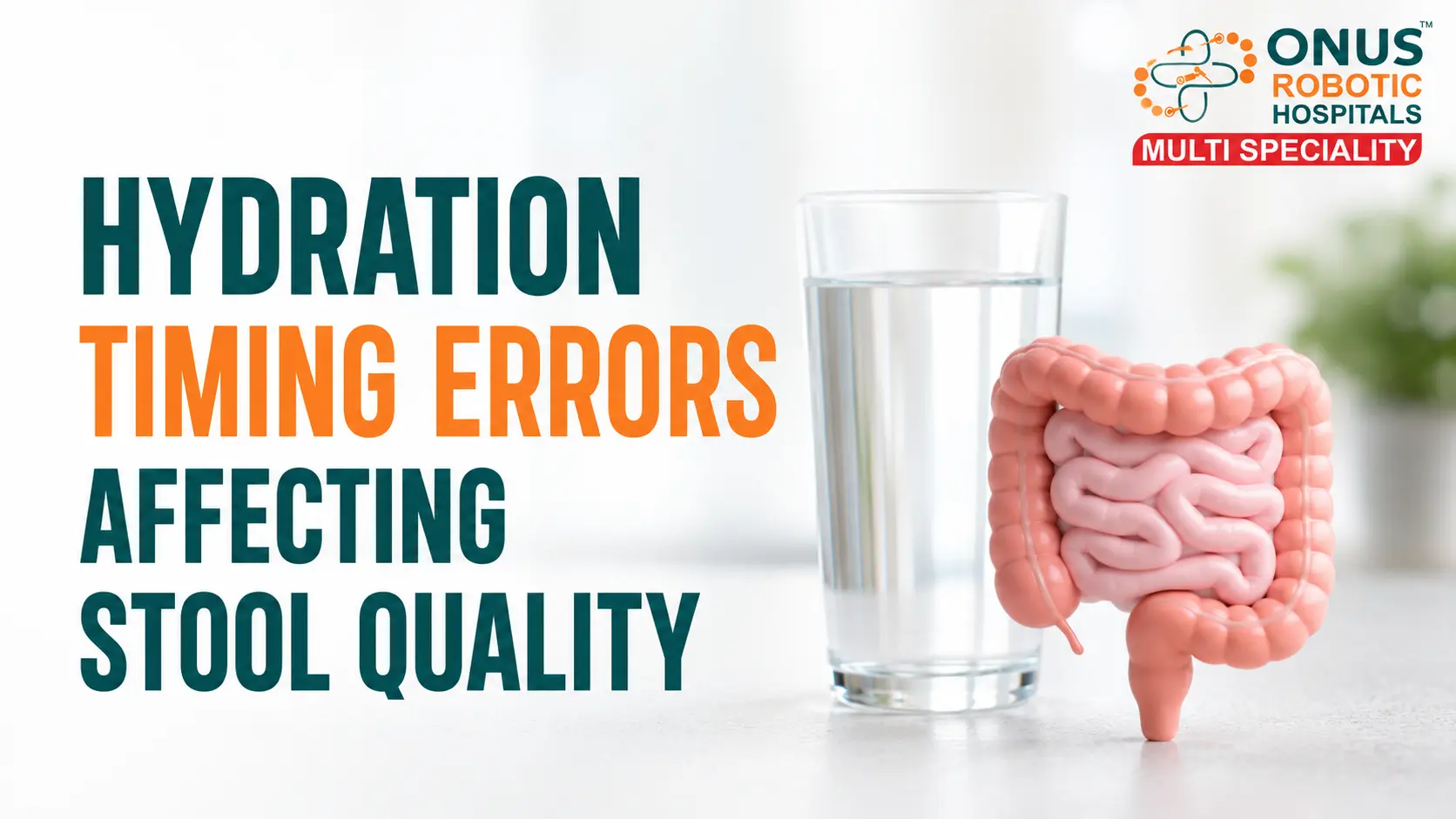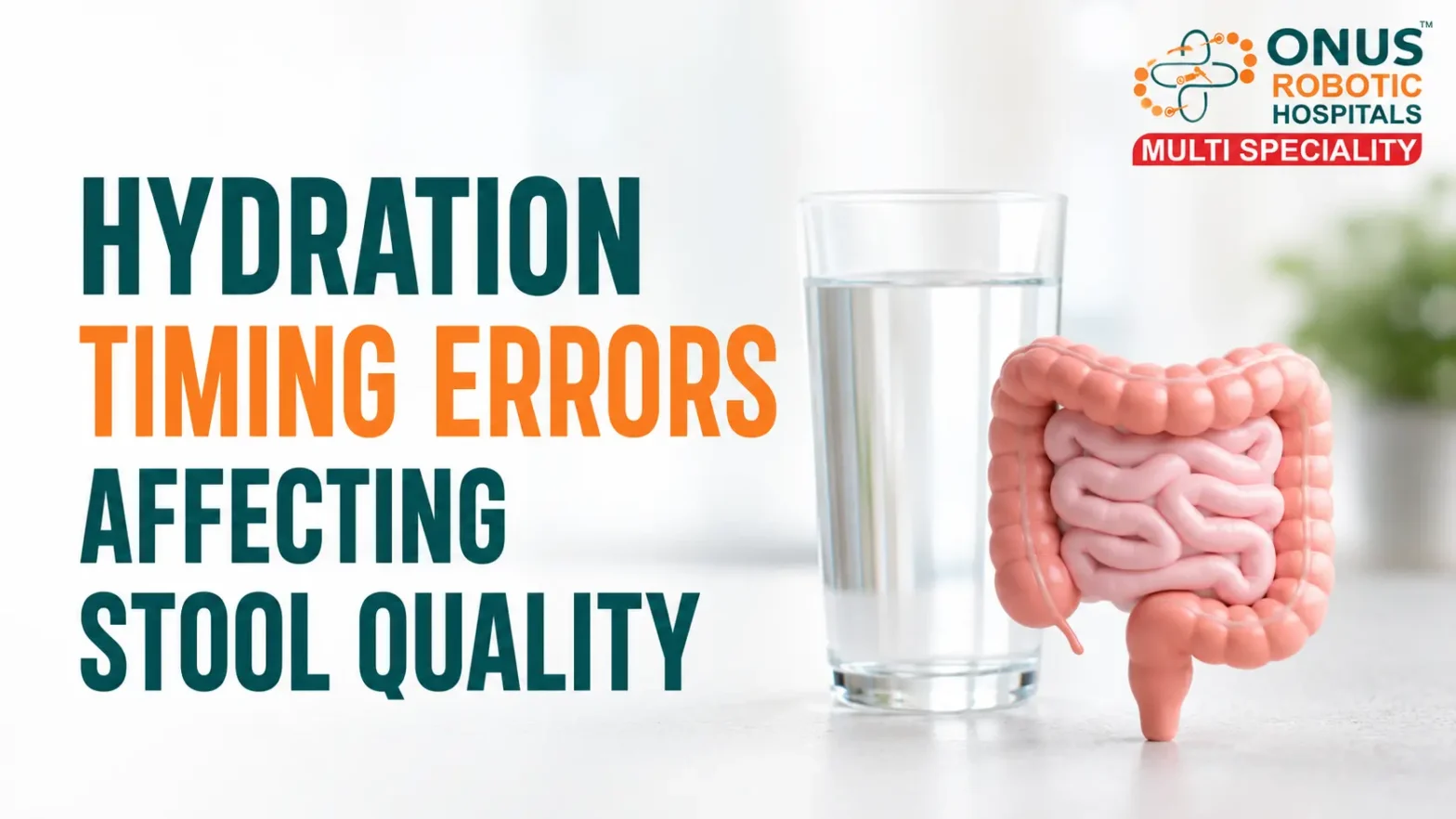
Hydration Timing Errors Affecting Stool Quality: Senior Consultant – General, Laser & Laparoscopic Surgery, Onus Robotic Hospital
Proper hydration plays an important role in digestion, bowel movement, and stool quality. Many people drink water randomly or drink very little throughout the day. This can lead to hard stools, constipation, repeated straining, and discomfort during bowel movements.
Poor hydration habits can also worsen conditions like piles, fissures, and chronic bowel strain. In this awareness session, Senior Consultant – General, Laser & Laparoscopic Surgery at ONUS Robotic Hospitals, explains how hydration timing affects stool quality and why water intake should be combined with fiber, movement, and healthy toilet habits.
How Hydration Affects Stool Quality
Water helps keep stool soft and easier to pass. When the body does not get enough fluids, stool can become dry, hard, and difficult to pass. Dehydration happens when the body uses or loses more fluid than it takes in, reducing the fluids needed for normal body functions.
When stool becomes hard, people often strain during bowel movements. Repeated straining increases pressure around the anal region and may contribute to piles, fissures, pain, and bleeding.
Common Water-Drinking Mistakes
Many people make simple hydration mistakes that affect bowel habits:
Drinking very little water throughout the day
Drinking most water only at night
Depending mostly on tea, coffee, or sugary drinks
Increasing fiber without increasing water
Ignoring thirst during work hours
Not drinking enough water in hot weather
Not increasing fluids during exercise or sweating
Skipping water after waking up
Holding urine and stool for long periods
Eating dry, low-fiber foods without enough fluids
Hydration should be consistent throughout the day. Drinking a lot of water at one time does not always correct poor hydration habits.
Why Hard Stools Cause Straining
Hard stools are difficult to pass. They can cause pain, repeated pushing, incomplete evacuation, and irritation around the anus. Constipation commonly occurs when bowel movements become less frequent and stools become difficult to pass, often due to changes in diet, routine, or inadequate fiber intake.
Repeated straining can worsen:
Piles
Hemorrhoids
Anal fissures
Rectal bleeding
Pain during stool
Swelling near the anus
Itching and irritation
Fear of passing stool
Connection Between Constipation, Piles and Fissures
Constipation is one of the most common reasons for piles and fissure-related symptoms. When stool is hard, the patient strains more. This increases pressure on the veins around the anus and can trigger or worsen hemorrhoids.
NIDDK explains that high-fiber foods can make stools softer and easier to pass, helping treat and prevent hemorrhoids. It also notes that water and other liquids help fiber work better.
A fissure may occur when hard stool causes a small tear near the anal opening. This can lead to sharp pain, burning, bleeding, and fear of passing stool.
Importance of Fiber + Water Combination
Fiber alone is not enough. If a patient increases fiber but does not drink enough water, stool may still remain hard or bloating may increase. Fiber needs fluid to work properly.
NIDDK recommends enough fiber and plenty of liquids to help fiber work better, and notes that adults generally need about 22 to 34 grams of fiber per day depending on age and sex.
Good fiber sources include:
Vegetables
Fruits
Whole grains
Millets
Beans
Lentils
Nuts and seeds
Salads
Oats
Increase fiber gradually to avoid gas and bloating.
Better Hydration Habits for Bowel Health
Healthy hydration habits can improve stool quality and reduce strain.
Practical tips include:
Drink water after waking up
Sip water regularly through the day
Do not wait until you feel very thirsty
Drink water between meals
Increase fluids during hot weather
Drink extra water with high-fiber meals
Reduce excess caffeine and sugary drinks
Carry a water bottle during work
Do not drink all water only at night
Combine hydration with walking and fiber
Mayo Clinic recommends plenty of fluids, high-fiber foods, regular exercise, not ignoring the urge to pass stool, and creating a regular schedule for passing stool to help prevent constipation.
Hydration Timing: Simple Daily Plan
A practical hydration routine may look like this:
After waking up: Drink water to start the day
Morning: Sip water between breakfast and lunch
Afternoon: Continue regular water intake
Evening: Drink water after activity or sweating
Dinner time: Avoid very dry meals
Night: Avoid excessive water right before sleep if it disturbs urination
The goal is steady hydration, not sudden over-drinking.
Warning Signs You Should Not Ignore
Consult a surgeon or doctor if you have:
Repeated constipation
Bleeding during stool
Pain during bowel movement
Swelling near the anus
Itching or burning sensation
Discomfort while sitting
Hard stools for many days
Severe straining
Black stools
Unexplained weight loss
Constipation lasting several weeks
Severe abdominal pain or vomiting
Cleveland Clinic advises contacting a healthcare provider if constipation is associated with severe pain, blood in stool, or lasts longer than three weeks.
When to Consult a Surgeon
You should consult a surgeon if constipation is repeatedly causing piles symptoms, fissure symptoms, bleeding, swelling, anal pain, or difficulty passing stool.
Early evaluation helps identify whether the problem is piles, fissure, fistula, infection, severe constipation, or another anorectal condition.
Expert Care at ONUS Robotic Hospitals
At ONUS Robotic Hospitals, patients with constipation, piles, fissures, bleeding during stool, anal pain, swelling, itching, and bowel-related discomfort receive expert evaluation and personalized treatment.
Consultation
📍 Dr. Ravi Kiran
Diabetologist & Preventive Medicine Specialist
Onus Robotic Hospital, Hyderabad