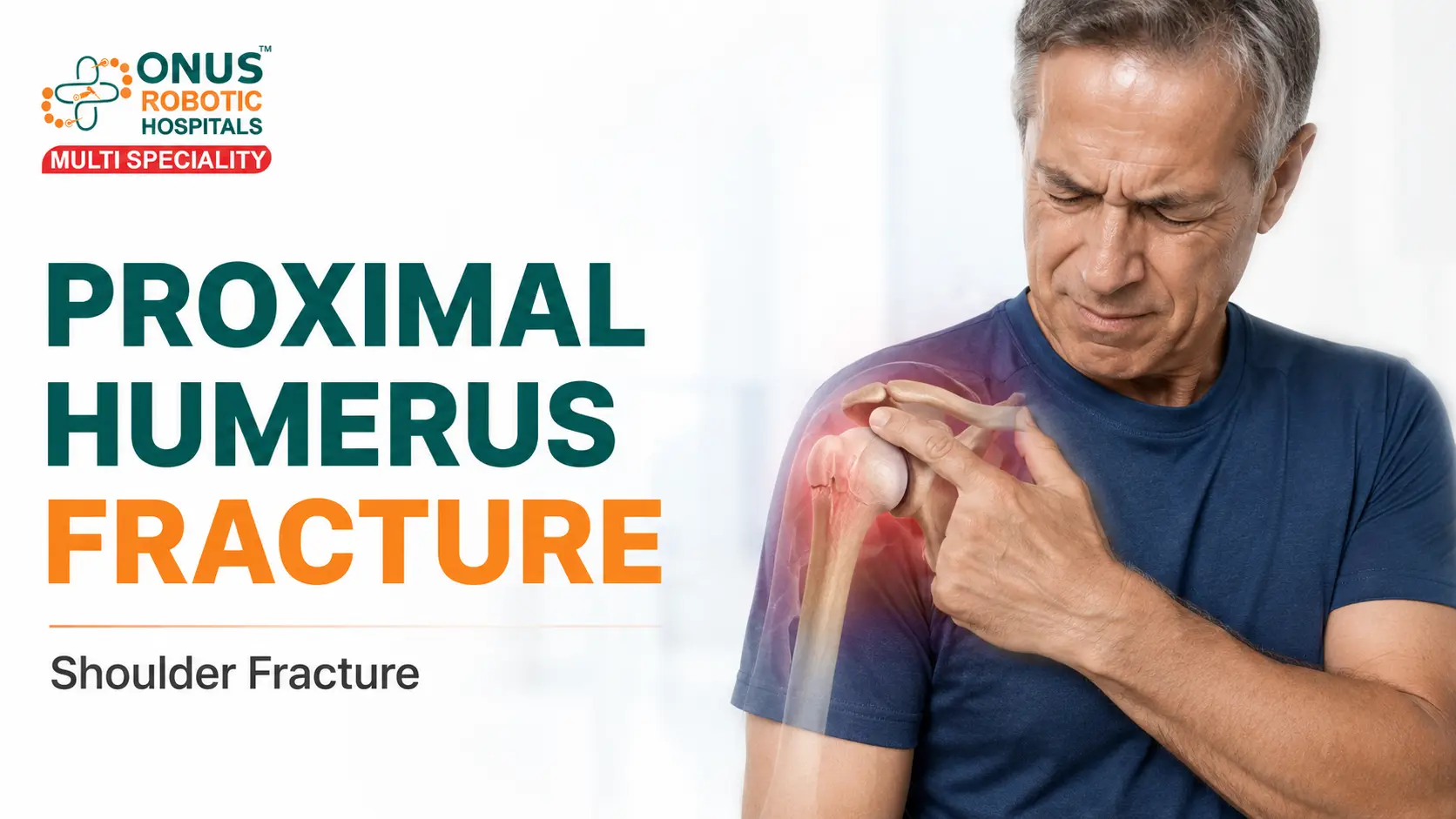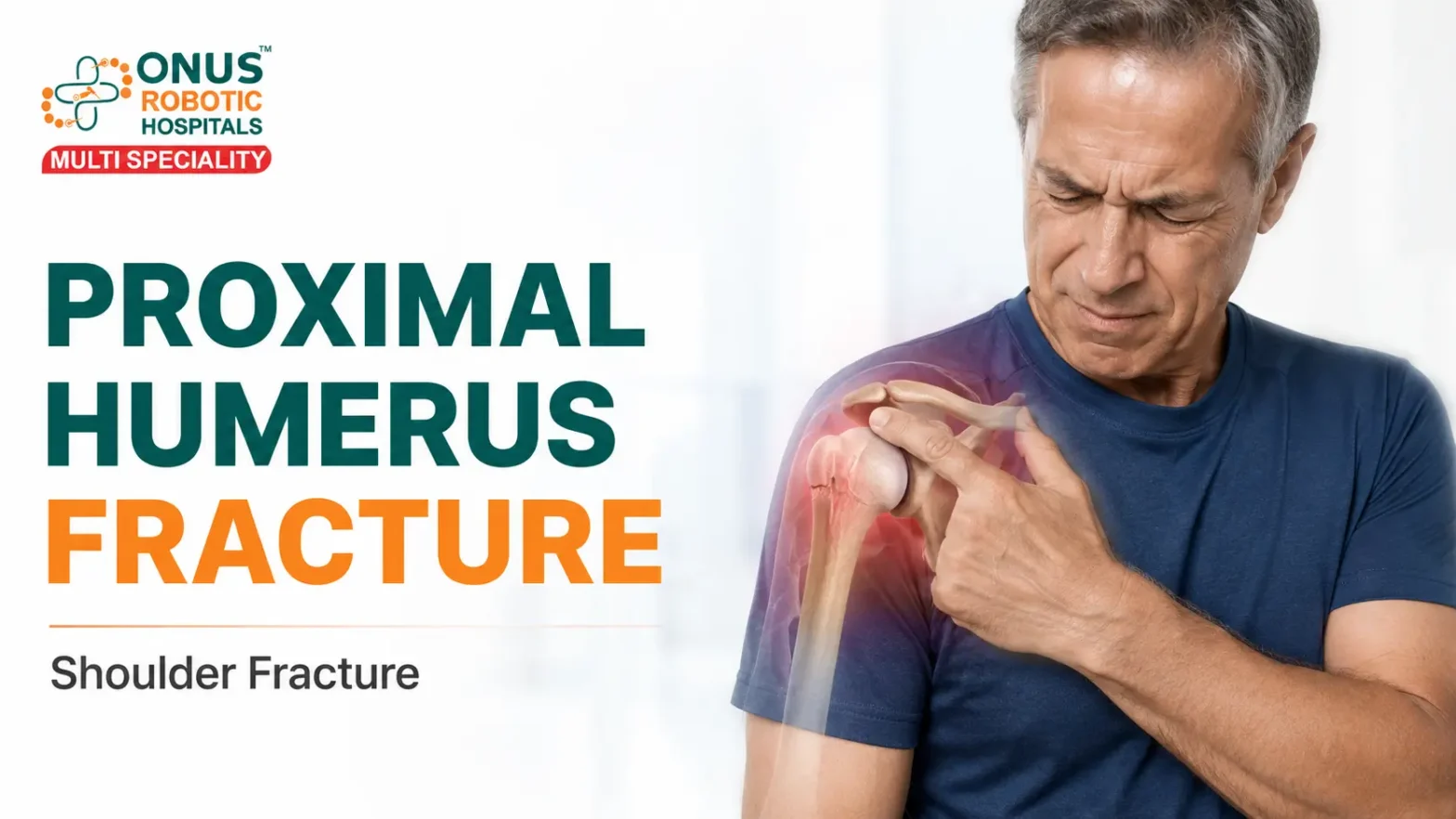
A Proximal Humerus Fracture is a break that occurs near the shoulder joint in the upper part of the arm bone. It commonly happens after falls, road traffic accidents, sports injuries, or injuries in elderly patients with weak bones.
This fracture can cause severe shoulder pain, swelling, bruising, difficulty lifting the arm, and reduced shoulder movement. Early orthopedic evaluation is important because delayed or improper treatment may lead to shoulder stiffness, weakness, deformity, and reduced function.
What Is a Proximal Humerus Fracture?
The humerus is the upper arm bone. The proximal humerus is the upper part of this bone, close to the shoulder joint. A fracture in this area can involve the humeral head, surgical neck, greater tuberosity, lesser tuberosity, or multiple bone fragments.
Many proximal humerus fractures are minimally displaced and can be treated without surgery, but displaced, unstable, complex, or joint-involving fractures may need surgical treatment.
Common Causes of Proximal Humerus Fracture
Common causes include:
- Falls on an outstretched hand
- Direct fall on the shoulder
- Road traffic accidents
- Sports injuries
- Workplace injuries
- Elderly fall injuries
- Osteoporosis or weak bones
- High-energy trauma in younger patients
In elderly patients, even a simple fall can sometimes cause a shoulder fracture due to reduced bone strength.
Symptoms You Should Not Ignore
Common symptoms include:
- Severe shoulder pain
- Swelling around the shoulder
- Bruising around the shoulder or upper arm
- Difficulty lifting the arm
- Pain while moving the shoulder
- Tenderness near the shoulder
- Visible deformity in severe cases
- Weakness in the arm
- Difficulty using the hand due to shoulder pain
- Pain after a fall or accident
A broken humerus can require surgery in some patients, while others may recover with a sling, cast, or splint, followed by physical therapy to regain movement.
When X-Ray, CT Scan or MRI May Be Needed
Diagnosis usually starts with physical examination and an X-ray. The doctor checks pain, swelling, bruising, shoulder movement, deformity, nerve function, and blood circulation.
X-Ray
X-ray helps confirm the fracture, identify fracture location, and assess alignment.
CT Scan
CT scan may be advised for complex fractures, multiple fragments, joint involvement, or surgical planning.
MRI
MRI may be advised in selected cases when soft tissue injury, rotator cuff injury, or unclear fracture pattern is suspected.
Proximal humerus fractures are usually diagnosed through physical exam and X-ray, while CT or MRI may be ordered if additional structures are injured or more detail is needed.
Treatment Options
Treatment depends on age, fracture type, bone quality, displacement, shoulder function needs, and overall health condition.
1. Non-Surgical Treatment
Many proximal humerus fractures can be treated without surgery when the fracture is stable and minimally displaced.
Non-surgical treatment may include:
- Arm sling or shoulder immobilizer
- Pain management
- Ice application
- Regular follow-up X-rays
- Early guided shoulder movement when safe
- Physiotherapy
- Gradual strengthening exercises
Conservative treatment often includes sling support and early range-of-motion exercises under supervision.
2. Surgical Treatment
Surgery may be required when the fracture is displaced, unstable, involving the joint, associated with dislocation, or unlikely to heal in good position.
Surgical options may include:
- Plate and screw fixation
- Intramedullary nail fixation
- Pin fixation in selected cases
- Shoulder replacement in severe fractures
- Reverse shoulder replacement in selected elderly patients with complex fractures
The exact surgery depends on the fracture pattern, bone quality, age, activity level, and surgeon’s assessment.
Importance of Physiotherapy After Fracture
Physiotherapy is very important after proximal humerus fracture treatment. Shoulder stiffness is a common problem if movement is delayed for too long or if rehabilitation is not followed properly.
Physiotherapy helps with:
- Pain reduction
- Shoulder range of motion
- Muscle strength
- Posture correction
- Arm function
- Daily activity recovery
- Prevention of stiffness
- Gradual return to work or sports
Exercise should begin only as advised by the orthopedic specialist or physiotherapist. Too much movement too early may affect healing, while too little movement may increase stiffness.
Recovery After Proximal Humerus Fracture
Recovery depends on fracture severity, age, bone quality, treatment method, physiotherapy, and overall health.
Recovery usually involves:
- Initial immobilization
- Pain and swelling control
- Follow-up X-rays
- Gradual shoulder exercises
- Strengthening phase
- Return to daily activities
- Regular doctor review
Elderly patients, diabetic patients, osteoporotic patients, and patients with complex fractures may need longer recovery and closer follow-up.
When Should You Consult an Orthopedic Specialist?
Consult an orthopedic specialist immediately if you have:
- Shoulder pain after a fall
- Swelling or bruising around the shoulder
- Inability to lift the arm
- Visible shoulder deformity
- Severe pain after accident
- Numbness or tingling in the arm
- Weakness in hand or fingers
- Pain not improving after injury
- Elderly fall with shoulder pain
Early diagnosis and proper treatment help reduce stiffness and improve shoulder function.
Expert Shoulder Fracture Care at ONUS Robotic Hospitals
At ONUS Robotic Hospitals, patients with proximal humerus fractures, shoulder fractures, trauma injuries, sports injuries, elderly fall injuries, and complex orthopedic conditions receive expert evaluation and personalized treatment.
For Appointments:
Dr. Balaraju Naidu, Robotic Orthopedic Surgeon
ONUS Robotic Hospitals – Hyderabad
👉 link: contact-us or book-appointment