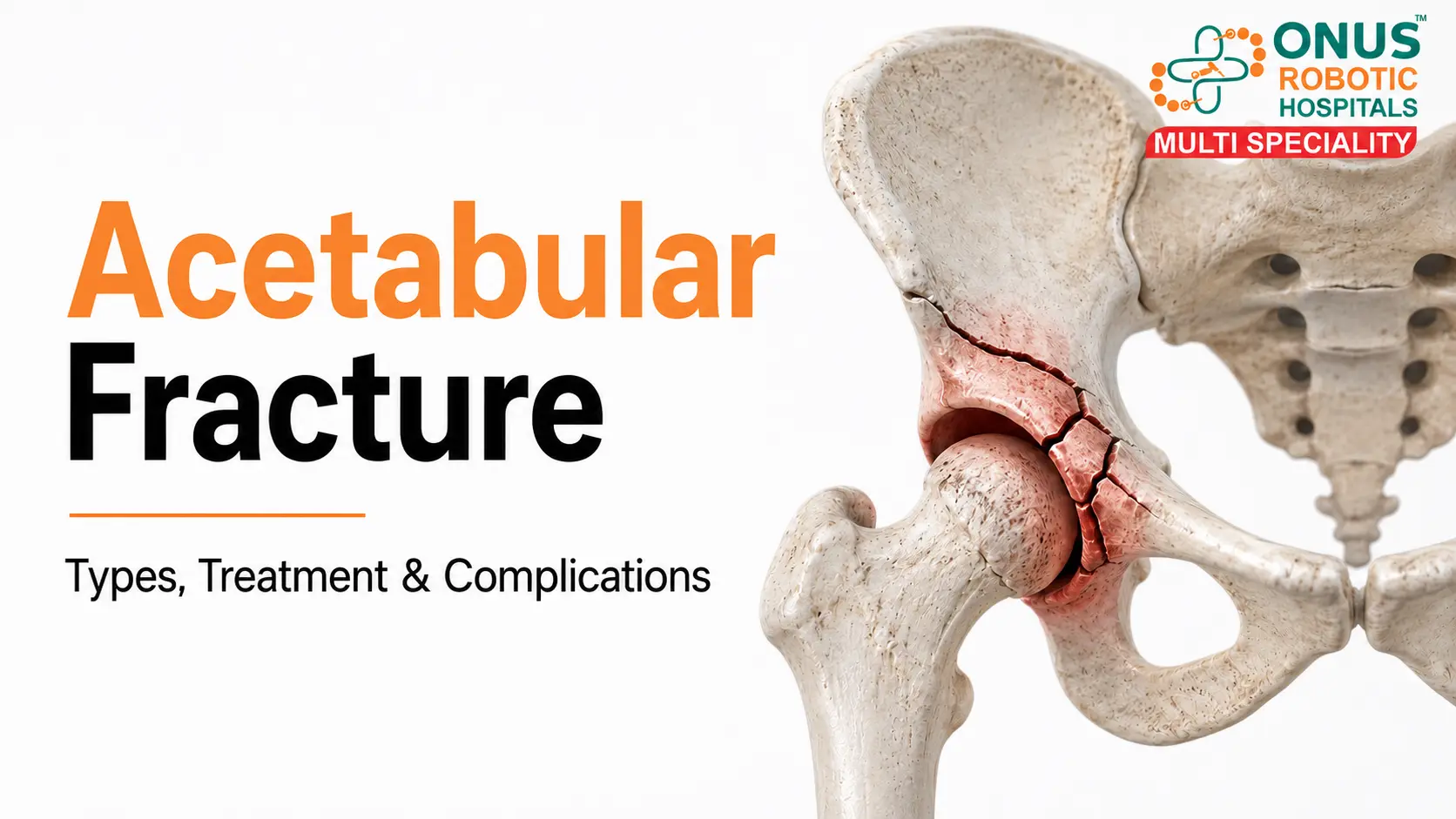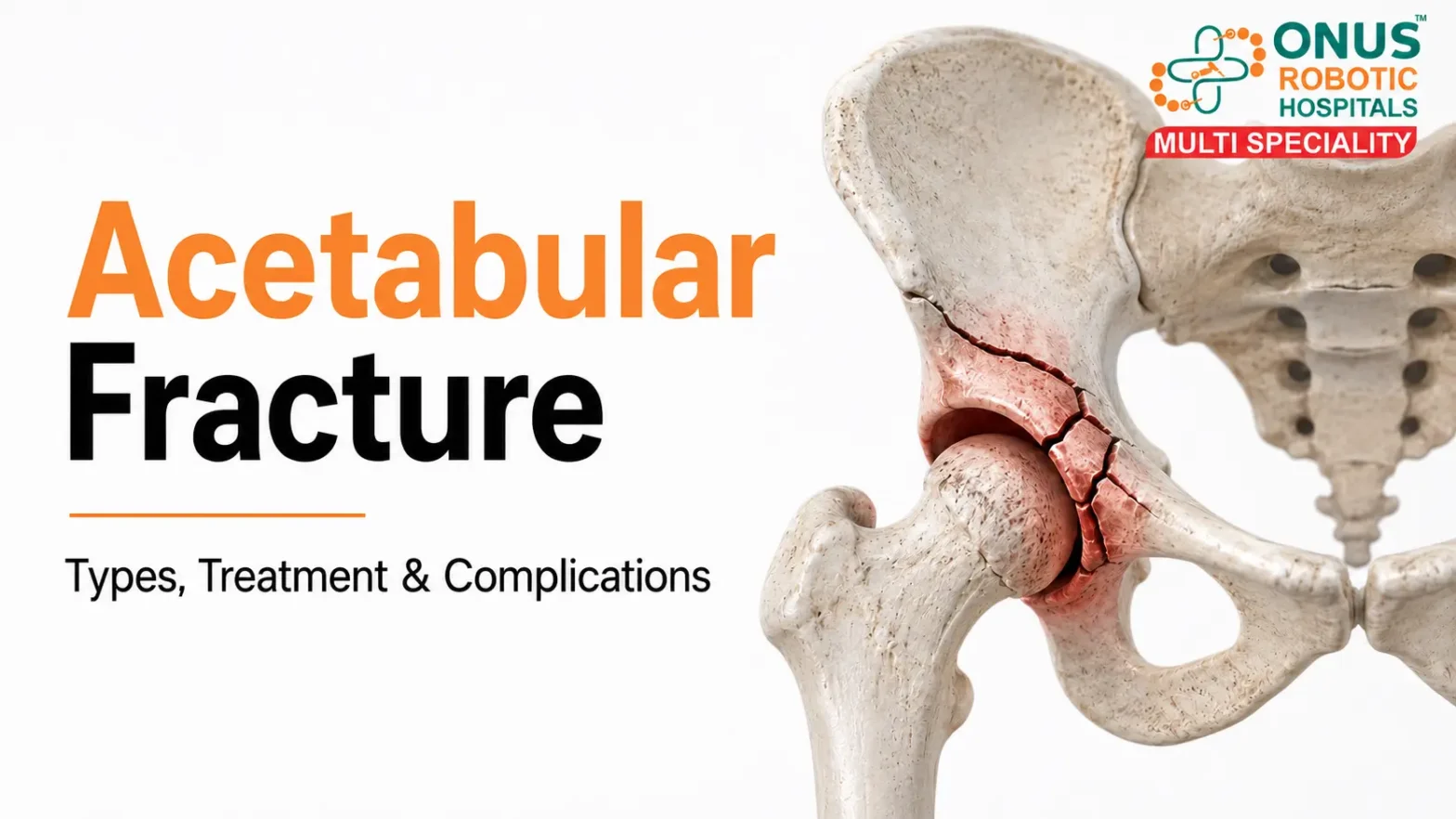
An acetabular fracture is a serious fracture involving the hip socket. The acetabulum is the socket part of the ball-and-socket hip joint, where the head of the thigh bone fits into the pelvis. These fractures are less common than many other hip fractures but are often more complex because they involve the joint surface.
Acetabular fractures usually occur due to high-impact injuries such as road traffic accidents, falls from height, or major trauma. In elderly patients, weak bones and even simple falls can sometimes cause acetabular fractures. These injuries need early orthopedic evaluation because delayed or improper treatment can lead to hip stiffness, arthritis, deformity, chronic pain, difficulty walking, and reduced quality of life.
What Is an Acetabular Fracture?
The acetabulum is the cup-shaped socket of the hip joint. When this socket breaks, the smooth joint surface may become irregular. Since the hip joint carries body weight and helps in standing, walking, sitting, and movement, acetabular fractures can seriously affect mobility.
Unlike some simple fractures, acetabular fractures may involve multiple fragments, joint displacement, hip dislocation, cartilage damage, or associated pelvic injuries.
Common Causes of Acetabular Fractures
Acetabular fractures commonly occur due to:
- Road traffic accidents
- Falls from height
- Major trauma
- Sports injuries
- Workplace injuries
- High-energy impact injuries
- Falls in elderly patients with weak bones
- Osteoporosis-related low-energy injuries
In younger patients, these fractures are often due to high-energy trauma. In older adults, poor bone quality can make the acetabulum vulnerable even after a relatively simple fall.
Symptoms You Should Not Ignore
Common symptoms include:
- Severe hip pain
- Pain after road accident or fall
- Inability to stand or walk
- Swelling around hip or pelvis
- Bruising
- Pain while moving the leg
- Pain while bearing weight
- Hip stiffness
- Visible deformity in severe trauma
- Numbness, tingling, or weakness if nerve injury is present
If the hip socket fracture is associated with hip dislocation, the pain and deformity may be more severe and urgent treatment may be needed.
Types of Acetabular Fractures
Acetabular fractures are classified based on the fracture pattern and the part of the socket involved. They may involve the anterior wall, posterior wall, anterior column, posterior column, transverse pattern, both columns, or combinations of these. Orthopedic trauma references note that acetabular fractures can involve one or two columns, one or two walls, or the roof of the acetabulum.
Common categories include:
- Posterior wall fracture
- Anterior wall fracture
- Posterior column fracture
- Anterior column fracture
- Transverse fracture
- T-shaped fracture
- Both-column fracture
- Associated fracture-dislocation
The treatment plan depends on the fracture type, displacement, joint stability, cartilage damage, age, bone quality, and overall health condition.
Diagnosis: X-Ray, CT Scan and MRI
Diagnosis begins with clinical examination and imaging. The doctor checks pain, limb position, movement, nerve function, blood circulation, associated injuries, and ability to bear weight.
X-Ray
X-ray helps identify the fracture and assess the hip joint alignment. Special pelvic X-ray views may be required.
CT Scan
CT scan is very important in many acetabular fractures because it shows the fracture pattern, number of fragments, joint involvement, and displacement more clearly. CT is frequently required for surgical planning.
MRI
MRI may be advised in selected cases when soft tissue injury, cartilage injury, occult fracture, or associated hip problems are suspected.
In emergency care, patients with suspected acetabular fractures are usually evaluated with X-rays and CT scan, especially if the femoral head and hip socket are out of place.
Treatment Options for Acetabular Fractures
Treatment depends on the fracture type, displacement, joint stability, age, bone quality, nerve status, associated injuries, and whether the hip joint remains congruent.
Non-Surgical Treatment
Non-surgical treatment may be considered when the fracture is stable, minimally displaced, and the hip joint alignment is maintained.
It may include:
- Pain management
- Bed rest or protected movement
- Walker or crutch support
- Restricted weight bearing
- Blood clot prevention measures
- Regular X-ray follow-up
- Physiotherapy and rehabilitation
- Monitoring for displacement
Even in non-surgical cases, close follow-up is necessary because the hip socket is a weight-bearing joint.
Surgical Treatment
Surgery may be required when the fracture is displaced, unstable, involves the joint surface, or is associated with hip dislocation. Acetabular fracture surgery aims to realign and stabilize the joint surface and may help avoid prolonged traction or bed rest.
Surgical options may include:
Open reduction and internal fixation
Plates and screws
Management of hip dislocation
Fracture reconstruction
Total hip replacement in selected elderly or severely damaged cases
Combined fixation and hip replacement in selected complex cases
The exact treatment is decided after detailed evaluation by an orthopedic trauma specialist.
Possible Complications After Acetabular Fracture
Acetabular fractures should not be ignored because they involve the hip joint. If the joint surface heals poorly or remains irregular, long-term complications may develop.
Possible complications include:
- Hip arthritis
- Chronic hip pain
- Hip stiffness
- Difficulty walking
- Limping
- Joint deformity
- Reduced hip movement
- Nerve injury
- Blood clots
- Avascular necrosis
- Heterotopic ossification
- Need for future hip replacement
- Reduced quality of life
Cleveland Clinic notes that acetabular fractures are painful injuries that often require surgery, and complications such as hip arthritis can arise because the cartilage around the hip socket may be affected.
Importance of Rehabilitation
Rehabilitation is a key part of recovery after acetabular fracture treatment. Because patients may have restricted weight bearing for several weeks, physiotherapy must be carefully planned.
Rehabilitation may include:
- Pain control
- Breathing and circulation exercises
- Safe bed mobility
- Walker or crutch training
- Hip range-of-motion exercises
- Strengthening exercises
- Balance training
- Gradual weight-bearing progression
- Gait training
- Return-to-activity planning
Physiotherapy should always follow the surgeon’s instructions because premature weight bearing can affect fracture healing.
When Should You Consult an Orthopedic Specialist?
Seek urgent orthopedic evaluation if you have:
- Severe hip pain after accident
- Pain after fall from height
- Inability to stand or walk
- Hip pain after road traffic accident
- Hip deformity
- Swelling or bruising around hip
- Numbness or tingling in the leg
- Elderly fall with hip or groin pain
- Persistent pain while bearing weight
Early diagnosis and proper treatment can improve recovery and reduce long-term complications.
Expert Acetabular Fracture Care at ONUS Robotic Hospitals
At ONUS Robotic Hospitals, patients with acetabular fractures, hip socket fractures, pelvic fractures, road accident injuries, hip trauma, elderly fall injuries, and complex orthopedic conditions receive expert evaluation and personalized treatment.
For Appointments:
Dr. Balaraju Naidu, Robotic Orthopedic Surgeon
ONUS Robotic Hospitals – Hyderabad
👉 link: contact-us or book-appointment