Sinusitis in Children: Symptoms, Causes, Warning Signs & Treatment- By Consultant ENT Head & Neck Surgeon, ONUS Robotic Hospitals

Sinusitis in Children: Symptoms, Causes, Warning Signs & Treatment- By Consultant ENT Head & Neck Surgeon, ONUS Robotic Hospitals

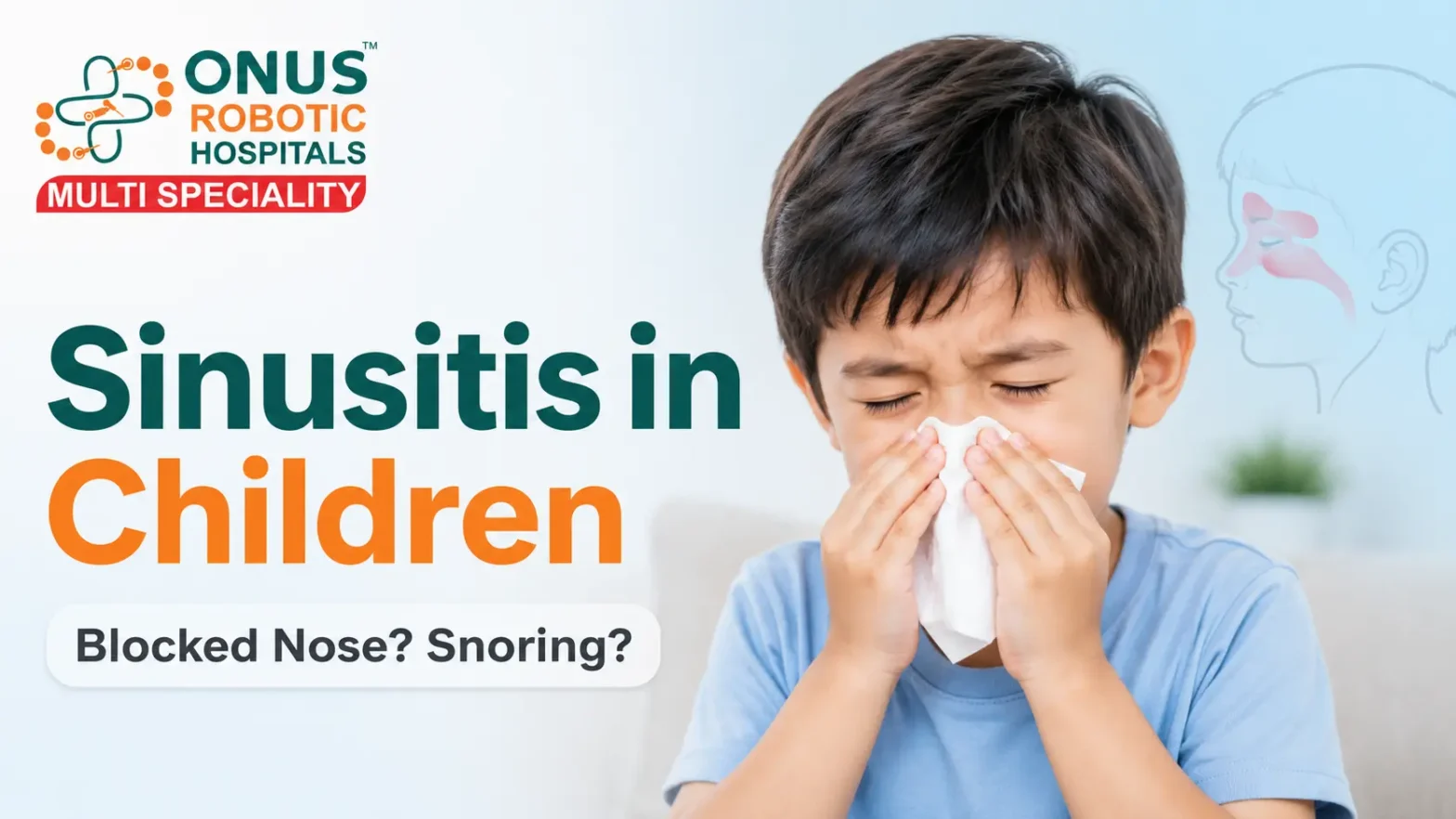
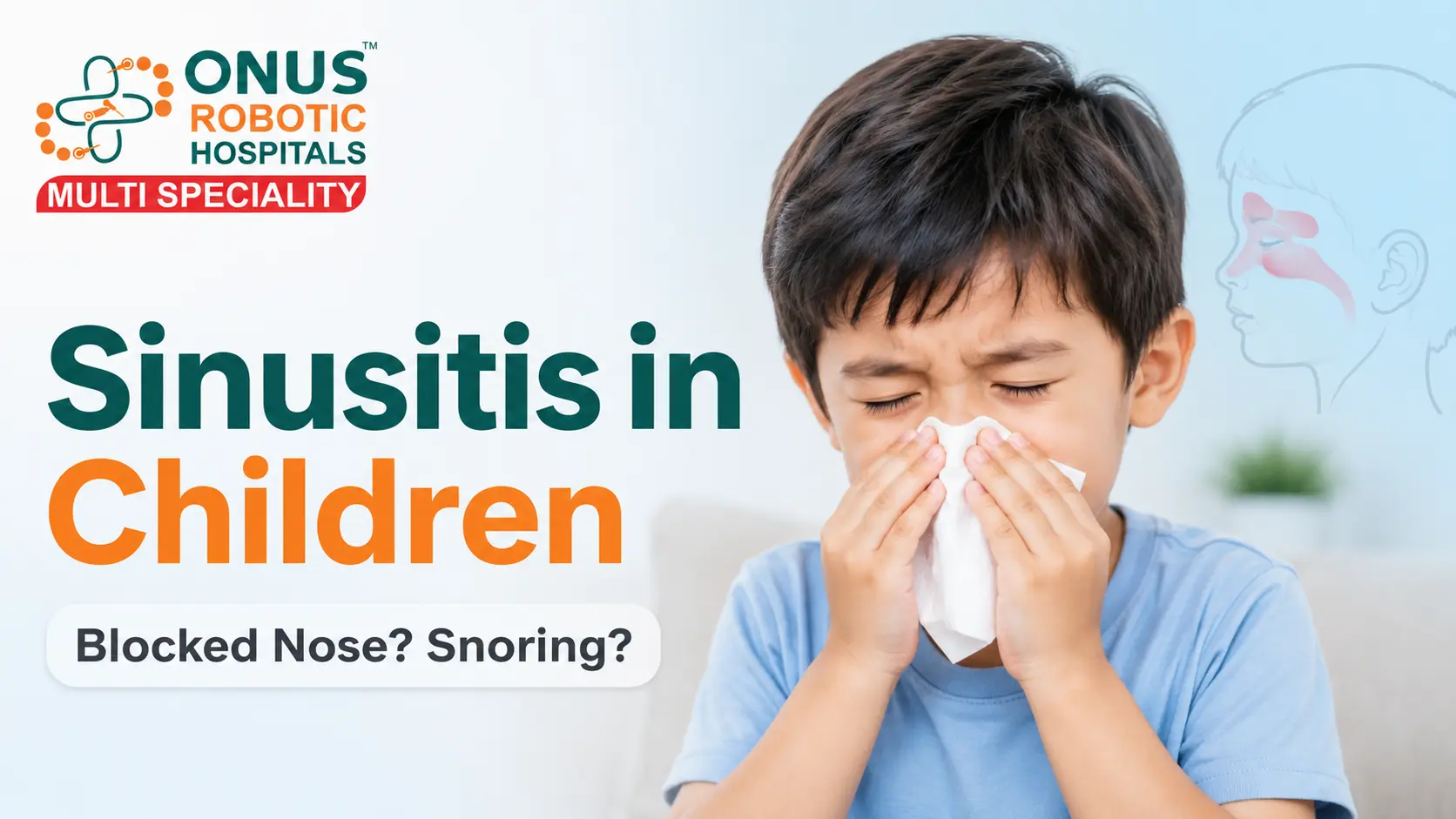
Many people think sinusitis occurs only in adults. But children can also get sinusitis. If a child has repeated cold, blocked nose, thick nasal discharge, cough, mouth breathing, headache, facial discomfort, fever, snoring, or disturbed sleep, it may be due to a sinus infection or sinusitis.

Sinusitis means inflammation or infection of the sinus lining. It can cause facial pain, stuffy or runny nose, fever, and other symptoms. It is commonly caused by a cold, but viruses, bacteria, allergies, and other factors can also contribute to sinusitis.

In this video, Consultant ENT Head & Neck Surgeon at ONUS Robotic Hospitals, explains whether children can get sinusitis, common causes, symptoms, warning signs, and when parents should consult an ENT specialist.

Can Children Get Sinusitis?

Yes. Children can get sinusitis. In children, sinus symptoms may look like a normal cold in the beginning. But if symptoms last longer, keep coming back, or affect sleep and breathing, parents should not ignore them.

Pediatric sinusitis can occur when the nose and sinus lining become swollen and mucus drainage is blocked. This may happen after a cold, due to allergy, adenoids, infection, or repeated nasal blockage.

Common Causes of Sinusitis in Children

Sinusitis in children may occur due to:

Repeated cold
Viral infection
Bacterial infection
Allergic rhinitis
Enlarged adenoids
Blocked nose
Thick mucus collection
Poor sinus drainage
Air pollution or dust exposure
Low immunity in some children
Recurrent upper respiratory infections

Children with allergy, enlarged adenoids, mouth breathing, snoring, or repeated infections may be more prone to sinus-related symptoms.

Symptoms of Sinusitis in Children

Parents should watch for symptoms that continue beyond a normal cold or keep recurring.

Common symptoms include:

Repeated cold
Blocked nose
Thick yellow or green nasal discharge
Chronic cough
Post-nasal drip
Mouth breathing
Snoring
Headache
Facial discomfort
Fever
Bad breath
Reduced appetite
Poor sleep
Irritability
Ear discomfort or ear infections

Johns Hopkins All Children’s lists symptoms such as bad breath, nighttime cough, fever, headache, post-nasal drip, runny nose, stuffy nose, and symptoms worsening after 7 to 10 days.

Cold vs Sinusitis in Children

A simple cold usually improves within a few days. Sinusitis may be suspected when symptoms last longer, worsen after initial improvement, or keep recurring.

Sinusitis may be more likely if the child has:

Cold symptoms lasting more than 10 days
Thick nasal discharge
Persistent blocked nose
Cough that is worse at night
Facial pain or headache
Fever
Bad breath
Repeated episodes of cold and nose block
Sleep disturbance due to nasal blockage

Symptoms of sinusitis in children can mimic a common cold, but they usually persist longer than the typical cold duration of about a week to 10 days.

Why Nose Block, Thick Mucus and Cough Happen

When the sinus and nasal lining become swollen, mucus drainage becomes difficult. Thick mucus may collect inside the nose and sinuses. This can cause blocked nose, post-nasal drip, throat irritation, and cough.

Cough is often worse at night because mucus drips backward into the throat while the child is lying down. This can disturb sleep and make the child tired or irritable during the day.

Mouth Breathing and Snoring in Children

Mouth breathing and snoring may occur when the child cannot breathe properly through the nose. This may be due to blocked nose, allergy, enlarged adenoids, enlarged tonsils, sinusitis, or sleep-disordered breathing.

Do not assume mouth breathing is only a habit. If a child snores regularly, sleeps with mouth open, has disturbed sleep, or wakes up tired, ENT evaluation is important.

What Happens If Pediatric Sinusitis Is Ignored?

If sinusitis in children is not identified and treated at the right time, it can lead to repeated discomfort and related ENT issues.

Possible problems include:

Repeated cold
Persistent nose block
Ear problems
Disturbed sleep
Poor feeding
Recurrent throat infections
Mouth breathing
Snoring
Poor concentration due to poor sleep
Repeated antibiotic use without proper diagnosis

Early diagnosis and proper treatment can help reduce repeated symptoms and improve breathing comfort.


When Should Parents Consult an ENT Specialist?

Parents should consult an ENT doctor if the child has:

Repeated cold
Blocked nose lasting many days
Thick nasal discharge
Chronic cough
Night cough
Mouth breathing
Snoring
Headache
Facial pain or discomfort
Fever with nasal symptoms
Bad breath
Sleep disturbance
Repeated ear infections
Symptoms not improving with routine treatment

Recurrent sinusitis may require evaluation by an ENT specialist for testing and treatment, especially when symptoms keep returning or do not improve properly.

Diagnosis of Sinusitis in Children

Diagnosis usually starts with clinical examination and detailed history.

The ENT specialist may ask about:

Duration of symptoms
Frequency of cold episodes
Nasal discharge
Cough pattern
Snoring and sleep symptoms
Allergy history
Mouth breathing
Ear complaints
Fever episodes
Previous medicines used

Evaluation may include:

ENT examination
Nasal examination
Pediatric nasal endoscopy in selected cases
Adenoid evaluation
Allergy assessment
Imaging only when needed
Assessment for recurrent infection or complications

Not every child needs a CT scan. The decision depends on symptoms, duration, severity, and response to treatment.

Treatment Options for Sinusitis in Children

Treatment depends on the cause and severity.

Treatment may include:

Saline nasal drops or spray
Steam or humidification when appropriate
Hydration
Allergy medicines if allergy is present
Doctor-advised nasal sprays
Antibiotics only when bacterial infection is suspected
Treatment for adenoids if needed
ENT follow-up for recurrent cases

ENT Health notes that children with acute bacterial sinusitis may improve within the first few days of antibiotic treatment, but medicines should be completed as advised. It also mentions that doctors may treat allergies or other conditions that worsen sinus infection.

Parents should avoid using over-the-counter nasal decongestant sprays without medical advice. Stanford Children’s Health warns that these sprays may make symptoms worse if used without checking with the child’s doctor.

How to Prevent Repeated Sinus Issues in Children

Prevention depends on identifying the trigger.

Helpful steps include:

Treat allergies early
Avoid dust and smoke exposure
Encourage proper hydration
Use saline drops if advised
Avoid unnecessary self-medication
Treat repeated cold properly
Evaluate adenoids if mouth breathing or snoring is present
Maintain good sleep routine
Avoid exposure to strong perfumes and pollutants
Consult ENT for recurrent symptoms

If sinusitis is related to allergy or adenoids, treating only the cold repeatedly may not solve the problem. The root cause should be identified.

Expert Pediatric ENT Care at ONUS Robotic Hospitals

At ONUS Robotic Hospitals, children with repeated cold, blocked nose, sinusitis, allergy, mouth breathing, snoring, adenoid-related symptoms, ear problems, throat infections, and sleep-related ENT complaints receive expert evaluation and personalized treatment.


For Appointments:

Consultant ENT Head & Neck Surgeon

ONUS Robotic Hospitals – Hyderabad

πŸ‘‰ link: contact-us or book-appointment
Β 

Book Doctor Appointment
Book Free Appointment
Please enable JavaScript in your browser to complete this form.