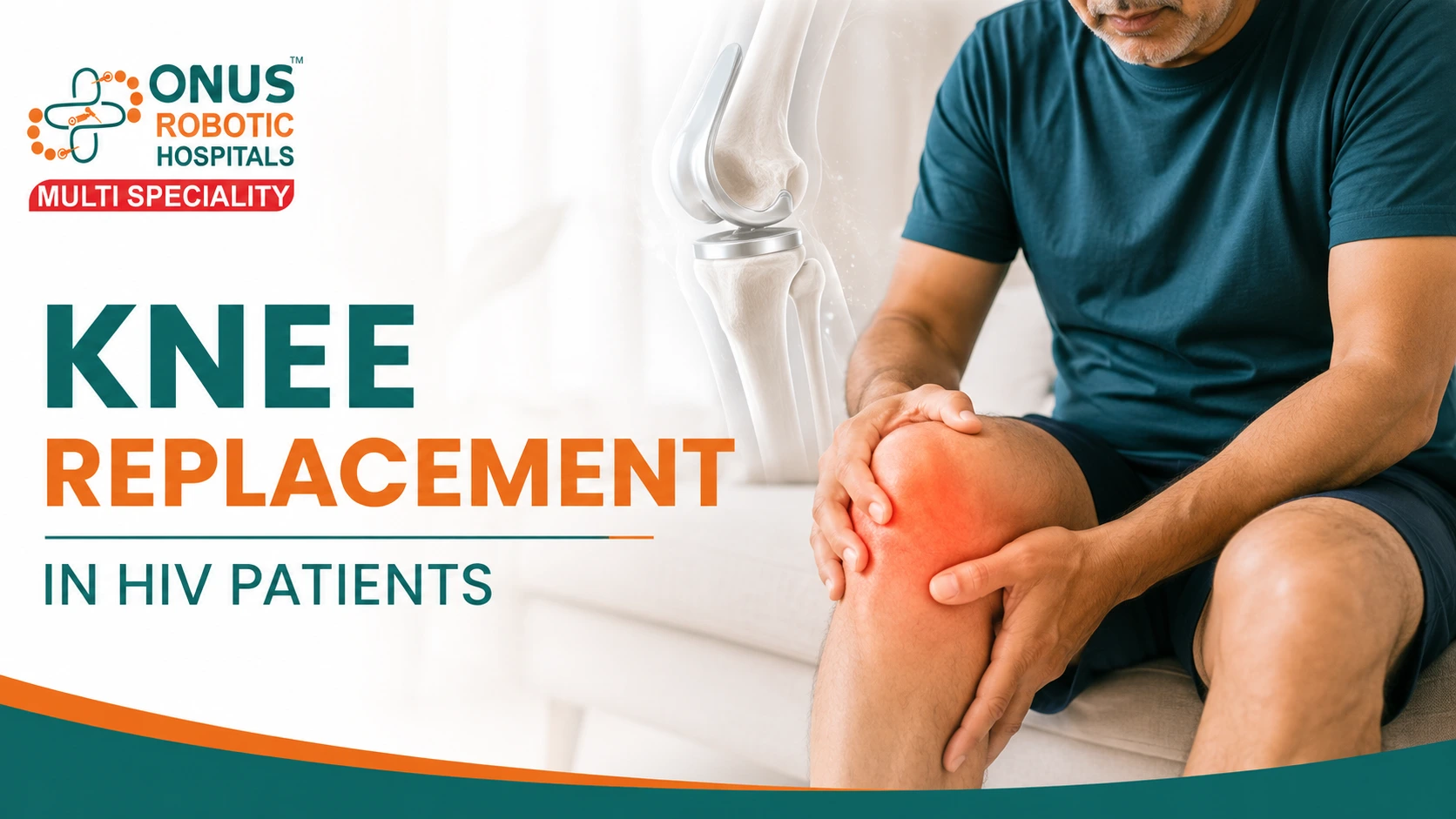
Knee replacement surgery can be life-changing for patients suffering from severe knee arthritis, advanced knee pain, deformity, stiffness, and difficulty walking. But many HIV-positive patients have an important question: Can I undergo knee replacement safely if I have HIV?
The answer is: Yes, knee replacement may be possible in HIV-positive patients when the infection is well controlled, immunity is optimized, and proper precautions are followed.
HIV itself is not an automatic reason to avoid knee replacement. However, the patient needs careful evaluation before surgery. CD4 count, viral load, general health, infection risk, nutrition, diabetes status, kidney function, and other medical conditions must be assessed before planning surgery.
At ONUS Robotic Hospitals, knee replacement in medically complex patients is planned with a multidisciplinary approach, including orthopedic evaluation, physician support, infection control precautions, advanced diagnostics, anesthesia assessment, and rehabilitation planning.
What Is Knee Replacement Surgery?
Knee replacement, also called Total Knee Replacement or Total Knee Arthroplasty, is a surgical procedure where damaged knee joint surfaces are replaced with artificial implants.
It is usually recommended when the knee joint is severely damaged due to:
- Advanced osteoarthritis
- Rheumatoid arthritis
- Post-traumatic arthritis
- Severe knee deformity
- Bone-on-bone arthritis
- Severe pain affecting daily life
- Difficulty walking or climbing stairs
- Failure of medicines, injections, and physiotherapy
The goal of knee replacement is to reduce pain, improve movement, correct deformity, and help the patient walk better.
Can HIV-Positive Patients Undergo Knee Replacement?
Yes. Many HIV-positive patients can undergo knee replacement when they are medically stable and their HIV is well controlled.
The most important factors are:
- CD4 count
- Viral load
- Current antiretroviral therapy status
- Presence or absence of opportunistic infections
- General immunity
- Nutritional status
- Diabetes control
- Kidney and liver function
- Overall surgical fitness
Patients with well-controlled HIV and good immune status may have outcomes closer to other patients. Patients with uncontrolled viral load, very low CD4 count, active infection, poor nutrition, uncontrolled diabetes, or other serious medical issues may have higher surgical risk.
Why Pre-Surgery HIV Evaluation Is Important
Before knee replacement, HIV-positive patients need careful preoperative assessment. This helps reduce the risk of infection, wound complications, delayed healing, and medical complications.
Important pre-surgery checks include:
- CD4 count
- HIV viral load
- Complete blood count
- Kidney function test
- Liver function test
- Blood sugar levels
- HbA1c if diabetic
- Nutritional assessment
- Screening for active infections
- Cardiac evaluation if needed
- Anesthesia fitness
- Current ART medication review
The orthopedic surgeon may coordinate with the patient’s HIV physician, general physician, anesthetist, and infection control team before surgery.
CD4 Count and Knee Replacement
CD4 count reflects the immune strength of the patient. A very low CD4 count may increase the risk of postoperative infection and poor wound healing.
For elective surgery, doctors usually prefer the patient’s immune status to be optimized before surgery. If CD4 count is very low, surgery may be postponed until the HIV physician improves the patient’s medical condition, unless surgery is urgent.
Viral Load and Surgery
Viral load shows the amount of HIV virus in the blood. A low or undetectable viral load generally indicates better HIV control.
For planned knee replacement, doctors prefer viral load to be controlled before surgery. If viral load is high, the HIV physician may adjust treatment and improve viral control before elective surgery.
This is one of the most important steps in reducing surgical risk.
Is Infection Risk Higher in HIV Patients?
Infection is an important concern in any joint replacement surgery. In HIV-positive patients, infection risk may be higher if immunity is poor or HIV is not controlled.
Risk may also increase with:
- High viral load
- Low CD4 count
- Diabetes
- Smoking
- Obesity
- Malnutrition
- Kidney disease
- Poor skin condition
- Active infection anywhere in the body
- Previous joint infection
- Poor hygiene or delayed wound care
With proper patient selection, medical optimization, sterile operation theatre protocols, antibiotic planning, and good postoperative care, the risk can be reduced.
When Should Knee Replacement Be Delayed?
Knee replacement may be delayed if the patient has:
- Uncontrolled HIV viral load
- Very low CD4 count
- Active opportunistic infection
- Fever or active infection
- Uncontrolled diabetes
- Severe anemia
- Poor nutrition
- Skin infection near the knee
- Untreated dental or urinary infection
- Poor general fitness for anesthesia
Delaying surgery in such cases is not denial of treatment. It is done to make the surgery safer and improve the chances of good recovery.
Robotic Knee Replacement in HIV Patients
Robotic knee replacement may offer additional benefits in selected patients by improving surgical planning, implant positioning, alignment accuracy, and soft tissue balancing.
In HIV-positive patients, the key priority remains infection prevention and medical optimization. Robotic technology can support precision, but the patient’s immune status, viral load control, sterile protocols, and postoperative care remain very important.
Potential benefits of robotic knee replacement include:
- Personalized surgical planning
- Accurate bone cuts
- Better implant alignment
- Better soft tissue balancing
- Improved joint stability
- Potentially smoother recovery in suitable patients
The decision for robotic knee replacement depends on the patient’s knee condition, bone quality, deformity, medical fitness, and surgeon’s evaluation.
Pre-Surgery Preparation for HIV-Positive Patients
Before knee replacement, patients should follow medical advice carefully.
Preparation may include:
- Continue HIV medicines as advised
- Do not stop ART without doctor advice
- Control viral load before elective surgery
- Improve nutrition and protein intake
- Control diabetes and blood pressure
- Stop smoking
- Treat dental, urinary, skin, or respiratory infections
- Maintain skin hygiene
- Inform doctors about all current medicines
- Complete anesthesia and cardiac fitness if advised
- Follow preoperative physiotherapy if recommended
Good preparation improves surgical safety and recovery.
Surgery Day Precautions
During surgery, the hospital team follows strict infection control and sterilization protocols.
These include:
- Sterile operation theatre environment
- Proper surgical hand hygiene
- Sterilized instruments
- Antibiotic prophylaxis as per protocol
- Careful tissue handling
- Blood loss management
- Anesthesia monitoring
- Safe biomedical waste protocols
- Universal precautions for all patients
Universal precautions are followed for every patient, regardless of HIV status.
Recovery After Knee Replacement
Recovery depends on the patient’s general health, immune status, pain control, physiotherapy, wound healing, and rehabilitation.
Most patients are encouraged to start movement and walking with support as advised by the surgeon and physiotherapy team.
Postoperative care includes:
- Wound care
- Pain management
- Antibiotics as advised
- DVT prevention measures
- Physiotherapy
- Walking training
- Knee bending exercises
- Monitoring for fever or wound discharge
- Follow-up visits
- Continuing HIV treatment
- Monitoring blood sugar if diabetic
Warning Signs After Surgery
Patients should immediately contact the hospital if they notice:
- Fever
- Increasing knee pain
- Redness around the wound
- Wound discharge
- Swelling that is worsening
- Sudden calf pain
- Breathlessness
- Chest pain
- Severe weakness
- Delayed wound healing
- Difficulty walking after initial improvement
Early reporting of symptoms helps doctors manage complications quickly.
Importance of Physiotherapy
Physiotherapy is essential after knee replacement. It helps restore movement, muscle strength, walking ability, and confidence.
Rehabilitation may include:
- Knee bending exercises
- Quadriceps strengthening
- Walking training
- Balance training
- Stair climbing practice
- Gait correction
- Home exercise plan
HIV-positive patients should follow physiotherapy regularly while also taking care of nutrition and infection prevention.
Frequently Asked Questions
Is HIV a contraindication for knee replacement?
No. HIV is not an automatic contraindication. Surgery may be possible when HIV is well controlled and the patient is medically fit.
Can an HIV-positive patient get robotic knee replacement?
Yes, selected HIV-positive patients may undergo robotic knee replacement after proper evaluation, medical optimization, and surgical planning.
What tests are needed before surgery?
Important tests may include CD4 count, viral load, blood tests, kidney and liver function tests, blood sugar tests, infection screening, X-ray, ECG, 2D Echo if needed, and anesthesia fitness.
Should ART medicines be stopped before surgery?
No patient should stop HIV medicines without advice from their HIV physician. In most cases, continuing ART is important.
Is infection risk always high?
Not always. Risk depends on viral control, CD4 count, diabetes, nutrition, hygiene, surgical protocols, and overall health.
Why Choose ONUS Robotic Hospitals?
ONUS Robotic Hospitals provides advanced orthopedic, robotic joint replacement, diagnostics, emergency, ICU, physiotherapy, and multi-specialty care under one roof.
For HIV-positive patients requiring knee replacement, the hospital focuses on careful planning, patient safety, infection prevention, advanced surgical technology, and structured rehabilitation.
For Appointments:
Dr. Balaraju Naidu, Robotic Orthopedic Surgeon
ONUS Robotic Hospitals – Hyderabad
👉 link: contact-us or book-appointment