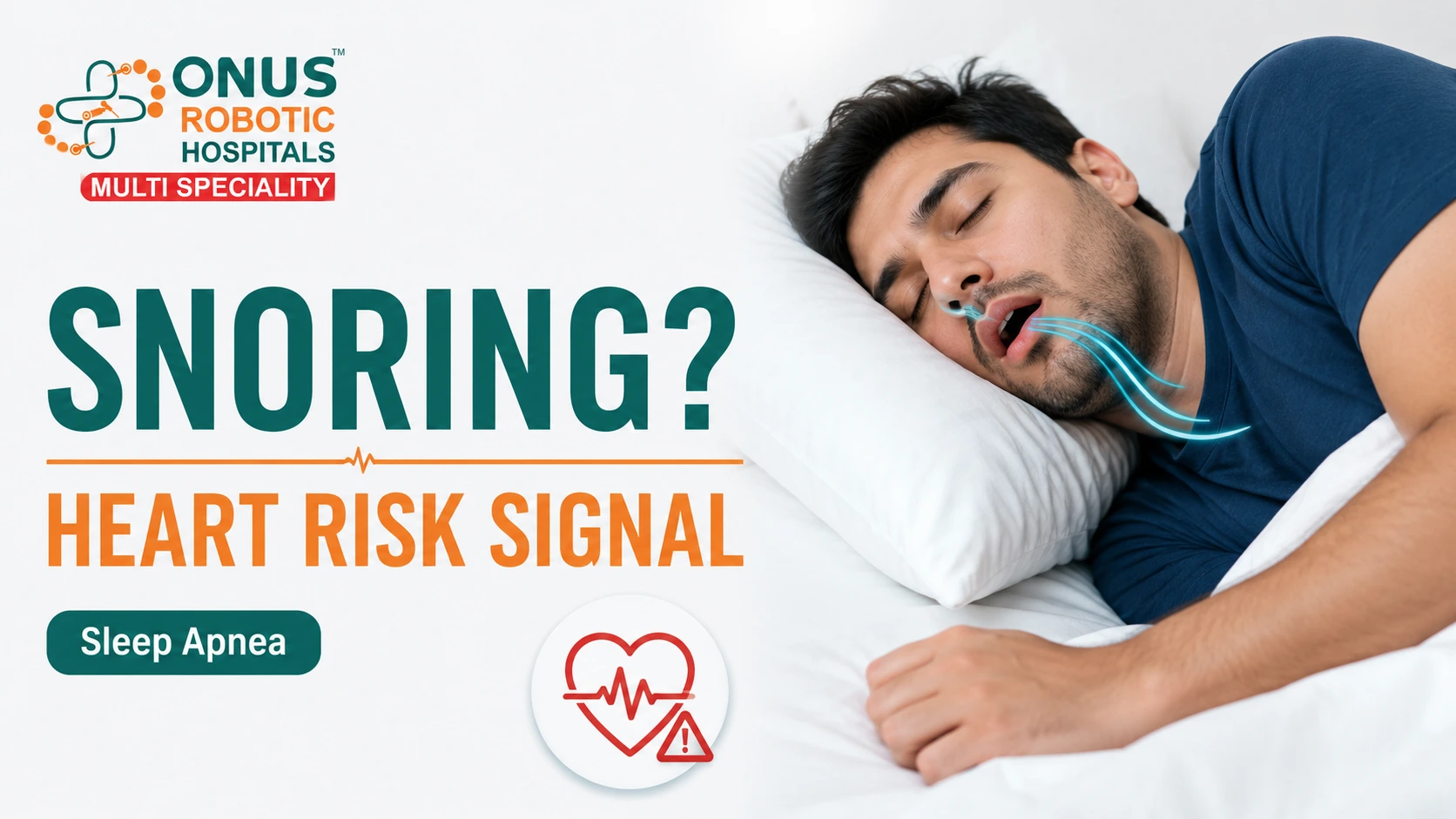
Symptoms of Sleep Apnea
Common symptoms of Obstructive Sleep Apnea include:
- Loud snoring
- Choking or gasping during sleep
- Breathing pauses during sleep
- Morning headache
- Daytime sleepiness
- Feeling tired after a full night of sleep
- Dry mouth after waking up
- Disturbed sleep
- Frequent waking during the night
- Poor concentration
- Irritability
- High blood pressure
- Obesity with snoring
- Restless sleep
If these symptoms are present, it is better to consult an ENT specialist or sleep specialist.
When Does Snoring Become Serious?
Snoring should be taken seriously when it affects breathing, sleep quality, or overall health.
You should seek medical evaluation if you have:
- Loud snoring every night
- Choking sensation during sleep
- Breathing pauses noticed by family members
- Morning headaches
- Excessive daytime sleepiness
- High blood pressure with snoring
- Obesity with disturbed sleep
- Sudden waking with breathlessness
- Poor sleep despite sleeping for many hours
- Snoring that affects daily energy and productivity
These signs may indicate Obstructive Sleep Apnea or another sleep-related breathing problem.
Who Is at Higher Risk of Sleep Apnea?
Sleep apnea can affect both adults and children. However, some people have a higher risk.
Risk factors include:
- Obesity
- Thick neck circumference
- Nose block
- Deviated nasal septum
- Sinus problems
- Enlarged tonsils
- Enlarged adenoids
- Smoking
- Alcohol use
- Family history of sleep apnea
- High blood pressure
- Middle age or older age
- Sleeping on the back
Children may also develop snoring or sleep apnea due to enlarged tonsils or adenoids.
How ENT Evaluation Helps
ENT evaluation plays an important role in identifying the cause of snoring and sleep-related breathing problems.
An ENT specialist can examine the nose, throat, tonsils, adenoids, soft palate, tongue base, and upper airway.
ENT evaluation may help identify:
- Nose block
- Deviated nasal septum
- Sinus disease
- Turbinate enlargement
- Tonsil enlargement
- Adenoid enlargement
- Throat airway narrowing
- Mouth breathing
- Upper airway obstruction
Based on the findings, the doctor may suggest further tests or treatment options.
Diagnosis of Snoring and Sleep Apnea
Diagnosis starts with a detailed medical history and clinical examination.
The doctor may ask about snoring pattern, sleep quality, daytime sleepiness, morning headache, choking episodes, weight, blood pressure, and family observations during sleep.
Depending on the symptoms, the following tests may be advised:
ENT Examination
An ENT examination helps evaluate the nose, throat, tonsils, adenoids, and airway.
Nasal Endoscopy
Advanced endoscopic ENT evaluation may help identify obstruction in the nose or throat.
Sleep Study
A sleep study may be advised to confirm sleep apnea. It helps assess breathing pauses, oxygen levels, snoring pattern, heart rate, and sleep quality.
Blood Pressure and Cardiac Risk Evaluation
If the patient has high blood pressure, obesity, diabetes, heart symptoms, or severe sleep apnea symptoms, further medical evaluation may be recommended.
Treatment Options for Snoring and Sleep Apnea
Treatment depends on the cause and severity of the condition.
Common treatment options include:
Lifestyle Changes
Weight reduction, regular sleep schedule, avoiding alcohol before sleep, quitting smoking, and changing sleeping posture may help in selected patients.
Nose Block Treatment
If snoring is due to nose block, allergy, sinus problem, or deviated nasal septum, ENT treatment may help improve airflow.
Tonsil and Adenoid Treatment
In children and some adults, enlarged tonsils or adenoids may contribute to snoring and sleep apnea. Proper evaluation can help decide the right treatment.
CPAP Therapy
For moderate to severe sleep apnea, CPAP therapy may be advised after sleep study evaluation. CPAP helps keep the airway open during sleep.
Oral Appliances
In selected cases, oral appliances may help keep the airway open and reduce snoring.
Surgery
Surgery may be considered when a structural airway blockage is identified and conservative treatment is not enough.
Why Choose ONUS Robotic Hospitals?
At ONUS Robotic Hospitals, patients receive advanced ENT evaluation and multi-specialty care for snoring, sleep apnea symptoms, nose block, sinus problems, tonsil and adenoid issues, and breathing difficulty during sleep.
Consultant ENT Head & Neck Surgeon, evaluates snoring-related symptoms and guides patients toward proper diagnosis and treatment.
For Appointments:
Consultant ENT Head & Neck Surgeon
ONUS Robotic Hospitals – Hyderabad
👉 link: contact-us or book-appointment