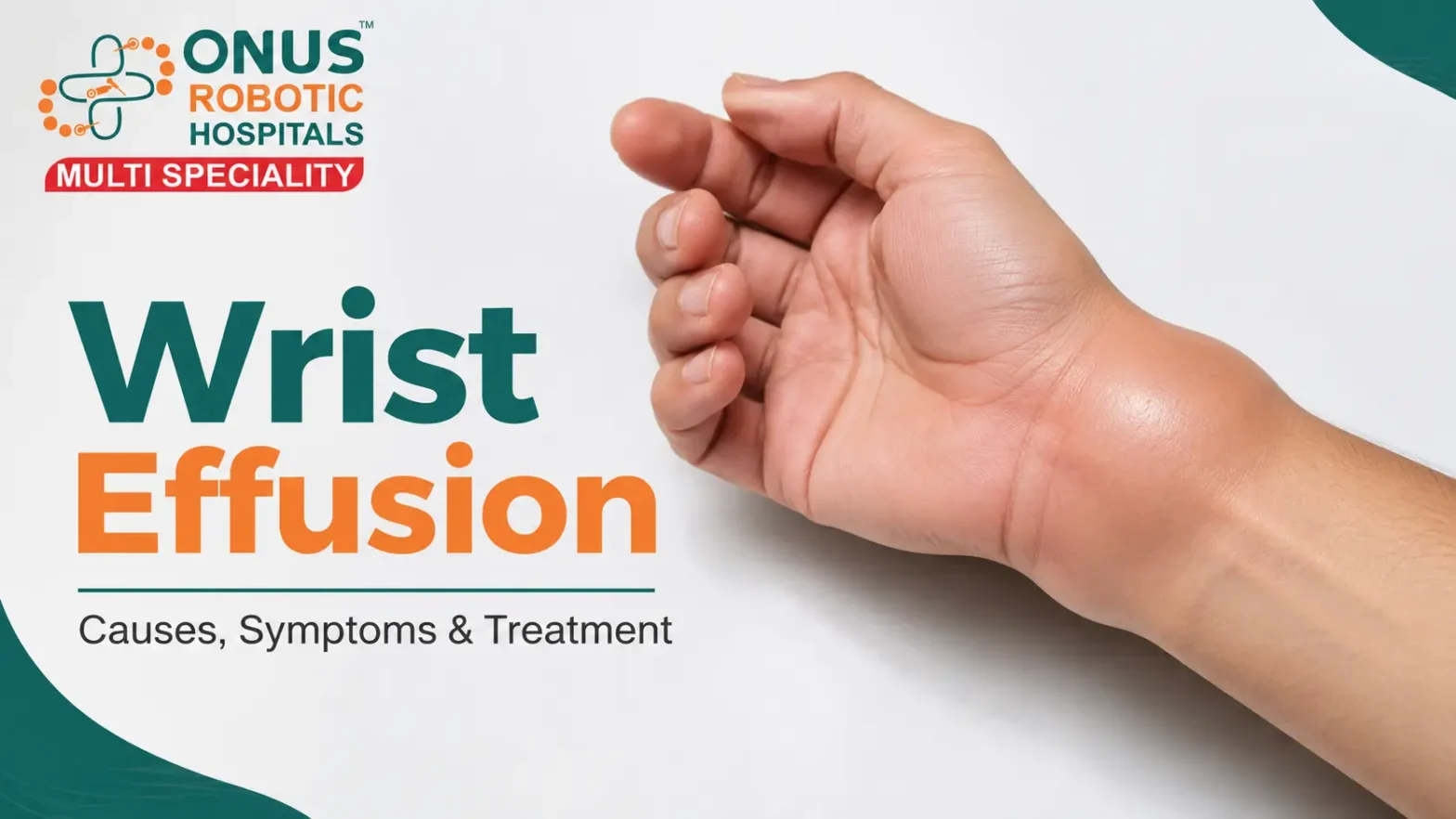
Wrist effusion means extra fluid buildup inside or around the wrist joint. Many patients notice swelling, pain, stiffness, warmth, or difficulty moving the wrist. It can happen after an injury, fall, overuse, arthritis, ligament injury, infection, inflammation, or other joint problems.
Wrist swelling should not be ignored, especially if it is associated with severe pain, redness, fever, injury, difficulty moving the hand, numbness, or repeated swelling. Joint effusion usually happens when fluid increases around a joint due to irritation, inflammation, injury, or infection.
In this video, Dr. Balaraju Naidu, Consultant Robotic Orthopedic Surgeon at ONUS Robotic Hospitals, explains what wrist effusion means, why fluid collects in the wrist joint, symptoms to watch for, diagnosis, and treatment options.
What Is Wrist Effusion?
Wrist effusion is a condition where excess fluid collects in or around the wrist joint. A small amount of joint fluid is normally present to lubricate the joint and support smooth movement. But when the wrist is injured or inflamed, the body may produce extra fluid, leading to swelling and discomfort.
This swelling may be mild or severe depending on the cause. In some patients, the wrist may feel tight, painful, warm, or difficult to move.
Why Does Fluid Collect in the Wrist Joint?
Fluid collects in the wrist when the joint lining becomes irritated or inflamed. This can happen due to trauma, arthritis, infection, repetitive strain, or ligament injury.
Common reasons include:
Fall on the hand
Wrist sprain
Ligament injury
Sports injury
Road traffic injury
Overuse or repetitive hand activity
Rheumatoid arthritis
Osteoarthritis
Gout or crystal arthritis
Infection
Inflammatory joint disease
Fracture around the wrist
Tendon inflammation
Autoimmune conditions
The important point is that wrist effusion is not a final diagnosis by itself. It is a sign that something is causing irritation or inflammation inside the wrist joint.
Common Symptoms of Wrist Effusion
Patients with wrist effusion may experience:
Wrist swelling
Pain while moving the wrist
Stiffness
Warmth around the joint
Redness in some cases
Reduced wrist movement
Difficulty gripping objects
Pain while lifting weight
Tenderness around the wrist
Difficulty using the hand
Numbness or tingling if nerves are irritated
Repeated swelling after activity
Some patients may feel the wrist is “full” or tight. Others may notice swelling only after work, exercise, or injury.
When Wrist Swelling Becomes Serious
Wrist swelling needs urgent evaluation if it is associated with warning signs.
Do not ignore wrist swelling if you have:
Severe pain
Redness
Fever
Sudden swelling after injury
Inability to move the wrist
Visible deformity
Numbness or tingling
Weak grip
Pain after fall
Pus or wound near wrist
Repeated swelling
Swelling with diabetes or low immunity
Swelling with fever, redness, and severe pain may suggest infection and needs immediate medical attention.
Wrist Effusion After Injury
A fall on the hand or direct trauma to the wrist can cause swelling due to ligament injury, fracture, sprain, or joint irritation. Sometimes patients think it is a simple sprain and delay treatment. But untreated wrist injuries can lead to stiffness, chronic pain, instability, or reduced hand function.
After injury, consult an orthopedic specialist if you have:
Swelling
Pain while gripping
Pain while rotating the wrist
Difficulty lifting objects
Bruising
Tenderness
Clicking or instability
Pain that does not improve
Wrist Effusion and Arthritis
Arthritis can cause inflammation inside the wrist joint and lead to fluid buildup. Rheumatoid arthritis, osteoarthritis, gout, and other inflammatory conditions can affect the wrist.
Arthritis-related wrist effusion may cause:
Morning stiffness
Repeated swelling
Pain in both wrists
Finger joint pain
Warmth around the joint
Reduced movement
Difficulty doing daily work
Long-standing pain
Early diagnosis is important because inflammatory arthritis can slowly damage joints if ignored.
Diagnosis of Wrist Effusion
The doctor will first examine the wrist and ask about symptoms, injury history, fever, arthritis symptoms, work habits, sports activity, and previous swelling episodes.
Diagnosis may include:
Clinical examination
X-ray
MRI
Blood tests
Ultrasound in selected cases
Joint fluid analysis if infection or gout is suspected
Nerve evaluation if numbness is present
Role of X-ray, MRI, Blood Tests and Joint Fluid Analysis
X-ray
X-ray helps identify fracture, arthritis, bone alignment problems, and some joint changes.
MRI
MRI gives detailed information about soft tissues, ligaments, cartilage, tendons, bone marrow swelling, and joint fluid. It is useful when ligament injury, occult fracture, inflammatory disease, or soft tissue damage is suspected.
Blood Tests
Blood tests may be advised if the doctor suspects infection, rheumatoid arthritis, gout, or inflammatory disease.
Common tests may include:
CBC
ESR
CRP
Uric acid
Rheumatoid factor
Anti-CCP
Other tests based on symptoms
Joint Fluid Analysis
If infection or crystal arthritis is suspected, fluid may be taken from the joint and tested. This helps identify infection, crystals, or inflammation.
Treatment Options for Wrist Effusion
Treatment depends on the underlying cause. The aim is to reduce swelling, control pain, treat the root cause, and restore wrist function.
Treatment may include:
Rest
Ice application after injury
Wrist splint or support
Pain and inflammation medicines
Elevation of the hand
Physiotherapy
Activity modification
Treatment for arthritis
Antibiotics if infection is confirmed
Joint aspiration in selected cases
Steroid injection in selected inflammatory cases
Surgery if fracture, ligament tear, or severe infection is present
Self-medication should be avoided, especially if swelling is severe, recurrent, or associated with fever or redness.
Role of Physiotherapy
Physiotherapy helps reduce stiffness and restore wrist strength after pain and swelling improve.
Physiotherapy may include:
Gentle range-of-motion exercises
Grip strengthening
Wrist mobility exercises
Tendon gliding exercises
Pain control methods
Return-to-work guidance
Sports rehabilitation
Prevention of stiffness
Exercises should be done only after proper diagnosis, especially after injury or suspected ligament damage.
When Surgery May Be Required
Surgery is not required for every wrist effusion. It may be needed only when there is a serious underlying cause.
Surgery may be considered for:
Fracture
Severe ligament tear
Wrist instability
Infection requiring drainage
Persistent swelling due to structural damage
Severe arthritis in selected cases
Failure of conservative treatment
The decision depends on examination, imaging findings, severity of symptoms, and functional limitation.
When to Consult an Orthopedic Specialist
Consult an orthopedic doctor if you have:
Wrist swelling after injury
Persistent wrist pain
Repeated swelling
Reduced wrist movement
Severe stiffness
Numbness or tingling
Fever with wrist swelling
Redness and warmth
Difficulty gripping
Pain affecting daily activities
Swelling not improving with rest
Early diagnosis can prevent long-term stiffness, weakness, and joint damage.
Expert Wrist Pain & Swelling Care at ONUS Robotic Hospitals
At ONUS Robotic Hospitals, patients with wrist effusion, wrist swelling, hand pain, ligament injury, arthritis, sports injury, trauma, and joint pain receive expert orthopedic evaluation and personalized treatment.
For Appointments:
Dr. Balaraju Naidu, Robotic Orthopedic Surgeon
ONUS Robotic Hospitals – Hyderabad
👉 link: contact-us or book-appointment