Introduction
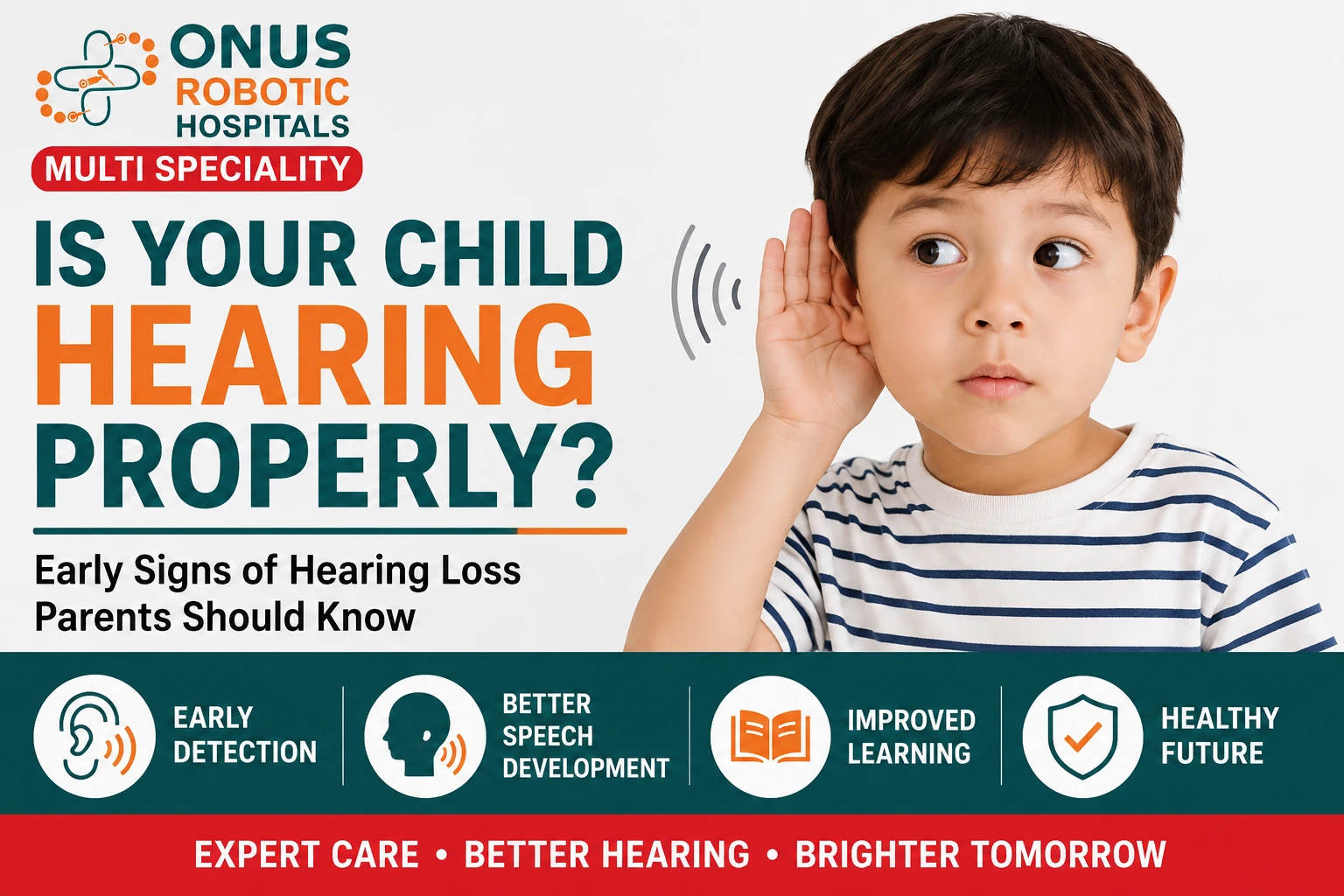
Hearing plays a vital role in a child’s speech, language, learning, and social development. Children learn to communicate by listening to sounds, words, and conversations around them. Even mild hearing loss can affect a child’s ability to develop language skills and perform well academically.
Unfortunately, hearing loss in children is not always obvious. Many parents may mistake hearing difficulties for inattentiveness, behavioral issues, or delayed speech. Recognizing the early warning signs can help ensure timely diagnosis and treatment, preventing long-term developmental challenges.
Why Early Hearing Is Important
From birth, children rely on hearing to:
- Learn language
- Develop speech skills
- Build social interactions
- Understand instructions
- Perform well in school
Untreated hearing problems during early childhood can significantly impact cognitive, emotional, and educational development.
Common Causes of Hearing Loss in Children
Several conditions can affect a child’s hearing.
Congenital Hearing Loss
Some children are born with hearing impairment due to:
- Genetic factors
- Family history
- Infections during pregnancy
- Premature birth
- Birth complications
Ear Infections
Repeated middle ear infections are one of the most common causes of temporary hearing loss in children.
Fluid Behind the Eardrum
Persistent fluid accumulation in the middle ear can reduce sound transmission.
Ear Wax Blockage
Excessive ear wax may temporarily affect hearing.
Enlarged Adenoids
Large adenoids can block the Eustachian tube and contribute to middle ear problems.
Noise Exposure
Frequent exposure to loud sounds through headphones, electronic devices, or environmental noise can damage hearing over time.
Early Signs of Hearing Loss in Infants
Parents should watch for developmental milestones.
Birth to 3 Months
A baby should:
- Startle at loud sounds
- Respond to familiar voices
- Calm down when hearing a parent’s voice
4 to 6 Months
A baby should:
- Turn toward sounds
- Respond to changes in tone of voice
- Enjoy toys that make sounds
7 to 12 Months
A baby should:
- Respond to their name
- Understand simple words
- Babble and imitate sounds
Failure to achieve these milestones may indicate hearing difficulties.
Signs of Hearing Loss in Toddlers
Children between one and three years may show:
- Delayed speech development
- Limited vocabulary
- Difficulty following simple instructions
- Not responding when called
- Frequently increasing TV volume
- Poor pronunciation
Parents often notice that their child seems to hear only when looking directly at them.
Signs of Hearing Loss in School-Age Children
Older children may display:
Academic Difficulties
Hearing loss can affect classroom learning and concentration.
Frequently Asking for Repetition
Children may often say:
- “What?”
- “Can you repeat that?”
Inattention
They may appear distracted because they cannot hear clearly.
Speaking Loudly
Children with hearing loss may not realize their own voice volume.
Social Difficulties
Communication challenges can affect friendships and confidence.
Warning Signs Parents Should Never Ignore
Consult an ENT specialist if your child:
- Does not respond to sounds consistently
- Has delayed speech development
- Frequently experiences ear infections
- Complains of hearing difficulties
- Turns one ear toward sounds
- Increases TV volume excessively
- Has poor school performance related to listening difficulties
Early evaluation is critical for proper diagnosis.
How Hearing Loss Affects Development
Speech and Language Delay
Children may struggle to learn new words and communicate effectively.
Learning Difficulties
Hearing problems can affect reading, writing, and classroom participation.
Behavioral Issues
Some children become frustrated when they cannot understand conversations.
Social Challenges
Difficulty hearing can interfere with interaction and confidence.
How Hearing Loss Is Diagnosed
ENT Examination
An ENT specialist evaluates the ears, nose, throat, and hearing function.
Hearing Tests
Several age-appropriate hearing tests may be performed.
Otoacoustic Emissions (OAE)
Often used in newborn hearing screening.
Auditory Brainstem Response (ABR)
Evaluates hearing pathways from the ear to the brain.
Pure Tone Audiometry
Commonly used in older children.
Tympanometry
Assesses middle ear function and fluid behind the eardrum.
Treatment Options
Treatment depends on the cause of hearing loss.
Medical Treatment
Conditions such as infections and allergies may improve with medication.
Ear Wax Removal
Removing impacted wax can restore normal hearing.
Treatment of Middle Ear Fluid
Management may include medications or minor procedures.
Hearing Aids
Children with permanent hearing loss may benefit from hearing aids.
Cochlear Implants
In selected cases of severe hearing loss, cochlear implantation can provide significant improvement.
Speech Therapy
Speech and language support may be recommended when hearing loss has affected communication skills.
Can Hearing Loss Be Prevented?
Some preventive measures include:
- Treat ear infections promptly
- Avoid inserting objects into the ears
- Limit exposure to loud sounds
- Use volume-controlled headphones
- Attend newborn hearing screenings
- Schedule regular hearing evaluations when necessary
When Should Parents Seek Medical Advice?
Consult an ENT specialist if:
- Your child misses hearing milestones
- Speech development is delayed
- Hearing appears inconsistent
- Ear infections occur repeatedly
- Teachers report listening difficulties
- Your child frequently asks for repetition
Early intervention leads to the best outcomes.
For Appointments:
Consultant ENT Head & Neck Surgeon
ONUS Robotic Hospitals – Hyderabad
👉 link: contact-us or book-appointment