Introduction
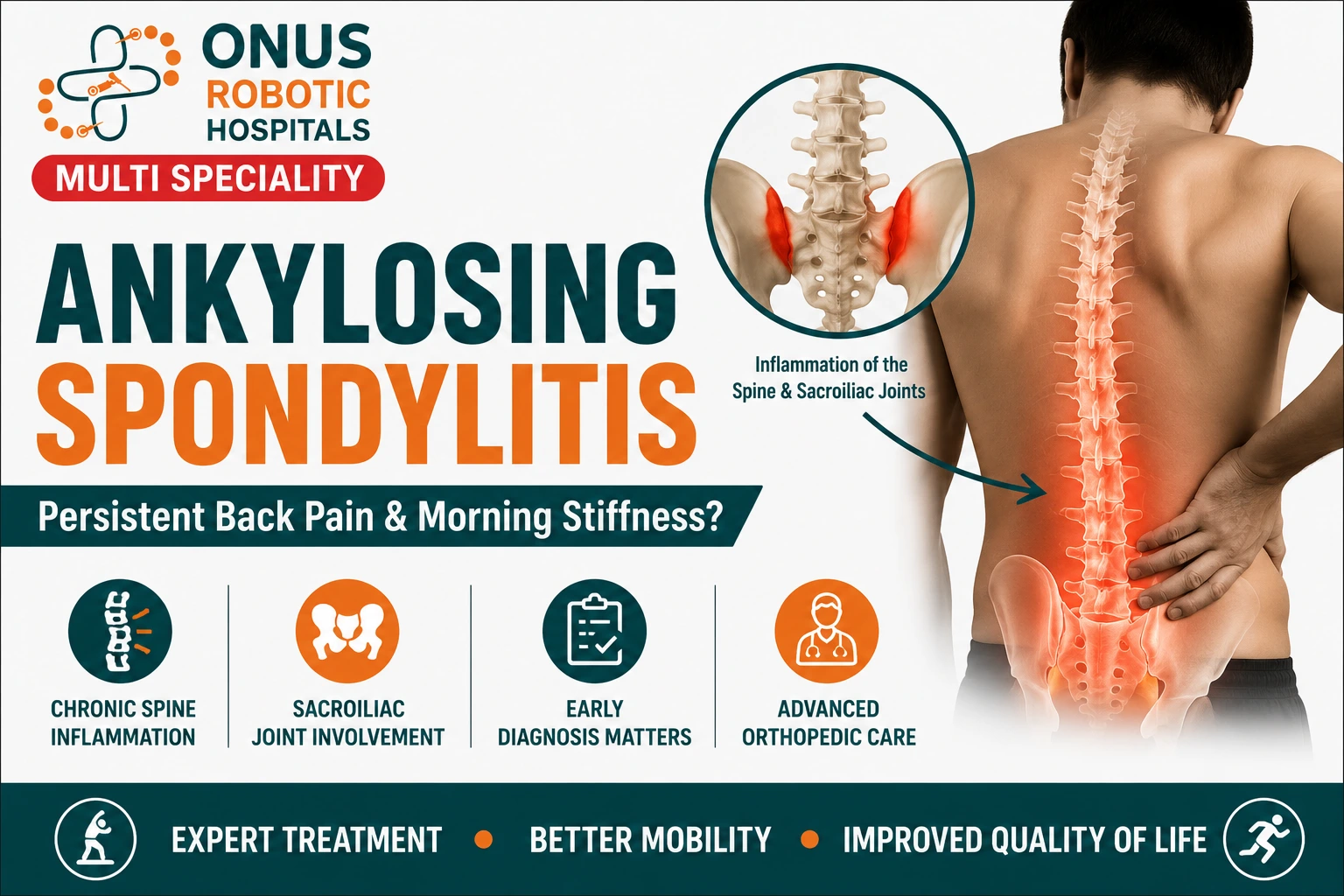
Ankylosing Spondylitis (AS) is a chronic inflammatory disease that primarily affects the spine and sacroiliac joints. Over time, it can cause pain, stiffness, and reduced flexibility of the spine. If left untreated, the inflammation may lead to fusion of the spinal bones, resulting in permanent loss of mobility.
Although Ankylosing Spondylitis commonly begins in young adults between the ages of 15 and 40, early diagnosis and treatment can significantly improve quality of life and help prevent long-term complications.
What Is Ankylosing Spondylitis?
Ankylosing Spondylitis is a type of inflammatory arthritis that mainly affects the joints between the spine and pelvis, known as the sacroiliac joints.
The condition causes chronic inflammation that can lead to:
- Persistent lower back pain
- Morning stiffness
- Reduced spinal flexibility
- Postural changes
- Joint pain
In advanced cases, the vertebrae may gradually fuse together, making the spine less flexible.
Causes of Ankylosing Spondylitis
The exact cause of Ankylosing Spondylitis is not fully understood. However, genetics play a major role.
HLA-B27 Gene
Many patients with Ankylosing Spondylitis carry a genetic marker known as HLA-B27. While not everyone with this gene develops the disease, it significantly increases the risk.
Other factors may include:
- Family history
- Immune system abnormalities
- Environmental triggers
Who Is at Risk?
Ankylosing Spondylitis is more common in:
- Young adults
- Men (though women can also be affected)
- Individuals with a family history of AS
- People who test positive for HLA-B27
Early Symptoms of Ankylosing Spondylitis
Recognizing symptoms early is important for preventing progression.
Chronic Lower Back Pain
Pain usually develops gradually and persists for more than three months.
Morning Stiffness
Patients often experience stiffness after waking up that improves with movement.
Pain in the Buttocks
Inflammation of the sacroiliac joints may cause pain in one or both buttocks.
Reduced Flexibility
Difficulty bending forward or twisting may develop over time.
Fatigue
Chronic inflammation can cause persistent tiredness.
Neck Pain
Some patients experience pain and stiffness in the neck.
Symptoms Beyond the Spine
Ankylosing Spondylitis can affect other parts of the body.
Hip and Shoulder Pain
Large joints may become inflamed.
Heel Pain
Inflammation where tendons attach to bone can cause pain, particularly at the Achilles tendon.
Eye Inflammation (Uveitis)
Symptoms include:
- Eye redness
- Eye pain
- Blurred vision
- Sensitivity to light
Chest Tightness
Inflammation of joints between the ribs and spine may reduce chest expansion.
How Is Ankylosing Spondylitis Diagnosed?
Clinical Evaluation
An orthopedic or rheumatology specialist evaluates:
- Symptoms
- Family history
- Physical examination findings
Imaging Studies
X-rays
Can identify sacroiliac joint damage and spinal changes.
MRI Scan
MRI helps detect inflammation in the early stages before changes appear on X-rays.
Blood Tests
Tests may include:
- HLA-B27
- ESR (Erythrocyte Sedimentation Rate)
- CRP (C-Reactive Protein)
These tests help assess inflammation and support diagnosis.
Complications of Untreated Ankylosing Spondylitis
Without treatment, AS may lead to:
Spinal Fusion
Bones of the spine may fuse together, causing severe stiffness.
Postural Deformity
Patients may develop a forward-stooped posture.
Reduced Mobility
Daily activities become increasingly difficult.
Osteoporosis
Weakened bones increase fracture risk.
Eye Problems
Repeated episodes of uveitis can affect vision.
Breathing Difficulties
Reduced chest expansion may affect lung function.
Treatment of Ankylosing Spondylitis
While there is no permanent cure, treatment can effectively control symptoms and slow progression.
Medications
Treatment may include:
- Anti-inflammatory medications (NSAIDs)
- Disease-modifying drugs
- Biologic therapies
- Pain-relieving medications
Physiotherapy
Physiotherapy is one of the most important aspects of treatment.
Benefits include:
- Improved posture
- Increased flexibility
- Reduced stiffness
- Better mobility
Exercise
Regular exercise helps maintain spinal movement and overall health.
Recommended activities include:
- Walking
- Swimming
- Stretching exercises
- Yoga (under guidance)
Lifestyle Modifications
Helpful measures include:
- Maintaining proper posture
- Avoiding smoking
- Maintaining a healthy weight
- Staying physically active
Importance of Early Diagnosis
Early diagnosis allows treatment to begin before significant joint damage occurs.
Benefits include:
- Better symptom control
- Reduced inflammation
- Prevention of spinal fusion
- Improved quality of life
- Preservation of mobility
When Should You Consult a Specialist?
Consult an orthopedic specialist or rheumatologist if you experience:
- Back pain lasting more than three months
- Morning stiffness that improves with activity
- Persistent buttock pain
- Reduced spinal flexibility
- Family history of Ankylosing Spondylitis
Early evaluation can prevent long-term complications.
For Appointments:
Dr. Balaraju Naidu, Robotic Orthopedic Surgeon
ONUS Robotic Hospitals – Hyderabad
👉 link: contact-us or book-appointment