Introduction
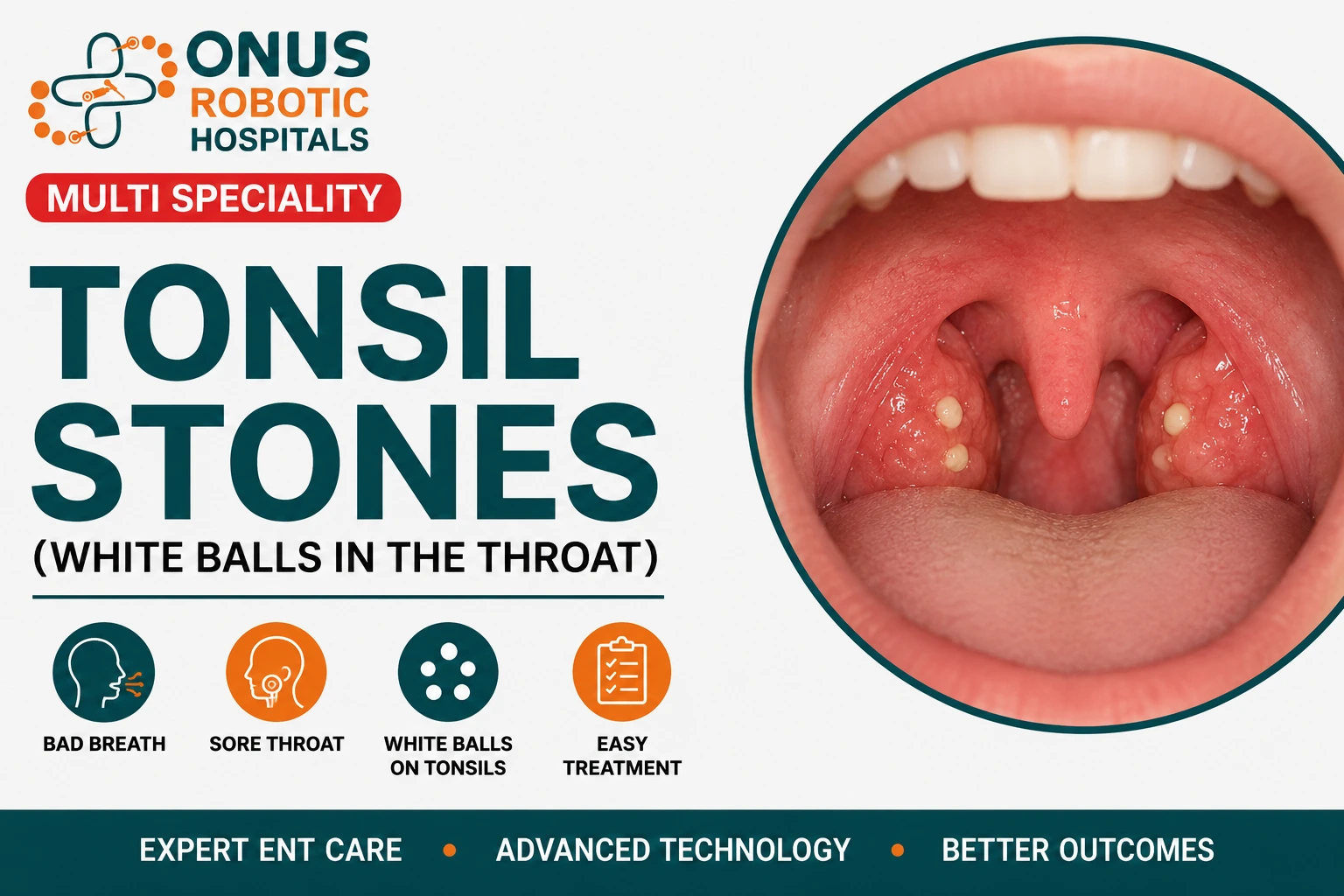
Have you ever noticed small white or yellowish balls at the back of your throat that sometimes produce a foul smell? These are commonly known as tonsil stones, medically called tonsilloliths.
Although tonsil stones are generally not dangerous, they can cause bad breath, throat discomfort, difficulty swallowing, and persistent irritation. Many people discover them accidentally while brushing their teeth or looking in the mirror.
Understanding why tonsil stones form and how they can be treated can help prevent recurrence and improve oral and throat health.
What Are Tonsil Stones?
Tonsil stones are hardened deposits of food particles, bacteria, dead cells, mucus, and other debris that become trapped in small pockets or crevices of the tonsils known as tonsillar crypts.
Over time, these trapped materials calcify and form small white, yellow, or cream-colored stones.
Tonsil stones may vary in size from tiny specks to larger, more noticeable lumps.
Why Do Tonsil Stones Form?
The tonsils contain natural folds and crevices that can trap debris. When this material is not cleared naturally, bacteria begin to grow and the debris hardens into stones.
Common Causes Include:
1. Chronic Tonsillitis
Repeated tonsil infections can enlarge the crypts and increase the likelihood of debris accumulation.
2. Poor Oral Hygiene
Inadequate brushing, flossing, and tongue cleaning allow bacteria to multiply in the mouth.
3. Postnasal Drip
Excess mucus from allergies or sinus infections can collect around the tonsils.
4. Large Tonsillar Crypts
Some individuals naturally have deeper tonsil pockets, making them more prone to stone formation.
5. Chronic Sinus Problems
Persistent nasal congestion and sinus infections contribute to mucus buildup and bacterial growth.
6. Smoking
Smoking alters oral bacterial balance and increases debris accumulation.
Symptoms of Tonsil Stones
Small tonsil stones may cause no symptoms and remain unnoticed.
Larger stones can produce:
- White or yellow spots on the tonsils
- Persistent bad breath (halitosis)
- Sore throat
- Feeling that something is stuck in the throat
- Difficulty swallowing
- Ear pain (referred pain)
- Metallic or unpleasant taste in the mouth
- Chronic throat irritation
- Recurrent cough
Bad breath is often the most common complaint because bacteria trapped within the stones produce sulfur-containing compounds.
How Are Tonsil Stones Diagnosed?
An ENT specialist can usually diagnose tonsil stones through a simple throat examination.
In some cases:
- Oral examination
- Endoscopic throat evaluation
- Imaging studies for unusually large or deeply embedded stones
may be required.
Can Tonsil Stones Be Dangerous?
Most tonsil stones are harmless.
However, untreated large stones may lead to:
- Persistent bad breath
- Chronic throat discomfort
- Recurrent infections
- Difficulty swallowing
- Enlargement of tonsillar crypts
- Repeated inflammation of the tonsils
Rarely, very large stones can cause significant discomfort and require medical removal.
Treatment Options for Tonsil Stones
Treatment depends on the size of the stones and severity of symptoms.
Conservative Management
Small stones often resolve naturally.
Recommended measures include:
- Gargling with warm salt water
- Maintaining good oral hygiene
- Regular tongue cleaning
- Staying hydrated
- Using alcohol-free mouthwash
These methods may help loosen and remove small stones.
Professional Removal by an ENT Specialist
If stones are large, painful, or recurrent, an ENT specialist can safely remove them.
Methods include:
- Manual removal under visualization
- Suction-assisted removal
- Endoscopic removal techniques
Professional removal minimizes injury to the tonsils.
Treatment of Underlying Conditions
Managing associated conditions can reduce recurrence:
- Allergy treatment
- Sinusitis management
- Treatment of chronic tonsillitis
- Improved oral hygiene practices
Tonsillectomy
In patients with:
- Frequent recurrent tonsil stones
- Chronic tonsillitis
- Persistent bad breath despite treatment
Tonsil removal surgery (tonsillectomy) may be recommended.
Tonsillectomy permanently eliminates tonsillar crypts and prevents future stone formation.
Home Remedies: What Should Be Avoided?
Many people attempt to remove tonsil stones themselves.
Avoid:
- Sharp objects
- Hairpins
- Toothpicks
- Aggressive poking of the tonsils
These methods can cause:
- Bleeding
- Infection
- Injury to surrounding tissues
Always seek medical assistance if stones are difficult to remove.
How to Prevent Tonsil Stones
Although not all cases can be prevented, these steps significantly reduce risk:
Maintain Excellent Oral Hygiene
- Brush twice daily
- Floss regularly
- Clean the tongue
- Use antiseptic mouthwash
Stay Hydrated
Adequate hydration helps reduce bacterial buildup.
Manage Allergies and Sinus Conditions
Controlling postnasal drip minimizes mucus accumulation.
Avoid Smoking
Smoking contributes to bacterial growth and oral inflammation.
Regular Dental Checkups
Routine dental care helps maintain oral health and reduce bacterial load.
When Should You See an ENT Specialist?
Consult an ENT specialist if you experience:
- Persistent bad breath
- Recurrent tonsil stones
- Difficulty swallowing
- Frequent throat infections
- Visible white masses on the tonsils
- Ear pain associated with throat symptoms
- Chronic throat discomfort
Early evaluation helps prevent complications and ensures effective treatment.
Conclusion
Tonsil stones are a common cause of white balls in the throat, bad breath, and persistent throat irritation. While small stones may not require treatment, recurrent or symptomatic stones should be evaluated by an ENT specialist.
Modern ENT treatments can safely remove tonsil stones and address underlying causes such as chronic tonsillitis, allergies, and sinus disease. With proper care and preventive measures, most people can significantly reduce recurrence and maintain better throat health.
If you notice persistent white spots on your tonsils or suffer from chronic bad breath, consult an ENT specialist for a comprehensive evaluation and personalized treatment plan.
For Appointments:
Consultant ENT Head & Neck Surgeon
ONUS Robotic Hospitals – Hyderabad
👉 link: contact-us or book-appointment