Introduction
Do you constantly feel like your nose is blocked, even when you don’t have a cold? Have you noticed a reduced sense of smell or persistent nasal congestion that doesn’t improve with medications?
These symptoms may be caused by nasal polyps, a common condition affecting the nose and sinuses. Although nasal polyps are usually non-cancerous, they can significantly impact breathing, sleep quality, and overall quality of life if left untreated.
Fortunately, modern ENT treatments can effectively manage nasal polyps and help patients breathe comfortably again.
What Are Nasal Polyps?
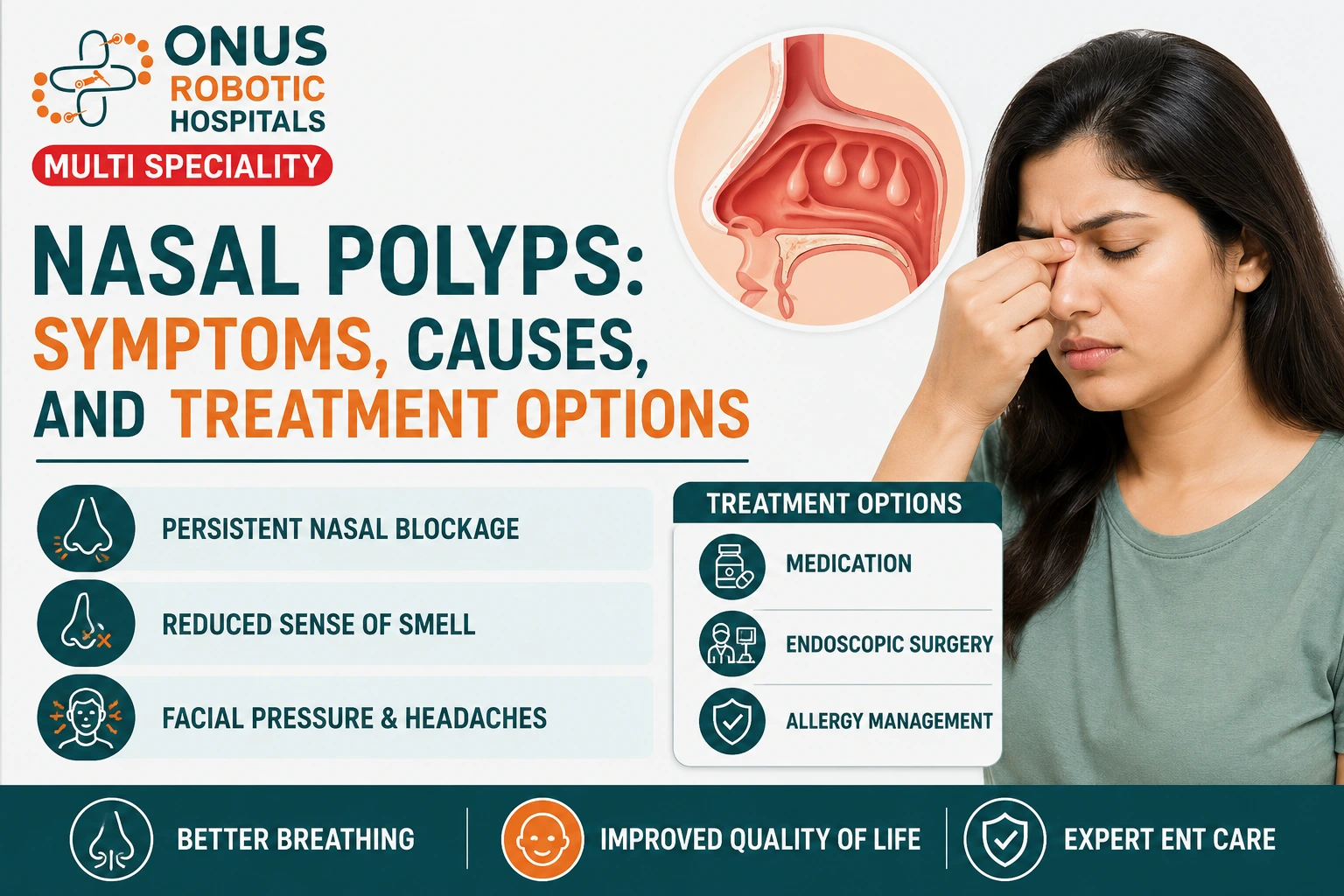
Nasal polyps are soft, painless, non-cancerous growths that develop on the lining of the nasal passages or sinuses.
They typically arise due to long-term inflammation of the nasal mucosa and are often associated with:
- Chronic sinusitis
- Allergies
- Asthma
- Recurrent nasal infections
Small polyps may not cause noticeable symptoms, but larger polyps or multiple polyps can obstruct the nasal passages and sinuses.
What Causes Nasal Polyps?
The exact cause of nasal polyps is not completely understood, but chronic inflammation is believed to play a major role.
Common Risk Factors Include:
Chronic Sinusitis
Persistent inflammation of the sinuses increases the risk of polyp formation.
Allergic Rhinitis
Long-standing allergies can irritate the nasal lining and contribute to polyp development.
Asthma
Patients with asthma are more likely to develop nasal polyps.
Aspirin Sensitivity
Some individuals with aspirin sensitivity have a higher risk of developing nasal polyps.
Recurrent Respiratory Infections
Repeated infections can trigger chronic inflammation.
Genetic Factors
A family history of nasal polyps may increase susceptibility.
Symptoms of Nasal Polyps
Symptoms often develop gradually and may resemble chronic sinus problems.
Persistent Nasal Blockage
One of the most common symptoms is a constantly blocked nose.
Reduced Sense of Smell
Many patients notice difficulty detecting odors.
Loss of Taste
Taste is closely linked to smell, so loss of smell may affect taste perception.
Runny Nose
Persistent nasal discharge may occur.
Postnasal Drip
Mucus draining down the throat can cause irritation and throat clearing.
Facial Pressure
Some patients experience pressure around the cheeks, forehead, or eyes.
Headaches
Sinus obstruction may contribute to recurrent headaches.
Snoring and Sleep Problems
Blocked nasal passages can interfere with normal breathing during sleep.
When Should You Suspect Nasal Polyps?
You should consider medical evaluation if you experience:
- Nasal blockage lasting more than 12 weeks
- Persistent loss of smell
- Recurrent sinus infections
- Chronic mouth breathing
- Facial pressure
- Snoring associated with nasal obstruction
Early diagnosis can prevent complications and improve treatment outcomes.
How Are Nasal Polyps Diagnosed?
Clinical Examination
An ENT specialist will evaluate your symptoms and examine the nasal cavity.
Nasal Endoscopy
A thin flexible endoscope with a camera is inserted into the nose to directly visualize the polyps.
Benefits include:
- Accurate diagnosis
- Assessment of polyp size
- Evaluation of sinus openings
CT Scan of the Sinuses
A CT scan may be recommended to determine:
- Extent of disease
- Sinus involvement
- Surgical planning if needed
Can Nasal Polyps Cause Complications?
If left untreated, nasal polyps may lead to:
Chronic Sinus Infections
Blocked sinuses create an environment where infections can persist.
Sleep Disturbances
Difficulty breathing through the nose may affect sleep quality.
Obstructive Sleep Apnea
Large polyps can contribute to breathing interruptions during sleep.
Reduced Quality of Life
Persistent congestion and loss of smell can significantly affect daily activities.
Treatment Options for Nasal Polyps
Treatment depends on the size of the polyps and severity of symptoms.
Medical Management
Nasal Steroid Sprays
These help reduce inflammation and shrink polyps.
Saline Nasal Irrigation
Saline rinses help clear mucus and improve nasal hygiene.
Allergy Management
Treating underlying allergies can reduce inflammation.
Oral Medications
In selected cases, short courses of oral steroids may be prescribed.
When Is Surgery Needed?
Surgery may be recommended if:
- Symptoms persist despite medication
- Polyps are large
- Breathing is severely affected
- Recurrent sinus infections occur
Endoscopic Sinus Surgery
Modern endoscopic sinus surgery allows ENT specialists to remove nasal polyps with minimal discomfort.
Benefits include:
- No external cuts
- Improved nasal airflow
- Better sinus drainage
- Faster recovery
- Reduced recurrence risk with proper follow-up
Can Nasal Polyps Return?
Yes, nasal polyps can recur, particularly in patients with:
- Chronic sinusitis
- Severe allergies
- Asthma
Regular follow-up and continued medical management help reduce recurrence rates.
Preventing Nasal Polyps
While not all cases can be prevented, the following measures may help:
- Control allergies effectively
- Treat sinus infections promptly
- Avoid smoking and environmental irritants
- Use saline nasal rinses regularly
- Follow prescribed treatment plans
When Should You Consult an ENT Specialist?
Seek ENT evaluation if you experience:
- Long-term nasal blockage
- Persistent loss of smell
- Recurrent sinus infections
- Facial pressure or headaches
- Difficulty breathing through the nose
- Snoring related to nasal obstruction
Prompt diagnosis can significantly improve outcomes.
For Appointments:
Consultant ENT Head & Neck Surgeon
ONUS Robotic Hospitals – Hyderabad
👉 link: contact-us or book-appointment