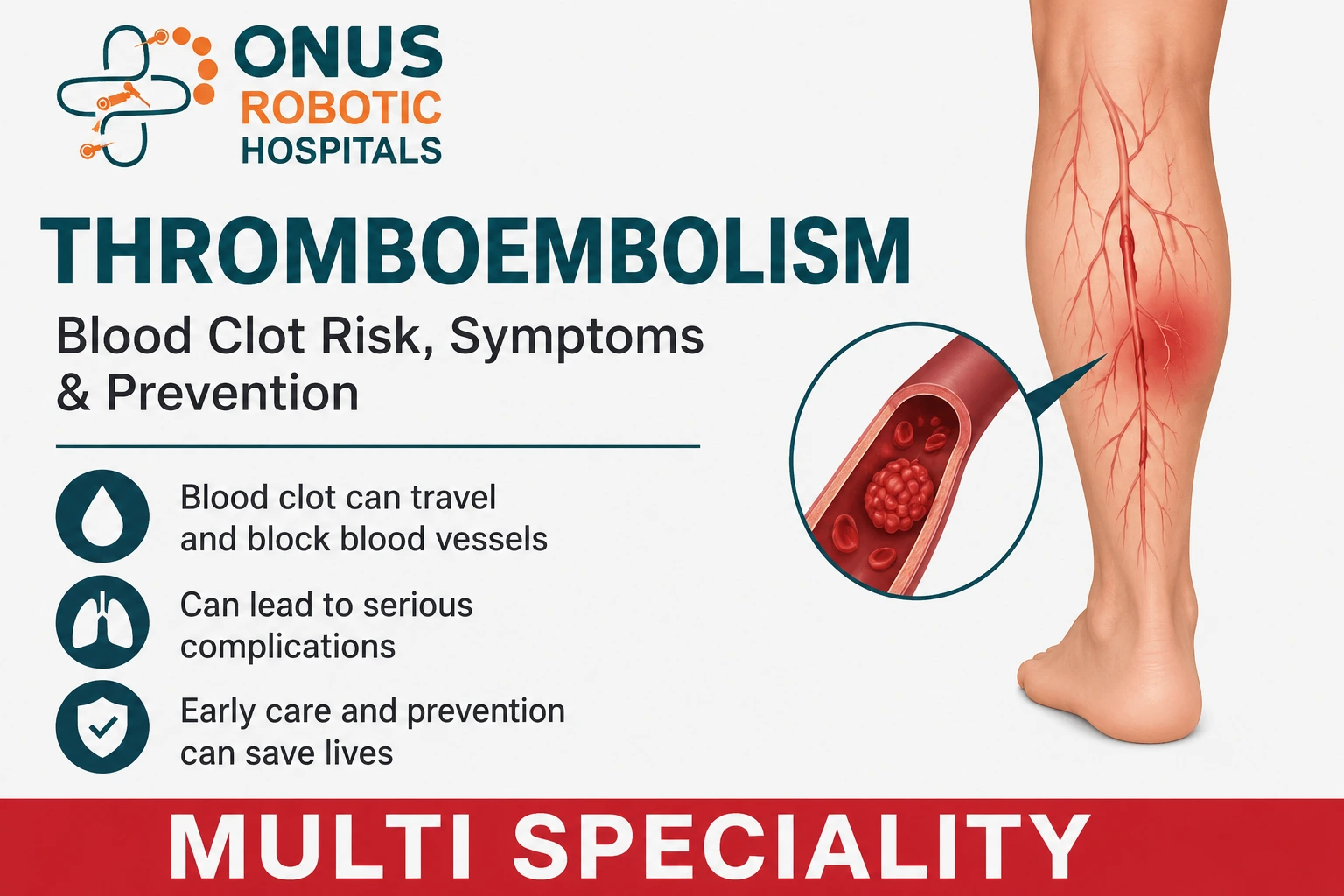
Blood clots are the body’s natural way of stopping bleeding after an injury. However, when a clot forms inside a blood vessel without a proper reason, it can become dangerous. A condition known as thromboembolism occurs when a blood clot develops in a vein or artery and may travel to another part of the body, potentially blocking blood flow to vital organs.
Thromboembolism can lead to serious medical emergencies such as Deep Vein Thrombosis (DVT) and Pulmonary Embolism (PE). Early recognition and treatment are crucial to prevent life-threatening complications.
What is Thromboembolism?
The word thromboembolism combines two terms:
- Thrombus – A blood clot that forms within a blood vessel.
- Embolus – A clot or part of a clot that breaks loose and travels through the bloodstream.
When a clot travels and blocks another blood vessel, it can reduce or completely stop blood flow to organs such as the lungs, brain, or heart.
Types of Thromboembolism
1. Deep Vein Thrombosis (DVT)
A blood clot that forms in the deep veins, usually in the legs.
2. Pulmonary Embolism (PE)
Occurs when a clot travels from the leg veins to the lungs, blocking blood flow and causing a medical emergency.
3. Arterial Thromboembolism
Clots that block arteries supplying blood to organs such as the heart or brain, increasing the risk of heart attack or stroke.
Common Causes of Thromboembolism
Several factors can increase the risk of developing blood clots:
- Prolonged bed rest or immobility
- Major surgery, especially orthopedic surgery
- Long-distance travel
- Obesity
- Smoking
- Cancer
- Pregnancy and postpartum period
- Hormonal medications
- Advanced age
- Previous history of blood clots
- Certain inherited clotting disorders
Symptoms of Deep Vein Thrombosis (DVT)
A clot in the leg veins may cause:
✔ Swelling in one leg
✔ Pain or tenderness in the calf or thigh
✔ Warmth over the affected area
✔ Redness or skin discoloration
✔ Leg heaviness
Some patients may have no symptoms until complications occur.
Symptoms of Pulmonary Embolism (PE)
When a clot reaches the lungs, symptoms may include:
✔ Sudden shortness of breath
✔ Chest pain, especially while breathing deeply
✔ Rapid heartbeat
✔ Coughing, sometimes with blood
✔ Dizziness or fainting
✔ Severe breathing difficulty
Pulmonary embolism is a medical emergency and requires immediate treatment.
Who Is at Higher Risk?
You may be at greater risk if you:
- Recently underwent surgery
- Have limited mobility due to injury or illness
- Are overweight or obese
- Smoke regularly
- Have a family history of blood clots
- Are recovering from fractures or orthopedic procedures
- Have cancer or chronic medical conditions
How is Thromboembolism Diagnosed?
Doctors may recommend:
Physical Examination
Assessment of swelling, pain, and circulation.
Doppler Ultrasound
Commonly used to detect clots in the leg veins.
Blood Tests
Including D-dimer testing.
CT Pulmonary Angiography
Used to diagnose pulmonary embolism.
MRI or Additional Imaging
When necessary for complex cases.
Treatment Options
Treatment depends on the location and severity of the clot.
Blood Thinners (Anticoagulants)
Help prevent clot growth and reduce the risk of new clot formation.
Compression Stockings
Improve circulation and reduce swelling.
Thrombolytic Therapy
Special clot-dissolving medications used in selected severe cases.
Surgical or Catheter-Based Procedures
May be required when large clots threaten organ function.
Prevention of Thromboembolism
Many blood clots can be prevented through simple measures:
Stay Active
Avoid sitting or lying down for prolonged periods.
Walk Frequently
Especially during long flights or travel.
Maintain a Healthy Weight
Reduces stress on blood vessels.
Stay Hydrated
Proper hydration supports healthy circulation.
Quit Smoking
Smoking significantly increases clotting risk.
Follow Post-Surgery Instructions
Use prescribed medications and compression devices after surgery.
Regular Health Checkups
Important for individuals with multiple risk factors.
When Should You Seek Immediate Medical Attention?
Seek emergency care if you experience:
- Sudden chest pain
- Severe shortness of breath
- Unexplained leg swelling
- Rapid heartbeat
- Coughing blood
- Fainting episodes
Prompt diagnosis and treatment can be life-saving.
Conclusion
Thromboembolism is a potentially serious condition that occurs when blood clots form and travel through the bloodstream. While some risk factors cannot be changed, many cases can be prevented through early detection, healthy lifestyle choices, regular movement, and proper medical care after surgery or injury.
If you notice symptoms such as leg swelling, unexplained pain, chest discomfort, or breathing difficulty, consult a healthcare professional immediately. Early treatment significantly reduces the risk of complications and improves outcomes.
For Appointments:
Dr. Balaraju Naidu, Robotic Orthopedic Surgeon
ONUS Robotic Hospitals – Hyderabad
👉 link: contact-us or book-appointment