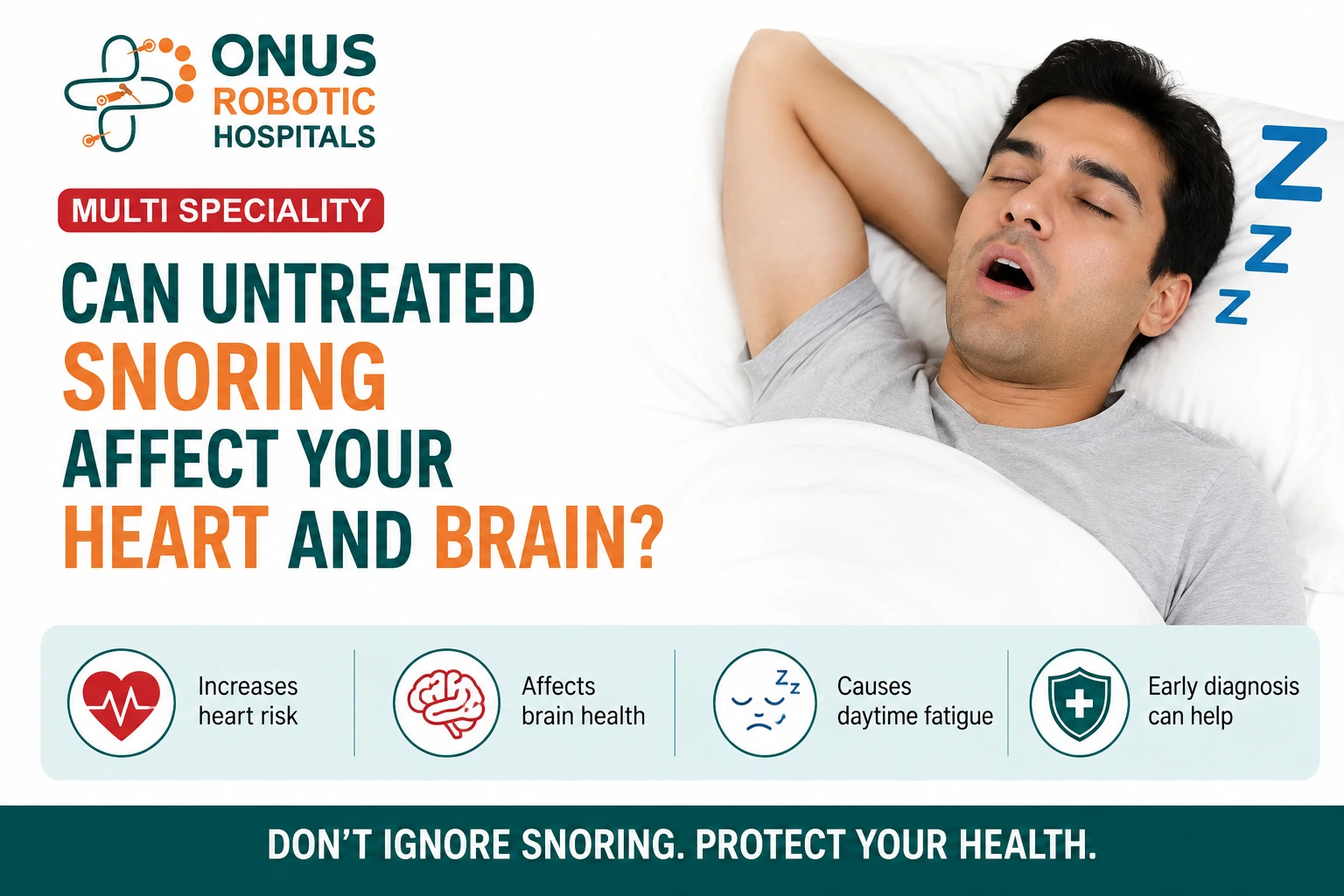
Snoring is often dismissed as a harmless nighttime nuisance. However, persistent and loud snoring can sometimes be a warning sign of an underlying sleep disorder known as Obstructive Sleep Apnea (OSA). When left untreated, chronic snoring and sleep apnea may affect not only sleep quality but also the health of the heart, brain, and other vital organs.
Understanding the connection between snoring and overall health can help individuals seek timely medical care and prevent serious complications.
What Causes Snoring?
Snoring occurs when airflow through the mouth and nose is partially blocked during sleep. This causes the surrounding tissues to vibrate, producing the familiar snoring sound.
Common causes include:
- Nasal congestion
- Deviated nasal septum
- Enlarged tonsils or adenoids
- Obesity
- Sleeping on the back
- Alcohol consumption before bedtime
- Smoking
- Aging-related muscle relaxation
- Obstructive Sleep Apnea (OSA)
While occasional snoring may not be dangerous, persistent loud snoring should be evaluated by a healthcare professional.
What is Obstructive Sleep Apnea?
Obstructive Sleep Apnea (OSA) is a condition where the airway repeatedly becomes blocked during sleep, causing temporary pauses in breathing.
These breathing interruptions may occur dozens or even hundreds of times during the night, reducing oxygen supply to the body and disturbing normal sleep patterns.
Warning Signs of Sleep Apnea
You may have sleep apnea if you experience:
✔ Loud, chronic snoring
✔ Episodes of stopped breathing during sleep
✔ Gasping or choking during sleep
✔ Excessive daytime sleepiness
✔ Morning headaches
✔ Poor concentration
✔ Memory problems
✔ Irritability or mood changes
✔ Fatigue despite adequate sleep
How Can Untreated Snoring Affect the Heart?
Repeated oxygen deprivation and sleep disruption place significant stress on the cardiovascular system.
High Blood Pressure
Sleep apnea can increase blood pressure levels by repeatedly activating the body’s stress response.
Heart Disease
Untreated sleep apnea is associated with an increased risk of:
- Coronary artery disease
- Heart attacks
- Heart failure
- Irregular heart rhythms
Increased Cardiovascular Strain
When breathing repeatedly stops during sleep, the heart must work harder to supply oxygen to the body.
How Can Untreated Snoring Affect the Brain?
The brain requires a continuous oxygen supply to function properly. Repeated drops in oxygen levels during sleep can negatively impact brain health.
Memory Problems
Poor-quality sleep may affect concentration, memory retention, and cognitive performance.
Increased Stroke Risk
Studies have shown that untreated sleep apnea can significantly increase the risk of stroke.
Mood Disorders
Chronic sleep deprivation may contribute to:
- Anxiety
- Depression
- Irritability
- Reduced mental performance
Daytime Fatigue
Lack of restorative sleep often leads to excessive daytime sleepiness, increasing the risk of workplace and driving accidents.
Consultant ENT Head & Neck Surgeon
ONUS Robotic Hospitals – Hyderabad
👉 link: contact-us or book-appointment