Introduction
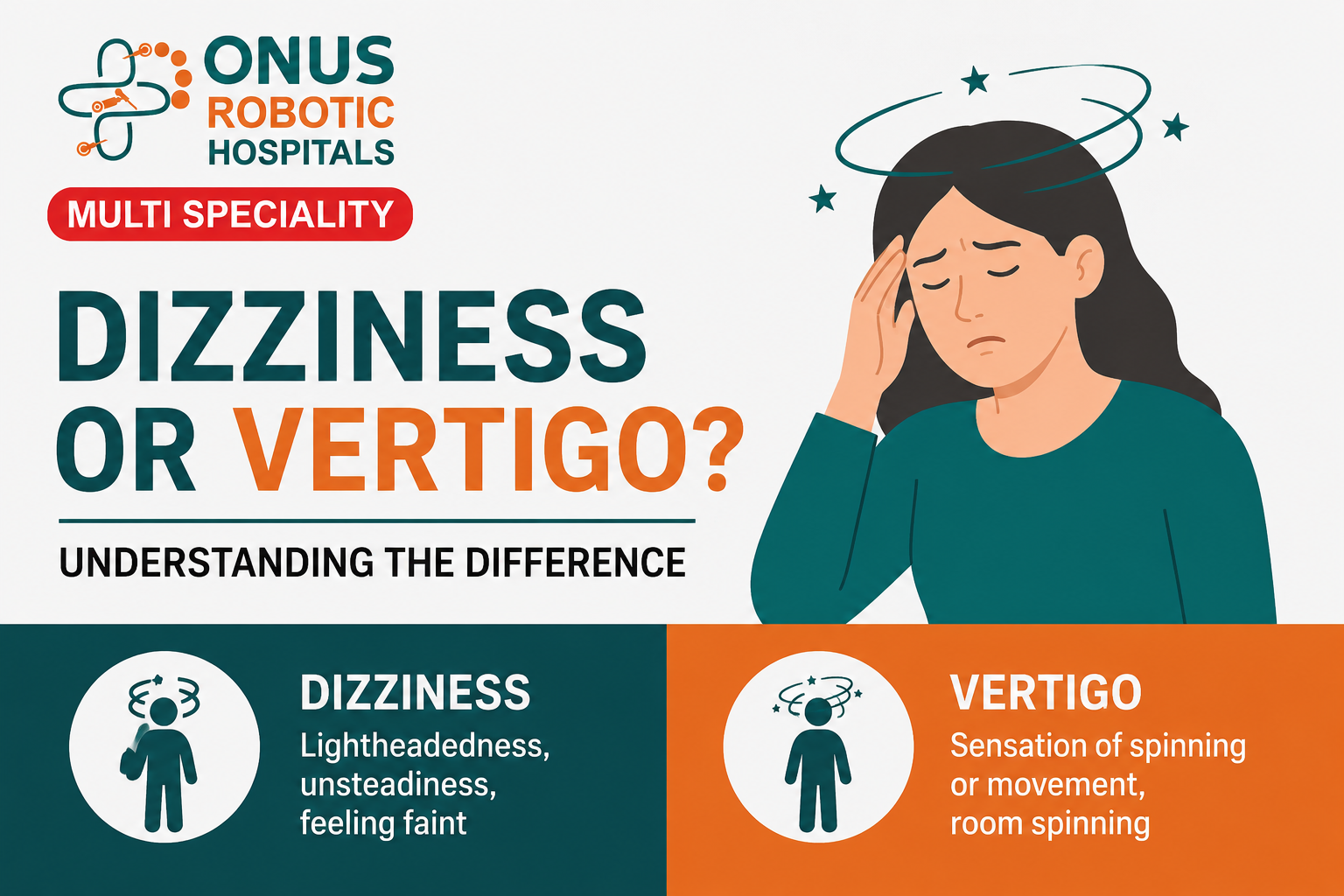
Many people use the terms dizziness and vertigo interchangeably, but they are not the same condition. While both can affect balance and make daily activities difficult, understanding the difference is important for proper diagnosis and treatment.
If you often feel lightheaded, unsteady, or experience a spinning sensation, identifying whether it is dizziness or vertigo can help you seek the right medical care.
What Is Dizziness?
Dizziness is a general term used to describe sensations such as:
- Feeling lightheaded
- Feeling faint
- Unsteadiness while walking
- Loss of balance
- Feeling weak or disconnected
Dizziness is a symptom rather than a disease and may result from various underlying health conditions.
Common Causes of Dizziness
- Low blood pressure
- Dehydration
- Anemia
- Low blood sugar
- Anxiety and stress
- Heart-related conditions
- Certain medications
- Neurological disorders
What Is Vertigo?
Vertigo is a specific type of dizziness that creates the sensation that you or your surroundings are spinning, moving, or tilting even when you are standing still.
People with vertigo often describe it as:
- The room spinning around them
- Feeling pulled to one side
- A sensation of movement while sitting or lying down
Vertigo is usually linked to problems involving the inner ear or balance system.
Common Causes of Vertigo
Benign Paroxysmal Positional Vertigo (BPPV)
One of the most common causes of vertigo. Tiny calcium crystals inside the inner ear become displaced, causing sudden spinning sensations during head movements.
Vestibular Neuritis
Inflammation of the balance nerve due to viral infections.
Meniere’s Disease
A disorder of the inner ear associated with:
- Vertigo attacks
- Hearing loss
- Ear fullness
- Ringing in the ears (tinnitus)
Labyrinthitis
An inner ear infection affecting both hearing and balance.
Migraine-Associated Vertigo
Some migraine sufferers experience vertigo even without severe headaches.
Dizziness vs Vertigo: Key Differences
| Dizziness | Vertigo |
|---|---|
| General feeling of imbalance | Sensation of spinning or movement |
| May cause lightheadedness | Creates rotational sensation |
| Often related to blood pressure, dehydration, anemia | Usually related to inner ear disorders |
| May occur gradually | Often sudden in onset |
| No spinning sensation | Spinning sensation is the hallmark symptom |
For Appointments:
Consultant ENT Head & Neck Surgeon
ONUS Robotic Hospitals – Hyderabad
👉 link: contact-us or book-appointment