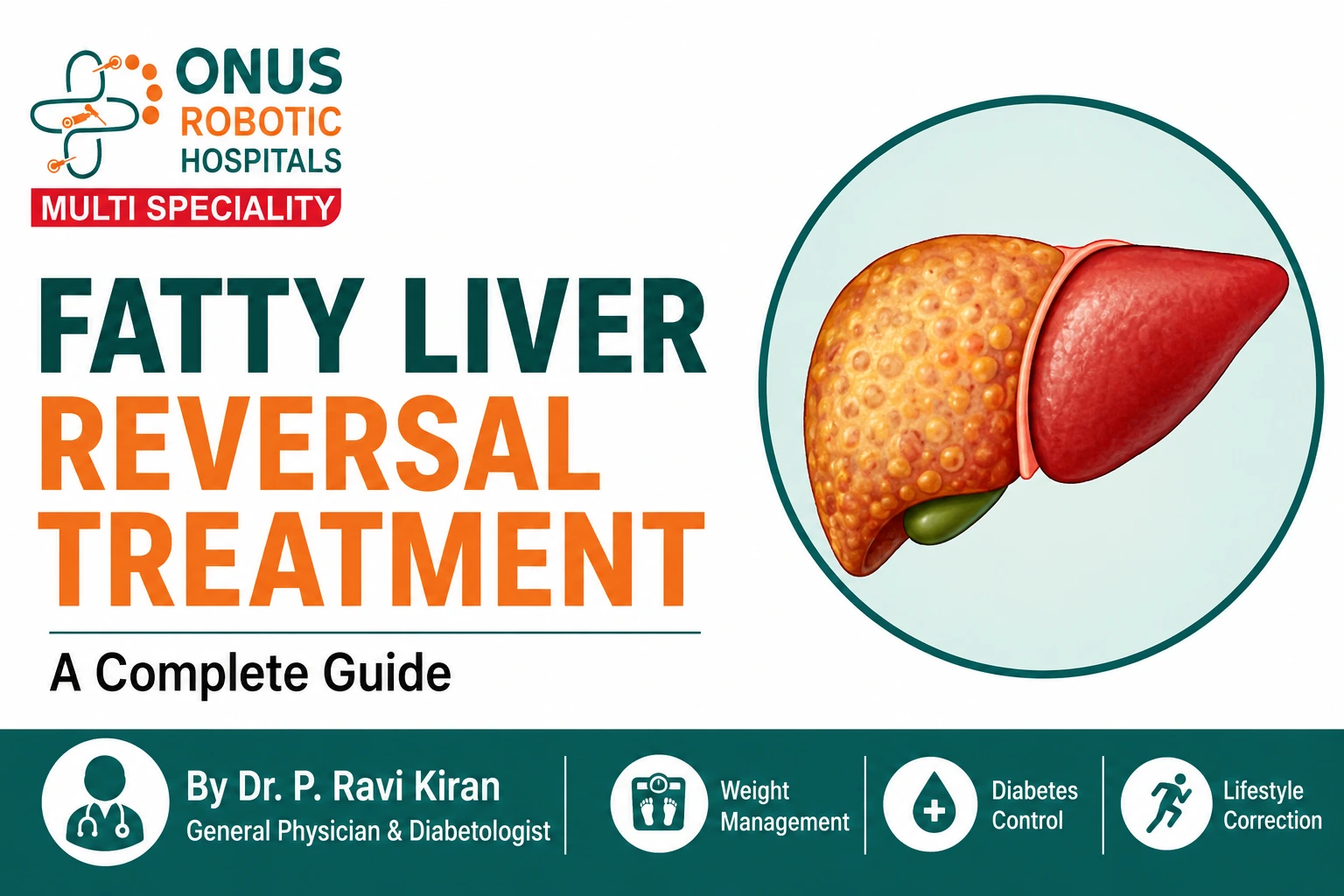
Fatty Liver Reversal Treatment: A Complete Guide – By Dr. Ravi Kiran | Diabetologist, Onus Robotic Hospital

Fatty Liver Reversal Treatment: A Complete Guide – By Dr. Ravi Kiran | Diabetologist, Onus Robotic Hospital

Introduction

Fatty liver disease has become one of the fastest-growing lifestyle-related health conditions worldwide, with India witnessing a significant increase due to changing dietary habits, sedentary lifestyles, obesity, and diabetes. Many individuals discover they have fatty liver only during a routine ultrasound scan, often without experiencing any noticeable symptoms.

Unfortunately, because fatty liver is common, many people ignore the diagnosis. However, untreated fatty liver can progress to liver inflammation, fibrosis, cirrhosis, and even liver failure in severe cases.

The encouraging news is that fatty liver disease is often reversible, especially when detected early and managed with a structured medical approach. Through healthy weight loss, lifestyle modification, proper nutrition, blood sugar control, and regular medical supervision, patients can significantly improve liver health.

In this guide, Dr. P. Ravi Kiran, Senior General Physician & Diabetologist at ONUS Robotic Hospitals, explains everything you need to know about fatty liver reversal and how early intervention can protect your long-term health.


What Is Fatty Liver Disease?

Fatty liver disease occurs when excessive fat accumulates inside liver cells. While a healthy liver contains only a small amount of fat, a buildup beyond normal levels affects the liver’s ability to function efficiently.

The condition is now medically referred to as Metabolic Dysfunction-Associated Steatotic Liver Disease (MASLD), replacing the older term Non-Alcoholic Fatty Liver Disease (NAFLD). When fatty liver progresses to inflammation and liver cell damage, it may develop into Non-Alcoholic Steatohepatitis (NASH).

Since the liver performs hundreds of essential functionsβ€”including detoxification, digestion, and metabolismβ€”maintaining liver health is crucial for overall well-being.


Why Is Fatty Liver Increasing in India?

The rising prevalence of fatty liver disease is closely linked to modern lifestyle changes. Factors contributing to this increase include:

  • Sedentary lifestyles with limited physical activity
  • Excess body weight and obesity
  • Increased consumption of processed and high-calorie foods
  • High intake of sugary beverages and refined carbohydrates
  • Poor sleep quality
  • Long working hours and stress
  • Type 2 diabetes
  • Insulin resistance
  • Metabolic syndrome

As obesity and diabetes continue to rise in India, fatty liver disease has become a major public health concern.


What Causes Fatty Liver?

Fatty liver develops when the liver stores more fat than it can process. Common causes include:

Obesity

Excess body fat, especially abdominal or belly fat, increases fat deposition within the liver.

Insulin Resistance

When the body’s cells become resistant to insulin, excess glucose is converted into fat and stored in the liver.

Type 2 Diabetes

Poor blood sugar control significantly increases the risk of fatty liver progression.

Metabolic Syndrome

Individuals with multiple metabolic risk factors are particularly vulnerable, including:

  • High blood pressure
  • Elevated blood sugar
  • High triglycerides
  • Low HDL (“good”) cholesterol
  • Increased waist circumference

Symptoms of Fatty Liver Disease

One of the biggest challenges is that fatty liver often develops silently.

Many people experience no symptoms at all during the early stages.

When symptoms do occur, they may include:

  • Persistent fatigue
  • Low energy levels
  • Abdominal discomfort
  • Feeling of fullness in the upper abdomen
  • Difficulty losing weight
  • Elevated liver enzymes in blood tests
  • Increased waist size

Because symptoms are subtle or absent, routine health screenings play a vital role in early diagnosis.


Grades of Fatty Liver

Grade 1 Fatty Liver

This is the mildest stage, with minimal fat accumulation. It is often reversible through healthy lifestyle changes.

Grade 2 Fatty Liver

Moderate fat accumulation requires structured intervention, regular monitoring, and lifestyle correction.

Grade 3 Fatty Liver

Severe fat accumulation increases the risk of liver inflammation, fibrosis, and long-term liver damage. Early medical treatment becomes essential.


Can Fatty Liver Be Reversed?

Yes. In many cases, fatty liver disease can be significantly improvedβ€”or even reversedβ€”by addressing its underlying metabolic causes.

Successful fatty liver reversal focuses on:

  • Sustainable weight loss
  • Blood sugar control
  • Improving insulin sensitivity
  • Healthy eating habits
  • Regular physical activity
  • Managing cholesterol and blood pressure
  • Ongoing medical supervision

Early treatment provides the best opportunity for recovery.


How Much Weight Loss Is Needed?

Research shows that even modest weight loss can make a significant difference:

  • 5% weight loss can reduce fat accumulation in the liver.
  • 7–10% weight loss may improve liver inflammation.
  • More than 10% weight loss may help reverse fibrosis in selected patients.

Gradual, medically supervised weight loss is far more effective than crash diets.


Best Diet for Fatty Liver Reversal

A liver-friendly diet emphasizes nutrient-rich, balanced meals while reducing excess calories and sugar.

Foods to Include

  • Green leafy vegetables
  • Fresh salads
  • Lean protein
  • Eggs
  • Fish
  • Lentils and pulses
  • Nuts and seeds
  • Whole grains in moderation

Limit

  • Sugary beverages
  • Sweets and desserts
  • Refined flour products
  • White rice in excess
  • Fried foods
  • Bakery products
  • Highly processed foods

Avoid

  • Excess alcohol
  • Soft drinks
  • Packaged snacks
  • Foods high in added sugar

Healthy eating not only reduces liver fat but also improves overall metabolic health.


Role of Exercise in Fatty Liver Reversal

Exercise is one of the most effective ways to improve liver health.

Regular physical activity helps:

  • Burn excess fat
  • Improve insulin sensitivity
  • Lower blood sugar
  • Promote weight loss
  • Reduce liver fat
  • Improve energy levels

Recommended activities include:

  • Brisk walking
  • Cycling
  • Swimming
  • Strength training
  • Yoga
  • Structured exercise programs

Aim for 150–300 minutes of moderate-intensity exercise every week, along with muscle-strengthening activities.


Fatty Liver and Diabetes: The Hidden Connection

Fatty liver and Type 2 diabetes frequently occur together.

People with fatty liver have a greater risk of developing:

  • Type 2 diabetes
  • Heart disease
  • Stroke
  • High blood pressure

Similarly, individuals with diabetes are more likely to develop fatty liver due to insulin resistance.

Managing blood sugar effectively often leads to significant improvements in liver health.


Advanced Medical Treatment Options

Some patients require more than lifestyle changes alone.

Depending on individual health status, treatment may include:

  • Structured weight management programs
  • Intensive lifestyle intervention
  • Medical nutrition therapy
  • Metabolic health counseling
  • Modern anti-obesity medications
  • GLP-1 receptor agonists (when medically appropriate)
  • Regular monitoring of liver function and metabolic health

Treatment plans should always be personalized under the supervision of an experienced physician.


The ONUS Slim 100β„’ Metabolic Transformation Program

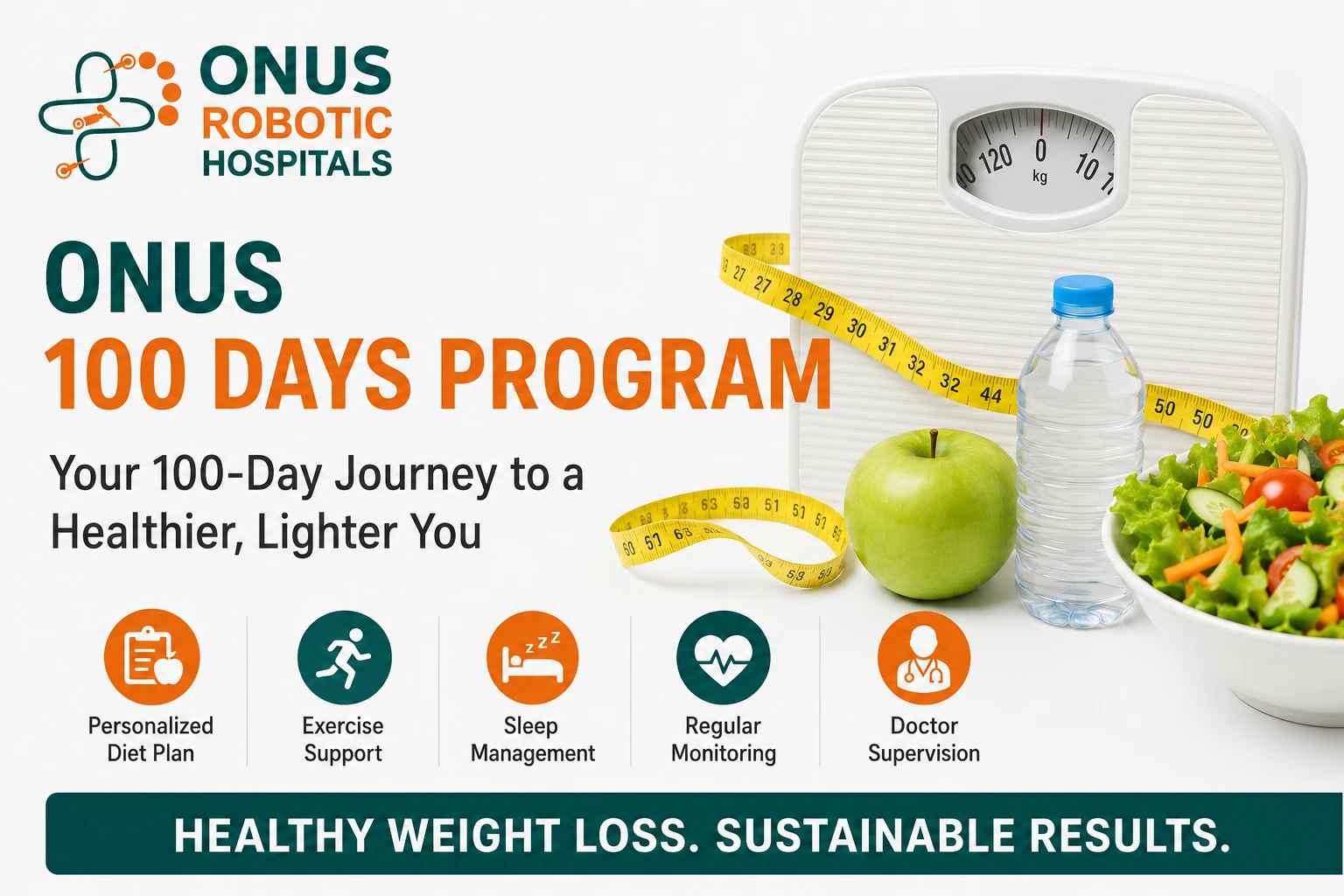
At ONUS Robotic Hospitals, patients with obesity, diabetes, metabolic syndrome, and fatty liver can benefit from the ONUS Slim 100β„’ – Doctor-Led 100-Day Weight Loss & Metabolic Health Program.

The program is designed to provide comprehensive support through:

  • Detailed medical evaluation
  • Body composition assessment
  • Personalized nutrition planning
  • Structured weight loss guidance
  • Physical activity counseling
  • Blood sugar and blood pressure monitoring
  • Lifestyle coaching
  • Regular follow-up visits
  • Long-term maintenance planning

The goal is not simply to reduce body weight but to improve metabolic health and reduce the risk of future complications.


When Should You Consult a Doctor?

Medical evaluation is recommended if:

  • Your ultrasound shows fatty liver.
  • Liver enzyme levels are elevated.
  • You have obesity or excess belly fat.
  • You have Type 2 diabetes or prediabetes.
  • You have high cholesterol or triglycerides.
  • You struggle to lose weight despite dieting.
  • You have metabolic syndrome.

Early diagnosis and timely intervention can prevent irreversible liver damage.


Tips to Protect Your Liver

Simple daily habits can go a long way in maintaining liver health:

  • Maintain a healthy body weight.
  • Eat balanced, home-cooked meals.
  • Exercise regularly.
  • Sleep for 7–8 hours every night.
  • Control diabetes and blood pressure.
  • Avoid excessive alcohol.
  • Stay hydrated.
  • Schedule regular health check-ups.

Conclusion

Fatty liver disease is more than just a liver conditionβ€”it is often a sign of underlying metabolic imbalance. Ignoring it can increase the risk of diabetes, cardiovascular disease, liver fibrosis, and cirrhosis.

Fortunately, early-stage fatty liver is often reversible through healthy weight loss, improved nutrition, regular exercise, blood sugar control, and consistent medical supervision.

At ONUS Robotic Hospitals, Dr. P. Ravi Kiran provides evidence-based care to help patients reverse fatty liver, improve metabolic health, and achieve lasting lifestyle changes.

If you’ve recently been diagnosed with fatty liver, don’t wait. Taking action today can protect your liver and improve your overall health for years to come.

Consultation

πŸ“ Dr. Ravi Kiran
Diabetologist & Preventive Medicine Specialist
Onus Robotic Hospital, Hyderabad


Book Doctor Appointment
Book Free Appointment
Please enable JavaScript in your browser to complete this form.
WhatsApp