Introduction
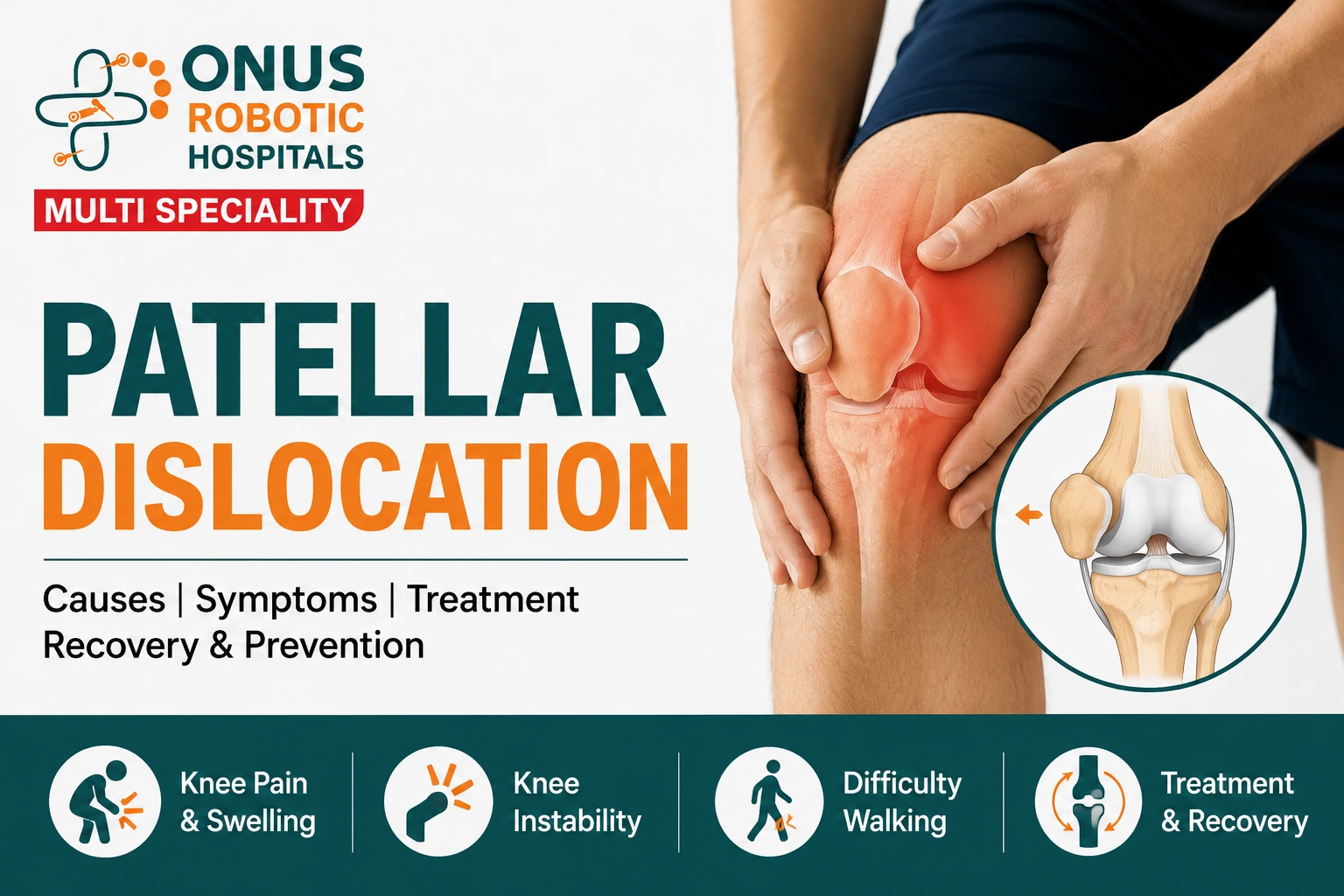
Patellar dislocation occurs when the kneecap (patella) slips out of its normal position in the groove at the front of the thigh bone (femur). It is a painful knee injury that commonly affects young adults, athletes, and physically active individuals, although it can occur at any age.
A dislocated kneecap can cause sudden pain, swelling, difficulty walking, and a feeling that the knee may “give way.” Without proper treatment, some patients may experience repeated dislocations, leading to chronic knee instability and cartilage damage.
At ONUS Robotic Hospitals, our orthopedic specialists provide comprehensive evaluation and advanced treatment options, including minimally invasive procedures and robotic-assisted orthopedic care for selected patients with recurrent patellar instability.
What Is Patellar Dislocation?
The patella normally glides smoothly within a groove called the trochlear groove as the knee bends and straightens.
Patellar dislocation occurs when the kneecap moves completely out of this groove, usually toward the outside (lateral side) of the knee.
In many first-time injuries, the kneecap returns to its normal position on its own. However, some patients require medical assistance to reposition it safely.
What Causes Patellar Dislocation?
Several factors can contribute to a kneecap dislocation.
Sports Injuries
Sudden twisting movements during sports such as:
- Football
- Basketball
- Volleyball
- Cricket
- Running
- Gymnastics
can force the kneecap out of place.
Direct Trauma
A fall or direct blow to the front or side of the knee may cause dislocation.
Anatomical Factors
Some individuals are born with knee structures that increase the risk of instability, including:
- Shallow trochlear groove
- High-riding patella (Patella Alta)
- Knock knees
- Generalized ligament laxity
- Weak thigh muscles
Previous Patellar Dislocation
Once a kneecap has dislocated, the risk of recurrence increases, especially without proper rehabilitation.
Symptoms of Patellar Dislocation
Symptoms usually appear suddenly after injury.
Common symptoms include:
- Sudden severe knee pain
- Visible displacement of the kneecap
- Rapid swelling
- Difficulty bending or straightening the knee
- Inability to bear weight comfortably
- Knee instability
- Feeling that the knee may “give out”
- Recurrent episodes of kneecap slipping
- Fear of movement after previous dislocations
Why Recurrent Patellar Dislocation Is a Concern
Repeated dislocations can damage the cartilage and soft tissues that stabilize the kneecap.
Potential complications include:
- Chronic knee instability
- Cartilage damage
- Loose bone or cartilage fragments
- Early osteoarthritis
- Persistent pain
- Reduced sports performance
- Difficulty climbing stairs or squatting
Early treatment helps reduce these long-term complications.
How Is Patellar Dislocation Diagnosed?
Your orthopedic specialist will evaluate:
Medical History
- Previous knee injuries
- Sports activities
- Recurrent instability
- Family history
Physical Examination
The doctor assesses:
- Knee alignment
- Patellar stability
- Swelling
- Ligament injury
- Range of motion
Imaging Studies
Investigations may include:
X-ray
- Confirms dislocation
- Detects fractures
MRI Scan
- Evaluates cartilage injury
- Detects ligament tears such as Medial Patellofemoral Ligament (MPFL) injury
- Identifies loose fragments inside the joint
CT Scan
May be recommended for detailed bone alignment assessment before surgery.
Treatment Options for Patellar Dislocation
Treatment depends on whether it is a first-time or recurrent dislocation, along with the severity of associated injuries.
Non-Surgical Treatment
Many first-time dislocations without significant cartilage injury can be managed conservatively.
Treatment includes:
- Rest
- Ice therapy
- Compression
- Elevation (RICE)
- Knee brace
- Pain-relieving medications
- Physiotherapy
- Quadriceps strengthening exercises
- Balance and stability training
Most patients gradually return to normal activities after rehabilitation.
Surgical Treatment
Surgery may be recommended if:
- Recurrent dislocations occur
- Ligaments are severely torn
- Cartilage damage is present
- Bone fragments are loose
- Conservative treatment fails
Common procedures include:
MPFL Reconstruction
Rebuilds the damaged ligament that stabilizes the kneecap.
Arthroscopic Surgery
Removes loose cartilage or repairs damaged tissue through minimally invasive techniques.
Realignment Procedures
Performed when abnormal bone alignment contributes to repeated dislocations.
Selected patients may benefit from advanced surgical planning and robotic-assisted orthopedic procedures where appropriate.
Rehabilitation After Patellar Dislocation
Physiotherapy plays a vital role in recovery.
Rehabilitation focuses on:
- Reducing pain and swelling
- Restoring knee movement
- Strengthening quadriceps muscles
- Improving hip and core stability
- Balance training
- Safe return to sports
Following the rehabilitation plan carefully reduces the chance of future dislocations.
Can Patellar Dislocation Be Prevented?
Although not all injuries can be prevented, the following measures reduce the risk:
- Strengthen thigh muscles
- Maintain a healthy body weight
- Warm up before exercise
- Use proper sports techniques
- Improve flexibility
- Wear appropriate footwear
- Continue rehabilitation after previous injuries
When Should You Consult an Orthopedic Specialist?
Seek immediate medical attention if you experience:
- A kneecap that appears out of place
- Severe knee pain after twisting or falling
- Difficulty walking
- Significant swelling
- Repeated kneecap dislocations
- Persistent knee instability
- Locking or catching sensations in the knee
Early diagnosis improves treatment outcomes and helps prevent permanent joint damage.
Why Choose ONUS Robotic Hospitals?
At ONUS Robotic Hospitals, our orthopedic team provides comprehensive care for sports injuries and knee disorders using modern diagnostic and treatment techniques.
Our services include:
- Advanced orthopedic evaluation
- Digital X-ray and MRI guidance
- Sports injury management
- Arthroscopic knee surgery
- MPFL reconstruction
- Robotic-assisted orthopedic procedures (where indicated)
- Personalized rehabilitation programs
- Long-term follow-up care
Our goal is to restore knee stability, reduce pain, and help patients return to their daily activities safely.
Conclusion
Patellar dislocation is more than just a temporary knee injury. If left untreated, repeated kneecap dislocations can lead to chronic instability, cartilage damage, and early arthritis.
Prompt evaluation, accurate diagnosis, and appropriate treatment—whether non-surgical or surgical—can restore knee function and prevent future complications.
If you experience knee instability, recurrent dislocations, or persistent knee pain, consult the orthopedic specialists at ONUS Robotic Hospitals for expert care and personalized treatment.
Frequently Asked Questions (FAQs)
1. Can a dislocated kneecap heal without surgery?
Yes. Many first-time dislocations without major ligament or cartilage damage can heal with bracing, physiotherapy, and rehabilitation.
2. Can patellar dislocation happen again?
Yes. Without proper rehabilitation or if structural abnormalities exist, recurrent dislocations are common.
3. How long does recovery take?
Recovery varies depending on the severity of the injury. Most patients recover within 6–12 weeks with conservative treatment, while surgical recovery may take several months.
4. Is surgery always necessary?
No. Surgery is generally recommended for recurrent dislocations, significant ligament tears, cartilage injuries, or when conservative treatment fails.
5. Can I return to sports after treatment?
Yes. Most patients can safely return to sports after completing rehabilitation and receiving clearance from their orthopedic specialist.
For Appointments:
Dr. Balaraju Naidu, Robotic Orthopedic Surgeon
ONUS Robotic Hospitals – Hyderabad
👉 link: contact-us or book-appointment