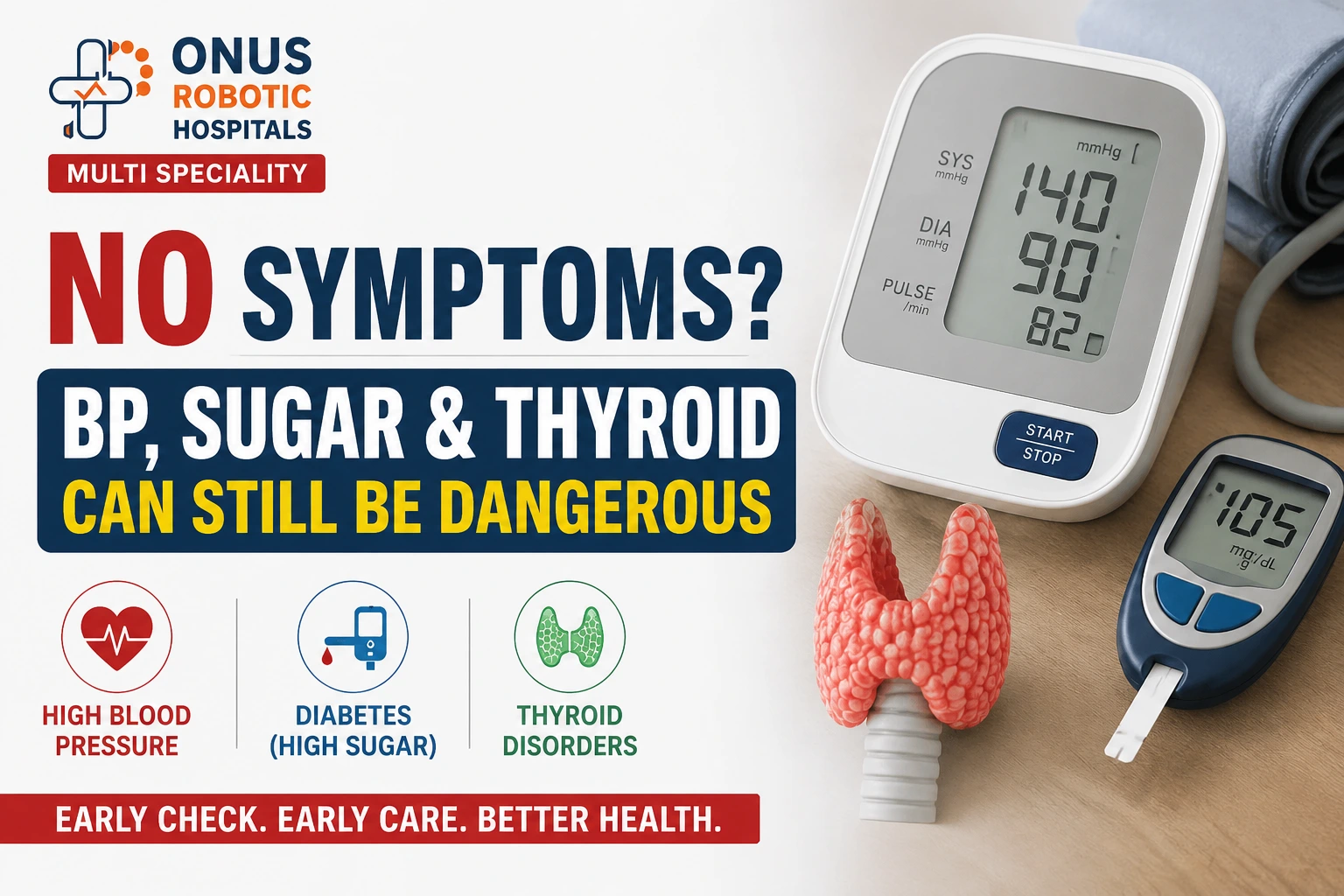
No Symptoms? BP, Sugar & Thyroid Can Still Be Dangerous – By Dr. Ravi Kiran | Diabetologist, Onus Robotic Hospital
Introduction
Many people believe that if they feel healthy, they must be healthy. Unfortunately, this is not always true. Conditions like high blood pressure (BP), diabetes (high blood sugar), and thyroid disorders often develop silently, without causing noticeable symptoms in their early stages.
By the time symptoms appear, these conditions may have already affected important organs such as the heart, kidneys, brain, eyes, and nerves. This is why doctors often refer to them as “silent diseases.”
Regular health checkups and early diagnosis play a crucial role in preventing serious health complications.
Why Are These Conditions Called Silent Diseases?
High blood pressure, diabetes, and thyroid disorders can progress gradually over months or even years without obvious warning signs.
Many people discover these conditions only during routine health checkups or after developing complications.
Early detection allows treatment to begin before permanent damage occurs.
High Blood Pressure (Hypertension)
High blood pressure occurs when the force of blood against the artery walls remains consistently high.
Many people with hypertension experience no symptoms at all.
Risk Factors
- Family history
- Obesity
- High salt intake
- Lack of physical activity
- Smoking
- Alcohol consumption
- Stress
- Increasing age
Possible Symptoms (Usually in Advanced Stages)
- Severe headache
- Dizziness
- Blurred vision
- Chest pain
- Shortness of breath
However, most patients remain symptom-free until complications develop.
Complications of Uncontrolled BP
- Heart attack
- Stroke
- Heart failure
- Kidney damage
- Vision loss
- Blood vessel damage
Regular BP monitoring is the best way to detect hypertension early.
Diabetes (High Blood Sugar)
Diabetes develops when the body cannot properly regulate blood glucose levels.
Type 2 diabetes often develops slowly, and many people remain unaware they have the disease.
Risk Factors
- Family history
- Obesity
- Physical inactivity
- Unhealthy diet
- High blood pressure
- High cholesterol
- Age above 35–40 years
Early Symptoms (May Be Mild or Absent)
- Frequent urination
- Increased thirst
- Fatigue
- Slow wound healing
- Blurred vision
- Frequent infections
Some people may have none of these symptoms.
Complications of Uncontrolled Diabetes
- Heart disease
- Stroke
- Kidney disease
- Nerve damage
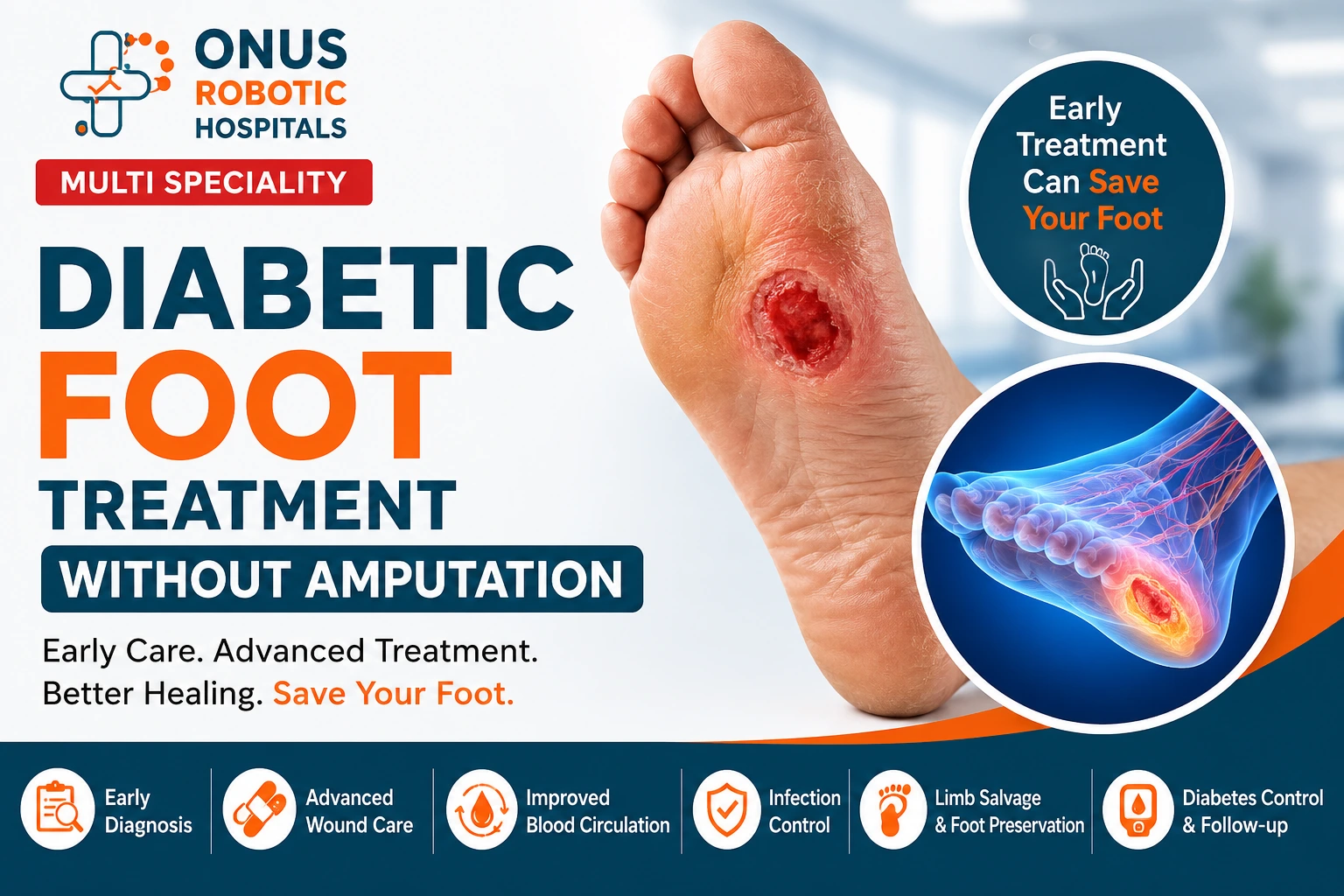
- Diabetic foot problems
- Vision loss
Routine blood sugar testing helps identify diabetes before complications occur.
📍 Dr. Ravi Kiran
Diabetologist & Preventive Medicine Specialist
Onus Robotic Hospital, Hyderabad