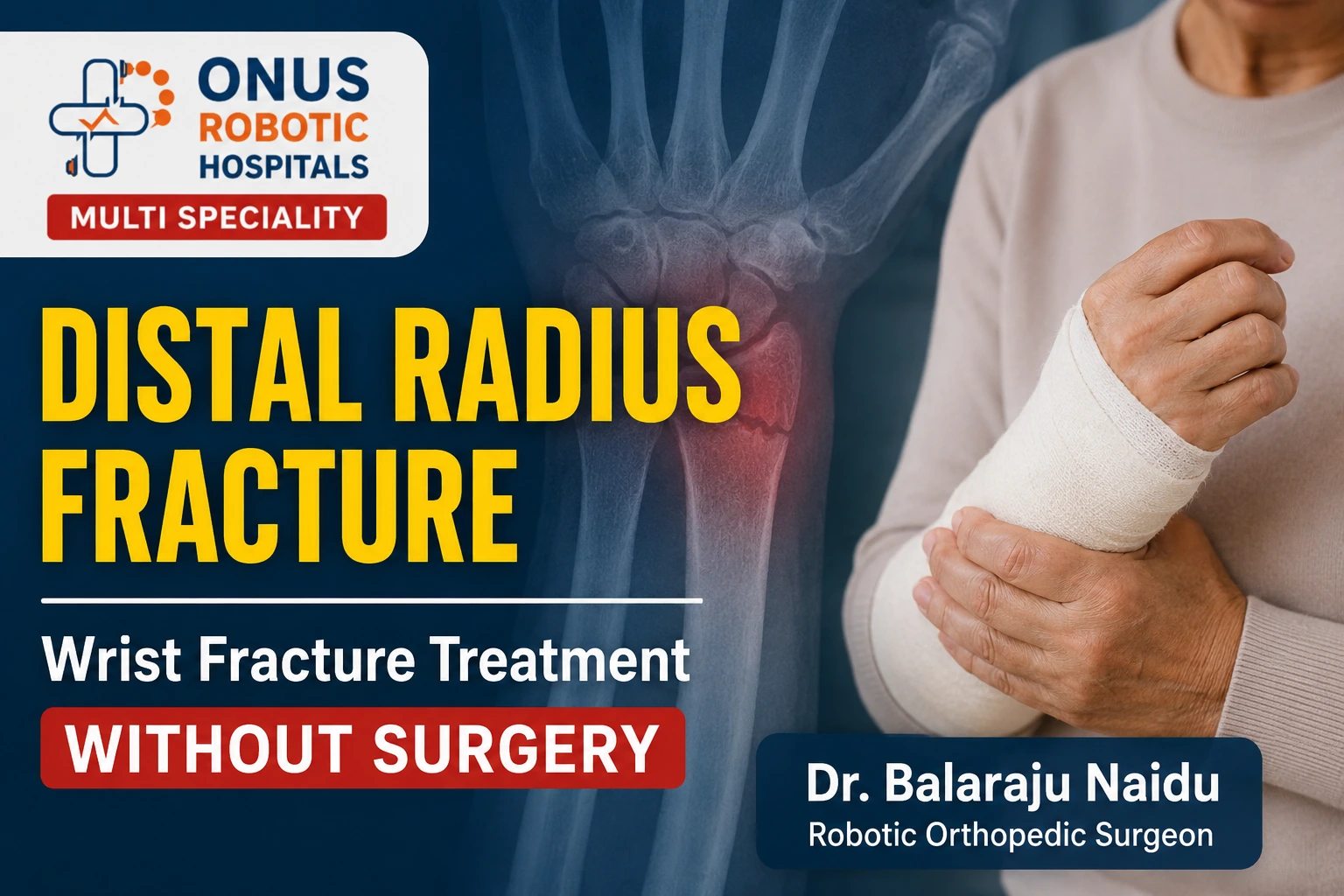
A distal radius fracture, commonly known as a wrist fracture, is one of the most frequent bone injuries seen in orthopedic practice. It usually occurs when a person falls on an outstretched hand, causing the wrist to absorb the impact. Although this injury can happen at any age, it is especially common among elderly individuals with osteoporosis and active young adults involved in sports or accidents.
Many patients wonder whether a wrist fracture always requires surgery. The answer depends on the type and severity of the fracture. In many cases, especially when the fracture is stable and properly aligned, non-surgical treatment can provide excellent results.
Dr. Balaraju Naidu, Robotic Orthopedic Surgeon at ONUS Robotic Hospitals, explains the different types of distal radius fractures, available treatment options, and when surgery becomes necessary.
What Is a Distal Radius Fracture?
The radius is one of the two bones in the forearm. The end of the radius closest to the wrist is called the distal radius.
A fracture in this area is known as a distal radius fracture. Because this bone plays a major role in wrist movement and hand function, proper diagnosis and treatment are essential for restoring normal movement.
Common Causes of Wrist Fractures
A distal radius fracture commonly occurs due to:
- Falling on an outstretched hand
- Road traffic accidents
- Sports injuries
- Workplace accidents
- Osteoporosis-related falls in elderly individuals
- High-impact trauma
Older adults, particularly women with osteoporosis, are more prone to these fractures because weakened bones break more easily.
Symptoms of a Distal Radius Fracture
Patients may experience:
- Severe wrist pain
- Swelling around the wrist
- Bruising
- Difficulty moving the wrist
- Visible deformity
- Tenderness over the fracture site
- Weak grip strength
- Inability to lift or hold objects
Immediate medical evaluation is recommended if these symptoms appear after a fall or injury.
Types of Distal Radius Fractures
Orthopedic surgeons classify wrist fractures based on their pattern.
1. Extra-Articular Fracture
An extra-articular fracture does not involve the wrist joint.
These fractures generally have a better prognosis and, when properly aligned, may heal successfully without surgery.
2. Intra-Articular Fracture
An intra-articular fracture extends into the wrist joint.
Because the joint surface is affected, these fractures require more careful treatment. Improper healing can lead to arthritis, stiffness, and long-term pain.
Can a Wrist Fracture Be Treated Without Surgery?
Yes. Many distal radius fractures can be managed without surgery if they meet specific criteria.
Non-surgical treatment is generally possible when the fracture is:
- Extra-articular
- Undisplaced or minimally displaced
- Stable
- Properly aligned
- Not affecting the wrist joint
Treatment usually includes:
- Closed reduction (if necessary)
- Wrist immobilization with a cast or splint
- Regular X-ray follow-up
- Pain management
- Physiotherapy after healing
With proper care, many patients regain excellent wrist function without an operation.
When Is Surgery Necessary?
Surgery is recommended when the fracture cannot heal properly with casting alone.
Your orthopedic surgeon may advise surgery if there is:
- Intra-articular fracture
- Significant displacement
- Loss of normal bone alignment
- Joint step-off
- Bone instability
- Multiple fracture fragments
- Open fracture
- Associated ligament injuries
The goal of surgery is to restore normal anatomy and preserve wrist function.
What Happens If Treatment Is Delayed?
Ignoring a wrist fracture or delaying treatment can lead to several complications, including:
- Permanent wrist deformity
- Chronic pain
- Reduced wrist movement
- Weak grip strength
- Malunion (bone heals in the wrong position)
- Early arthritis
- Difficulty performing daily activities
Early diagnosis significantly improves recovery and reduces the risk of long-term complications.
Diagnosis
Your orthopedic specialist may recommend:
Clinical Examination
- Checking swelling
- Assessing deformity
- Evaluating wrist movement
- Assessing nerve and blood supply
Imaging Tests
- X-rays
- CT Scan (for complex fractures)
- MRI (when ligament injuries are suspected)
These investigations help determine the best treatment plan.
Recovery After Wrist Fracture
Healing time depends on age, fracture type, and treatment method.
Generally:
- Bone healing: 6–8 weeks
- Return to routine work: 6–12 weeks
- Full strength recovery: 3–6 months
Physiotherapy plays an important role in restoring flexibility, grip strength, and wrist movement after immobilization.
Tips to Prevent Wrist Fractures
You can reduce your risk by:
- Improving bone health with adequate calcium and Vitamin D
- Treating osteoporosis
- Wearing protective gear during sports
- Maintaining good balance and muscle strength
- Keeping floors free of slipping hazards
- Exercising regularly
Why Early Orthopedic Consultation Matters
Every wrist fracture is different. While some fractures heal well with a cast, others require surgical stabilization to restore proper alignment and prevent future disability.
Consulting an orthopedic surgeon immediately after a wrist injury ensures accurate diagnosis, timely treatment, and better long-term outcomes.
Expert Care at ONUS Robotic Hospitals
At ONUS Robotic Hospitals, patients receive comprehensive orthopedic care using advanced diagnostic techniques and personalized treatment plans.
Whether your fracture requires conservative treatment or surgery, early evaluation helps achieve the best possible recovery.
About the Doctor
Dr. Balaraju Naidu
Robotic Orthopedic Surgeon
ONUS Robotic Hospitals
Dr. Balaraju Naidu specializes in the diagnosis and treatment of fractures, joint injuries, sports injuries, robotic-assisted orthopedic procedures, and advanced musculoskeletal care. His patient-centered approach focuses on restoring mobility, reducing pain, and helping individuals return to their daily activities safely and efficiently.
Frequently Asked Questions (FAQs)
Is every wrist fracture treated with surgery?
No. Stable, extra-articular, and undisplaced fractures can often be treated successfully with casting and regular follow-up.
How long does a wrist fracture take to heal?
Most distal radius fractures heal within 6 to 8 weeks, though complete recovery may take several months.
Can I move my fingers while wearing a cast?
Yes. Gentle finger movement is encouraged unless your doctor advises otherwise to reduce stiffness and swelling.
What happens if a wrist fracture is left untreated?
Untreated fractures may heal incorrectly, leading to pain, deformity, stiffness, weak grip, and arthritis.
Is physiotherapy necessary after cast removal?
Yes. Physiotherapy helps restore wrist strength, flexibility, and normal function after immobilization.
For Appointments:
Dr. Balaraju Naidu, Robotic Orthopedic Surgeon
ONUS Robotic Hospitals – Hyderabad
👉 link: contact-us or book-appointment