Children are naturally active—they run, jump, climb, and play every day. However, if your child frequently complains of foot pain or ankle pain after physical activity, it may not simply be due to tiredness. One possible reason is flat foot, also known as pes planus, a common condition seen in children.
While many children with flat feet experience no discomfort, others may develop pain, difficulty walking, fatigue, or problems participating in sports. Understanding the condition early helps parents know when reassurance is enough and when medical evaluation becomes necessary.
Dr. Balaraju Naidu, Senior Robotic Orthopedic Surgeon at ONUS Robotic Hospitals, explains everything parents should know about flat foot in children.
What is Flat Foot?
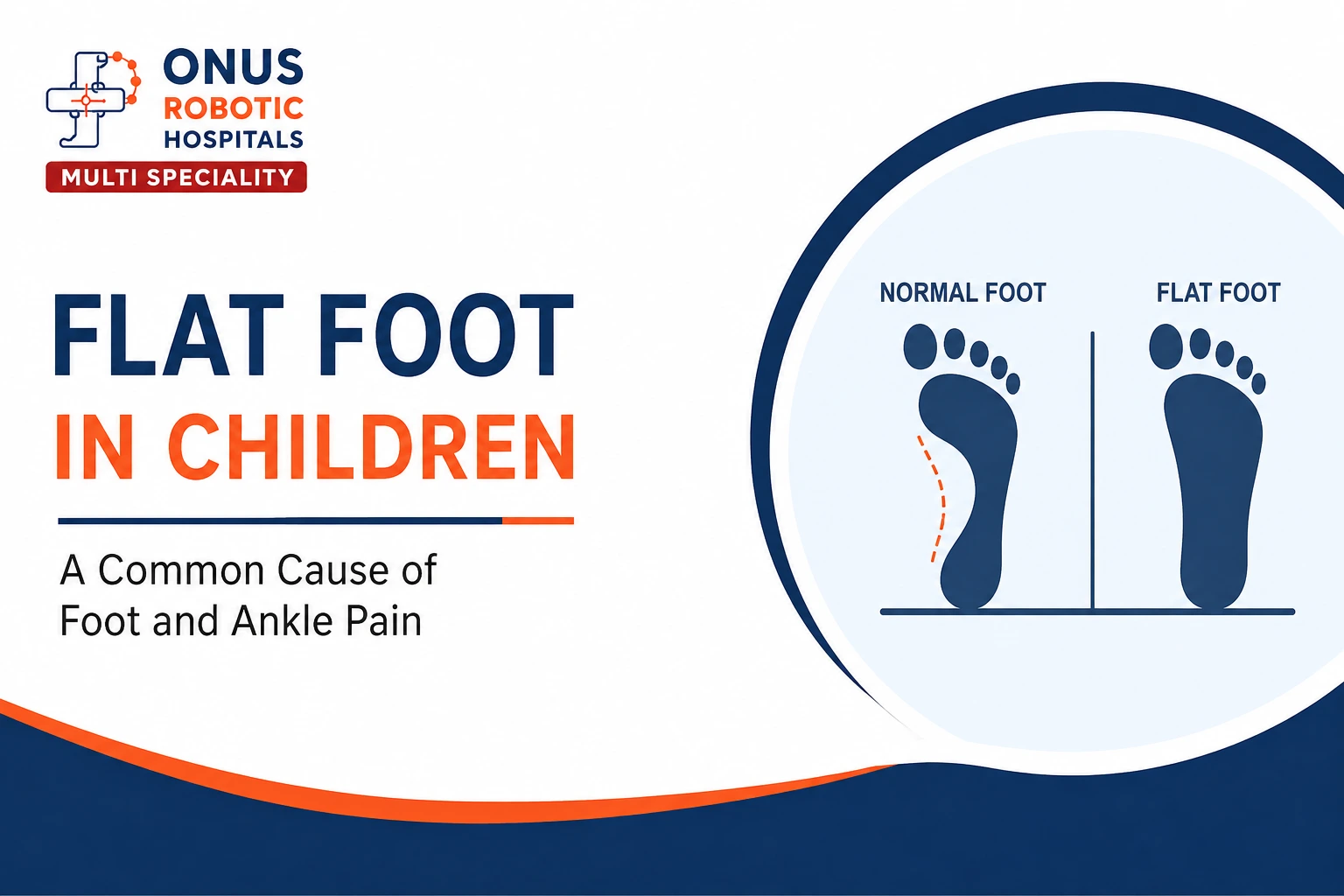
A normal foot has a curved arch along its inner side. This arch acts as a natural shock absorber, helping distribute body weight evenly while walking, running, and jumping.
In children with flat foot, this arch appears lower than usual or disappears completely when standing, causing the entire sole of the foot to touch the ground.
Flat feet are very common during infancy and early childhood because the foot arch develops gradually as children grow.
Most children naturally develop a normal arch by the age of 6 to 10 years.
Why is the Foot Arch Important?
The arch of the foot plays several important roles:
- Absorbs shock during walking and running
- Maintains balance and stability
- Improves walking efficiency
- Protects the ankles, knees, hips, and lower back from excessive stress
- Helps children participate comfortably in sports and outdoor activities
When the arch is weak or absent, additional strain may occur on the muscles, tendons, and joints.
Types of Flat Foot
1. Flexible Flat Foot
Flexible flat foot is the most common type.
Characteristics include:
- Arch appears while sitting or standing on tiptoes
- Arch disappears only when standing normally
- Usually painless
- Often improves naturally with age
Most children with flexible flat feet do not require surgery.
2. Rigid Flat Foot
Rigid flat foot is much less common but requires careful medical evaluation.
Features include:
- Arch remains absent even when sitting or standing on tiptoes
- Foot movement becomes stiff
- Pain is more common
- Walking may become difficult
- May indicate an underlying bone or joint problem
Rigid flat foot should always be examined by an orthopedic specialist.
What Causes Flat Foot in Children?
Several factors may contribute to flat foot, including:
Normal Growth and Development
Many young children naturally have flat feet because the arch has not fully developed.
Family History
Flat feet often run in families. If one or both parents have flat feet, children are more likely to develop the condition.
Loose Ligaments
Some children naturally have flexible joints and ligaments, allowing the arch to collapse while standing.
Muscle Weakness
Weak foot and leg muscles can reduce arch support.
Nutritional Deficiencies
Vitamin D deficiency and inadequate calcium intake may affect bone development in growing children.
Certain Medical Conditions
Less commonly, flat feet may result from:
- Neuromuscular disorders
- Congenital bone abnormalities
- Tarsal coalition (abnormal connection between foot bones)
- Cerebral palsy
- Muscular disorders
Symptoms of Flat Foot
Many children never develop symptoms.
However, some may experience:
- Foot pain after walking
- Ankle pain
- Heel pain
- Leg fatigue
- Difficulty running
- Frequent tripping
- Uneven shoe wear
- Swelling around the ankle
- Reduced participation in sports
- Pain after prolonged standing
If these symptoms continue despite rest, medical evaluation is recommended.
When Should Parents Be Concerned?
Consult an orthopedic specialist if your child has:
- Persistent foot pain
- Severe ankle pain
- Difficulty walking
- One foot flatter than the other
- Stiff or rigid feet
- Frequent falls
- Swelling
- Progressive worsening of deformity
- Inability to participate in physical activities
Early diagnosis can prevent future complications.
How is Flat Foot Diagnosed?
Diagnosis usually includes:
Clinical Examination
The orthopedic specialist checks:
- Walking pattern
- Foot posture
- Flexibility
- Heel alignment
- Arch appearance
Tiptoe Test
If the arch reappears while standing on tiptoes, the condition is usually a flexible flat foot.
Imaging Tests
If rigid flat foot or another abnormality is suspected, doctors may recommend:
- X-rays
- CT Scan
- MRI
These tests help identify bone abnormalities or joint problems.
Treatment for Flat Foot
Treatment depends on the child’s symptoms rather than the appearance of the foot.
Observation
Children without pain usually require no treatment.
Regular monitoring is often sufficient.
Supportive Footwear
Well-designed shoes provide:
- Better stability
- Improved comfort
- Reduced strain on the feet
Arch-support footwear may help children with symptoms.
Orthotic Insoles
Custom or prefabricated arch supports may reduce pain in selected children.
They improve comfort but do not permanently create an arch.
Stretching Exercises
Exercises strengthen muscles supporting the foot.
Examples include:
- Heel raises
- Toe walking
- Towel curls
- Marble pickup exercises
- Calf muscle stretching
Regular exercise often improves flexibility and reduces discomfort.
Physiotherapy
Physiotherapy may be advised when children have:
- Muscle tightness
- Poor balance
- Weak foot muscles
- Pain during activity
A personalized rehabilitation program improves strength and movement.
Nutritional Evaluation
Some children may require testing for:
- Vitamin D deficiency
- Calcium deficiency
Correcting nutritional deficiencies supports healthy bone development.
When is Surgery Needed?
Surgery is rarely necessary.
It may be considered if:
- Pain remains severe despite treatment
- Foot becomes rigid
- Significant deformity develops
- Walking becomes difficult
- Underlying structural abnormalities are present
The type of surgery depends on the specific cause and severity of the condition.
Can Flat Foot Be Prevented?
Not every case can be prevented, but parents can encourage healthy foot development by:
- Providing supportive footwear
- Encouraging outdoor physical activity
- Maintaining a healthy body weight
- Ensuring adequate calcium intake
- Providing sufficient Vitamin D
- Seeking medical advice if pain develops
Frequently Asked Questions
Is flat foot normal in young children?
Yes. Most children are naturally flat-footed during early childhood, and arches often develop as they grow.
Does every child with flat feet need treatment?
No. Treatment is recommended only when symptoms such as pain or difficulty walking are present.
Can exercises cure flat feet?
Exercises improve strength, flexibility, and comfort but may not permanently change the foot’s arch.
Are special shoes necessary?
Supportive footwear can reduce symptoms in children with painful flat feet, although not every child requires specialized shoes.
Is surgery common?
No. Most children improve without surgery. Surgical treatment is reserved for severe or rigid flat feet causing significant pain or disability.
Conclusion
Flat foot in children is a common condition and, in most cases, is a normal part of development. Many children never experience pain and require only observation. However, persistent foot pain, ankle pain, walking difficulties, or a rigid flat foot should never be ignored.
Early assessment by an orthopedic specialist helps identify the cause and ensures timely treatment through supportive footwear, exercises, physiotherapy, nutritional management, or surgery when necessary.
If your child complains of recurring foot discomfort, seeking expert orthopedic evaluation can help them stay active, comfortable, and confident during their growing years.
About Dr. Balaraju Naidu
Dr. Balaraju Naidu is a Senior Robotic Orthopedic Surgeon at ONUS Robotic Hospitals, specializing in pediatric orthopedic conditions, sports injuries, joint preservation, trauma care, and robotic-assisted joint replacement surgeries. He provides comprehensive evaluation and personalized treatment plans to help children and adults achieve pain-free mobility and improved quality of life.
For Appointments:
Dr. Balaraju Naidu, Robotic Orthopedic Surgeon
ONUS Robotic Hospitals – Hyderabad
👉 link: contact-us or book-appointment