Our ears play a vital role in hearing, communication, and maintaining balance. However, when the delicate eardrum (tympanic membrane) develops a hole or tear, it can lead to hearing loss, repeated ear discharge, frequent infections, and significant discomfort.
Many people ignore these symptoms, assuming they will heal on their own. While some small perforations close naturally, larger or persistent holes often require medical treatment to prevent long-term complications.
In this educational webinar, Dr. Akshitha Reddy, Consultant ENT Surgeon at ONUS Robotic Hospitals, explains the causes of eardrum perforation, how it is diagnosed, and the permanent treatment options available, including tympanoplasty.
What is a Hole in the Eardrum?
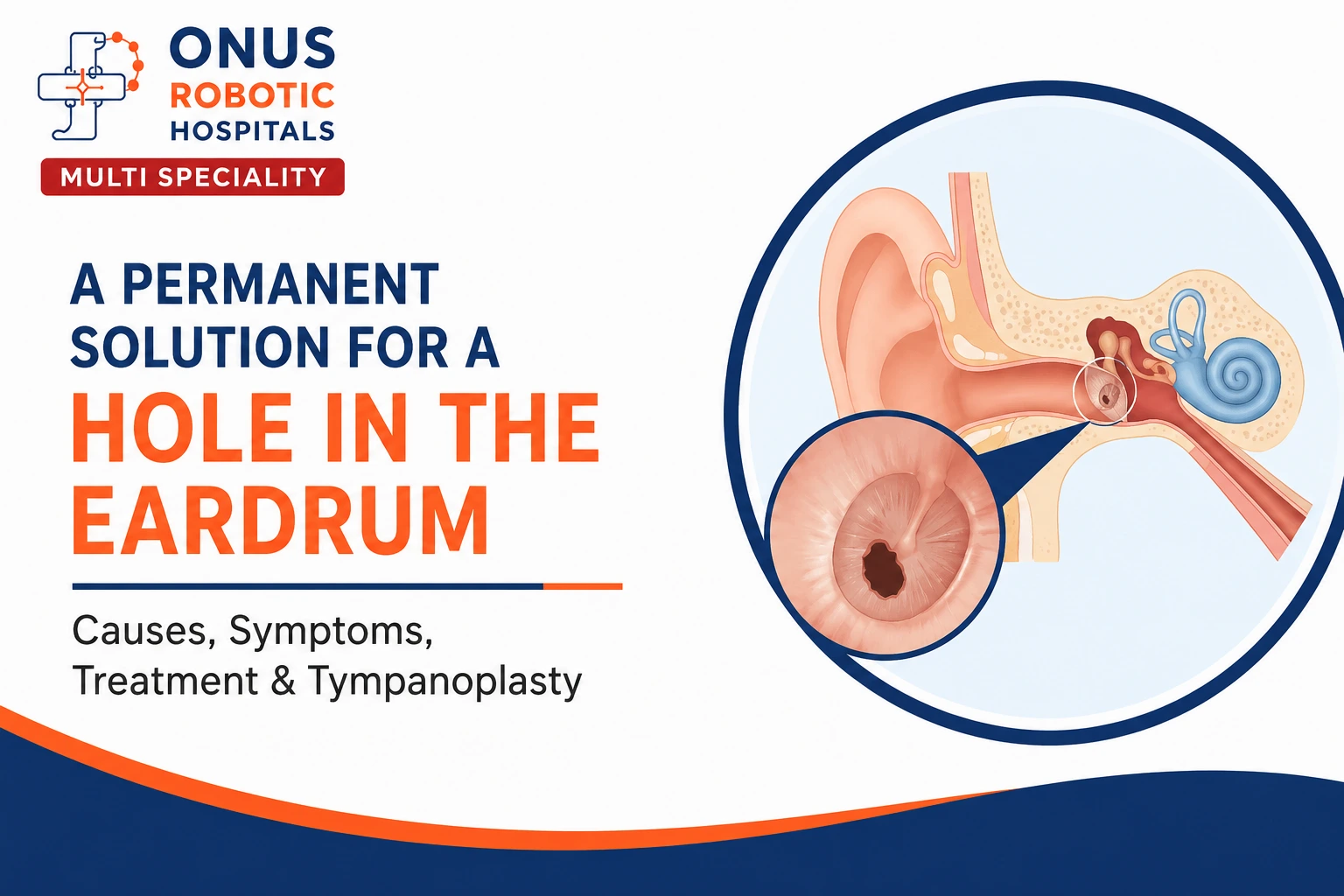
The eardrum, also called the tympanic membrane, is a thin membrane that separates the outer ear from the middle ear. It vibrates when sound waves enter the ear, allowing sound to be transmitted to the hearing bones.
A hole or tear in the eardrum, known as an eardrum perforation, disrupts this process. As a result, hearing may become impaired, and bacteria can enter the middle ear more easily, leading to repeated infections.
What Causes an Eardrum Perforation?
Several conditions can cause a hole in the eardrum.
1. Repeated Ear Infections
Chronic middle ear infections are one of the most common causes. Pressure from accumulated pus can rupture the eardrum.
2. Ear Injury
Trauma to the ear, such as inserting cotton buds, hairpins, or other sharp objects into the ear canal, may puncture the eardrum.
3. Sudden Pressure Changes
Rapid changes in air pressure, known as barotrauma, can occur during:
- Air travel
- Scuba diving
- Explosions
- Blast injuries
These sudden pressure changes may tear the eardrum.
4. Loud Noise or Acoustic Trauma
Extremely loud sounds or explosions can damage the eardrum.
5. Head Injury
Severe trauma to the head or skull may also result in eardrum perforation.
Symptoms of a Hole in the Eardrum
Symptoms vary depending on the size of the perforation and whether an infection is present.
Common symptoms include:
- Reduced hearing
- Ear discharge
- Ear pain
- Ringing in the ears (Tinnitus)
- Repeated ear infections
- Feeling of fullness in the ear
- Whistling sound while sneezing or blowing the nose
- Dizziness or imbalance in some cases
If symptoms persist, medical evaluation is essential.
Why Should You Not Ignore an Eardrum Perforation?
Ignoring a persistent hole in the eardrum can lead to several complications.
These include:
- Chronic ear infections
- Progressive hearing loss
- Damage to the middle ear
- Continuous ear discharge
- Formation of cholesteatoma (abnormal skin growth inside the ear)
- Difficulty hearing conversations
- Reduced quality of life
Early treatment can prevent these complications and preserve hearing.
How is an Eardrum Perforation Diagnosed?
An ENT specialist performs a detailed evaluation.
Medical History
The doctor asks about:
- Previous ear infections
- Ear injuries
- Hearing problems
- Ear discharge
- Duration of symptoms
Ear Examination
Using an otoscope or ear microscope, the ENT specialist examines the eardrum to determine:
- Size of the perforation
- Location
- Presence of infection
- Condition of the middle ear
Consultant ENT Head & Neck Surgeon
ONUS Robotic Hospitals – Hyderabad
👉 link: contact-us or book-appointment