Introduction
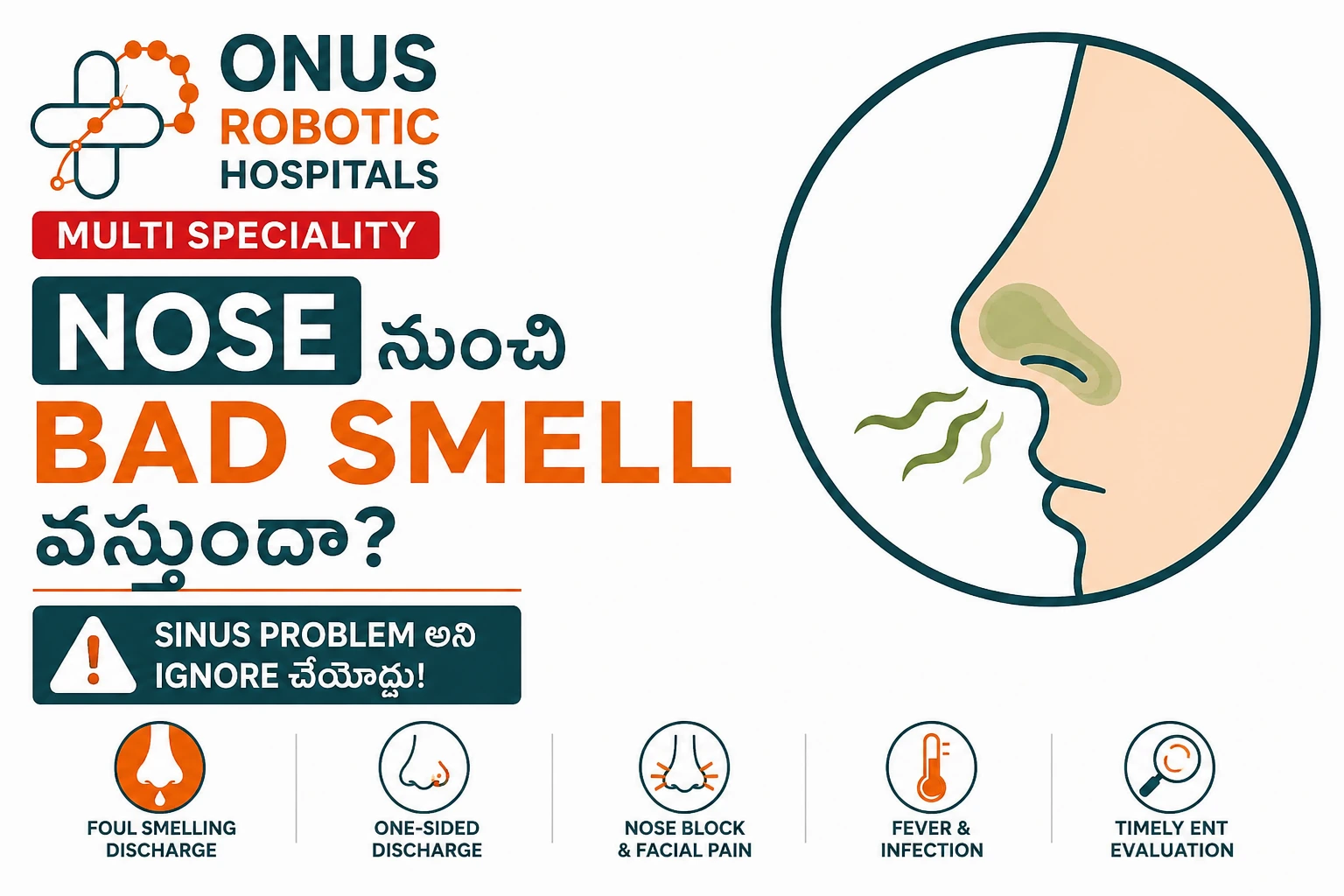
A persistent bad smell coming from the nose or foul-smelling nasal discharge can be unpleasant and concerning. Many people assume it is simply due to sinusitis or a common cold and attempt to manage it with home remedies, perfumes, or over-the-counter medications.
However, a foul smell from the nose may indicate several underlying conditions, ranging from sinus infections to foreign bodies in children and other nasal disorders. Identifying the actual cause is important because treatment depends on the underlying problem.
In this article, Dr. Akshita Reddy, Consultant ENT Surgeon, explains the common causes of foul-smelling nasal discharge, warning signs that should not be ignored, and when to seek medical attention.
What Causes a Bad Smell from the Nose?
A bad smell from the nose is usually caused by infection, inflammation, blockage, or the presence of abnormal material inside the nasal passages.
The smell may be noticed by the patient, family members, or both.
1. Sinus Infection (Sinusitis)
One of the most common causes of foul-smelling nasal discharge is a sinus infection.
The sinuses are air-filled spaces around the nose and face. When these spaces become infected or blocked, mucus can accumulate and become infected, producing an unpleasant odor.
Common Symptoms of Sinusitis
- Nasal blockage
- Thick nasal discharge
- Facial pain or pressure
- Headache
- Reduced sense of smell
- Fever
- Foul smell from the nose
Persistent sinus infections may require medical evaluation and treatment.
2. Foreign Body Inside the Nose (Especially in Children)
A very important cause of one-sided foul-smelling nasal discharge in children is a foreign body inside the nose.
Young children may accidentally place small objects such as:
- Beads
- Seeds
- Small toys
- Paper pieces
- Food particles
inside their nostrils without informing parents.
Warning Signs
- Discharge from only one nostril
- Bad smell from one side of the nose
- Blood-stained discharge
- Persistent nasal blockage
Parents should seek prompt ENT evaluation if these symptoms occur.
3. Chronic Nasal Infections
Long-standing bacterial infections inside the nose may produce thick discharge and an unpleasant odor.
These infections can develop due to:
- Poor sinus drainage
- Recurrent upper respiratory infections
- Nasal structural abnormalities
Proper diagnosis is essential to identify the underlying cause.
4. Nasal Polyps and Blockages
Nasal polyps are soft, non-cancerous growths that develop inside the nasal passages.
They can:
- Block airflow
- Trap mucus
- Increase the risk of infections
- Contribute to foul-smelling discharge
Patients often experience chronic nasal obstruction along with sinus-related symptoms.
5. Dental Infections
In some cases, infections involving the upper teeth or gums can spread toward the sinus region and cause:
- Bad smell
- Facial pain
- Nasal discharge
- Sinus symptoms
This is why a thorough evaluation is sometimes necessary.
6. Allergies and Secondary Infection
Chronic allergies can cause swelling and blockage inside the nasal passages.
When mucus drainage becomes impaired, secondary infections may develop, leading to:
- Thick discharge
- Nasal congestion
- Unpleasant odor
Warning Signs That Should Not Be Ignored
You should consult an ENT specialist if you experience:
Persistent Foul Smell
A bad smell that continues for several days or weeks.
Thick Nasal Discharge
Especially yellow, green, or foul-smelling discharge.
One-Sided Nasal Symptoms
Particularly important in children, as this may indicate a foreign body.
Nasal Blockage
Difficulty breathing through the nose.
Facial Pain or Pressure
Pain around the cheeks, forehead, or eyes may indicate sinus involvement.
Fever
Fever combined with nasal symptoms may suggest infection.
Recurrent Symptoms
Repeated episodes of bad smell or nasal discharge should always be evaluated.
Why Self-Treatment May Not Be Enough
Many people attempt to hide the smell with:
- Perfumes
- Nasal sprays
- Home remedies
- Deodorizing products
While these may temporarily mask symptoms, they do not address the underlying cause.
Without proper treatment, the condition may worsen or become chronic.
How Is the Cause Diagnosed?
An ENT specialist may perform:
Medical History and Examination
Reviewing symptoms and examining the nasal passages.
Nasal Endoscopy
A small camera may be used to examine deeper areas of the nose and sinuses.
Imaging Studies
CT scans may be recommended when sinus disease is suspected.
Foreign Body Assessment
Children with one-sided discharge may require careful evaluation to rule out an object inside the nose.
Consultant ENT Head & Neck Surgeon
ONUS Robotic Hospitals – Hyderabad
👉 link: contact-us or book-appointment