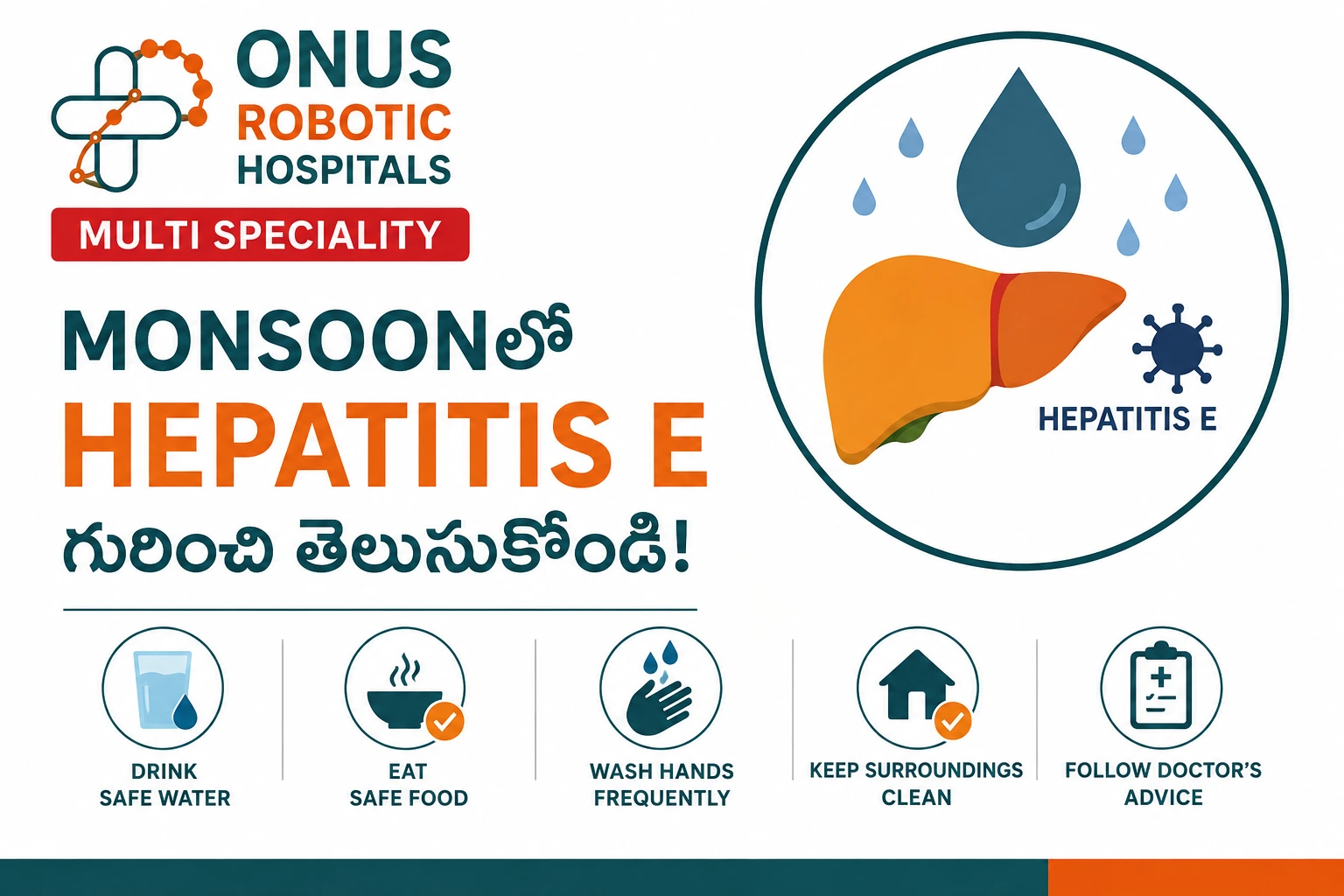
Why Should You Know About Hepatitis E During the Monsoon Season? – By Dr. Ravi Kiran | Diabetologist, Onus Robotic Hospital
Introduction
The monsoon season brings welcome relief from the heat, but it also increases the risk of several waterborne and foodborne infections. Among these is Hepatitis E, a viral infection that affects the liver and is commonly spread through contaminated food and unsafe drinking water.
During periods of heavy rainfall, water contamination becomes more common due to poor sanitation, flooding, and mixing of sewage with drinking water sources. As a result, cases of Hepatitis E often increase during the monsoon months.
Although many people recover completely from Hepatitis E, the infection can cause significant illness and may be particularly dangerous for certain high-risk groups, including pregnant women.
In this article, Dr. P. Ravikiran, Infectious Diseases Specialist, explains how Hepatitis E spreads, its symptoms, who is most at risk, and how to protect yourself and your family during the monsoon season.
What Is Hepatitis E?
Hepatitis E is a viral liver infection caused by the Hepatitis E Virus (HEV).
The virus primarily affects the liver, leading to inflammation and symptoms such as jaundice, fatigue, nausea, and dark-colored urine. Most infections are self-limiting, meaning they resolve on their own with supportive care. However, some cases can become severe and require close medical monitoring.
Why Does Hepatitis E Increase During Monsoon?
Monsoon conditions create an environment where contamination of food and water becomes more likely.
Several factors contribute to increased transmission:
Water Contamination
Heavy rainfall can contaminate drinking water supplies with sewage and waste, increasing the risk of viral infections.
Poor Sanitation
Flooding and drainage problems may expose communities to contaminated water sources.
Consumption of Unsafe Food
Food prepared under unhygienic conditions can become contaminated and transmit the virus.
Street Food and Outdoor Eating
During monsoon, improperly handled food and beverages may carry a higher risk of infection.
These factors make Hepatitis E one of the important infections to watch for during the rainy season.
How Does Hepatitis E Spread?
Hepatitis E spreads mainly through the fecal-oral route, which means a person becomes infected after consuming food or water contaminated with the virus.
Common Sources of Infection
- Contaminated drinking water
- Food prepared with contaminated water
- Poor personal hygiene
- Improper sanitation facilities
- Contaminated fruits and vegetables that are not properly washed
The infection does not usually spread through casual contact but is strongly associated with contaminated food and water.
Common Symptoms of Hepatitis E
Symptoms may appear several weeks after exposure to the virus.
Fever
Many patients experience mild to moderate fever during the early stages of infection.
Nausea and Vomiting
Digestive symptoms are common and may affect appetite.
Loss of Appetite
Patients often notice a significant reduction in their desire to eat.
Fatigue and Weakness
Persistent tiredness is one of the most frequently reported symptoms.
Jaundice (Yellow Eyes and Skin)
As liver function becomes affected, bilirubin levels rise, causing yellow discoloration of the eyes and skin.
Dark-Colored Urine
Excess bilirubin may be excreted in urine, making it appear dark yellow or tea-colored.
Abdominal Discomfort
Some patients may experience discomfort in the upper right side of the abdomen where the liver is located.
Why Are Pregnant Women at Higher Risk?
One of the most important aspects of Hepatitis E is its potential severity during pregnancy.
Pregnant women may face:
- More severe liver inflammation
- Increased risk of complications
- Higher likelihood of hospitalization
- Greater health risks for both mother and baby
Because of these risks, pregnant women should be especially careful about food hygiene and drinking water safety during the monsoon season.
Who Else Should Be More Careful?
Certain individuals may be at greater risk of complications from Hepatitis E, including:
- Pregnant women
- People with pre-existing liver disease
- Individuals with weakened immune systems
- Elderly individuals
- People living in areas with poor sanitation
These groups should seek medical advice promptly if symptoms develop.
How Is Hepatitis E Diagnosed?
Since symptoms can resemble other liver conditions, proper medical evaluation is essential.
Blood Tests
Specific blood tests can help confirm Hepatitis E infection.
Liver Function Tests (LFTs)
These tests assess the extent of liver inflammation and monitor liver health.
Clinical Evaluation
Doctors evaluate symptoms, medical history, and laboratory findings before confirming the diagnosis.